International Workers’ Day: The Arduous Lives of Iranian Workers
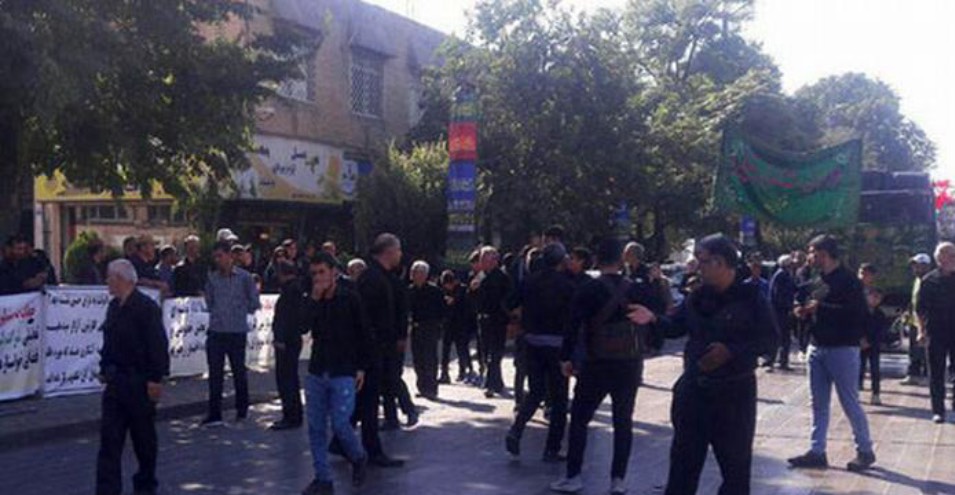
Most workers in Iran had a difficult livelihood even before the coronavirus outbreak, which has now become even more challenging with economic recession and inflation. The economic crisis, which deepened with the spread of coronavirus, has imposed considerable pressure on workers and their families.
As May approaches—this year coinciding with Ordibehesht 12—numerous reports have been published in Iranian media about workforce reductions in production units, worker layoffs, and delayed wage payments, reflecting the deteriorating conditions of segments of society that even under normal circumstances struggle to meet their basic needs.
The Iran Labor News Agency (ILNA) published a report on the eve of International Workers’ Day about unemployed workers at the Fasa Sugar Factory, which can be considered one of thousands of examples in the Islamic Republic.
According to this report, this factory’s problems have a long history and last year resulted in more than 10 protest gatherings by workers demanding their overdue wages.
According to ILNA, the arrest of the Fasa Sugar Factory’s managing director did not resolve the workers’ problems, and now while officials are preparing to hold Workers’ Day ceremonies, approximately 300 employees of this production unit continue to face the problem of unpaid claims.
Hadi Mohaddes, a member of the Fasa Sugar Factory’s workers’ council, said many workers have not received their salaries for seven months, and the managing director’s two arrests have not helped their situation. He added that factory officials, by selling some scrap metal and orange tree fruits from the facility’s grounds, were only able to pay some employees’ November wages.
Unemployed Workers Turn to Scavenging
This labor activist, referring to the unemployment and home confinement of most Fasa Sugar Factory workers, told ILNA: “These people can only manage their affairs and their families’ with subsidy money, while some workers have resorted to activities such as scavenging and buying and selling old plastic and waste materials to earn income.”
The original owner of the Fasa Sugar Factory is the Ministry of Defense, and this production unit was conditionally transferred during what is called privatization. Hasan Argiou, the governor of Fasa, says the new owner is from another field and entered sugar and candy production from construction “and this lack of expertise created problems for this complex and its workers.”
The transfer of companies and factories based on Article 44 of the Islamic Republic’s Constitution and the shortcomings and negative consequences of how it has been implemented is a topic that was also mentioned in the National Front of Iran’s statement on the occasion of International Workers’ Day.
National Front Criticizes Privatization
In this statement, it is emphasized that officials “have transformed privatization into crony capitalism,” and on this pretext, removed a clause from the same article that acknowledges five percent of factory and company shares should be given to workers to increase motivation for work and production, quality, and job security.
The National Front in its statement published on Ordibehesht 11 says that in a situation where all sectors are classified as “crisis conditions,” different segments of the people, and especially workers, simultaneously with the coronavirus crisis and the spread of COVID-19 disease, endure heavy and severe economic pressure, yet “effective and practical policies to fundamentally solve these problems are not visible from the rulers.”
“Rulers Unaware of Workers’ Suffering”
This political organization, referring to the recent determination of the minimum workers’ wage, which according to most experts and labor activists does not even cover minimum expenses, pointed out that this issue showed that “the rulers do not know or do not want to understand the suffering of the working community.”
Part of this statement reads: “With the Islamic Republic’s erroneous policies and ignorance, the poverty line expands every day to encompass a broader segment, and some shamelessly, using rents, connections, and exploiting various titles, plunder the economic and social capital of society and ask people to tolerate ‘these conditions’!”
The unemployment crisis, economic recession, and skyrocketing prices, which had intensified even before the official confirmation of the coronavirus outbreak in Iran, have now put vulnerable segments under increasing pressure throughout Iran, and in areas such as eastern Iran, which has a long history of deprivation, these pressures have increased.
74 Percent Below the Food Security Poverty Line
Alim Yarmohammadi, the Zahedan representative in the fifth Islamic Consultative Assembly, told ILNA on Ordibehesht 5: “Given that 74 percent of the Sistan and Baluchestan province population are below the food security poverty line and do not have permanent jobs, most work on a daily basis and are day laborers, and so with the peak of coronavirus, these people did not stop their activities, and our and other officials’ concerns were due to this.”
The Iranian Writers’ Association also in a statement on the occasion of International Workers’ Day, referring to increased enforcement and judicial action against workers and their supporters in the past year, called for “rapid and unconditional release of labor activists.”
In its May Day statement, the National Front of Iran, with an indirect allusion to the year’s slogan announced by the Islamic Republic’s leader, Ali Khamenei, “Surge in Production,” wrote: “The ruling body should note that increased production is not achieved through words and slogans. Increased production, in addition to supporting the workers, requires the creation and development of factories and production institutions in all forms and shapes and greater entrepreneurship.”
Nationalists in their statement listed attracting domestic and foreign investment and creating secure political and economic conditions as prerequisites for flourishing productive activities, and criticizing the government’s foreign policy, emphasize that “creating tensions in regional countries and confronting the global community” contradicts the goal of attracting investment and increasing production.
With the rapid spread of the new coronavirus in Iran, many production activities came to a halt or partial shutdown, and with the announcement of a declining trend in cases and deaths from COVID-19 in official statistics, some restrictions have either been completely lifted or reduced.
The Iranian Writers’ Association in its Workers’ Day statement accused the Islamic Republic officials and government officials of simultaneously “failing to support the livelihood of disadvantaged people” while keeping factories and workshops open and reopening them, thereby “endangering the lives of many workers and citizens.”
Source: DW