Jahanpour once again denied the loss of 200,000 corona vaccines
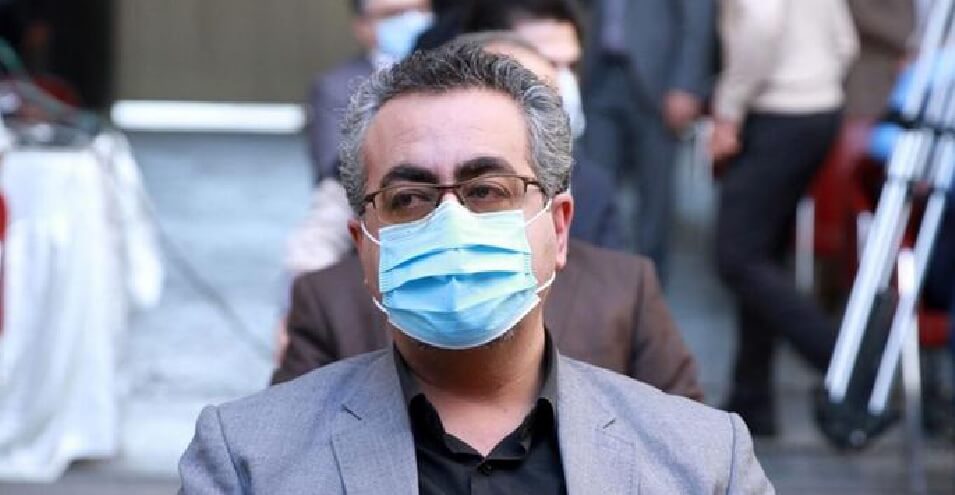
The Food and Drug Administration (FDA) spokesperson has denied for the third time a member of parliament's claim that a large number of coronavirus vaccines are missing. The MP says that information from the Ministry of Health's own system indicates that the status of 200,000 doses of the vaccine is unclear.
The director of the Ministry of Health's Public Relations Center and spokesperson for the Food and Drug Administration, for the third time in three days, called the claim that 200,000 doses of the coronavirus vaccine were missing in Iran baseless.
In response to this claim, Kianoush Jahanpour tweeted on Thursday, May 13: "No vaccine has been lost and will not be lost, and its information is continuously monitored. What has apparently been lost outside the health system for a long time is the honesty of some politicians and documented and calculated words."
Mohsen Dehnavi, a representative from Tehran in the Islamic Consultative Assembly, said in a letter a few days ago that he had asked Health Minister Saeed Namaki to send a report on the number of imported and administered vaccines "as soon as possible."
He says that public reports indicate that the coronavirus vaccine is being freely sold in the market or "administered by profiteers and aristocrats," and that addressing the distribution of the vaccine should be at the top of the Minister of Health's priorities.
Unanswered letter to the Minister of Health regarding the missing vaccine
Repeating this accusation, Dehnavi specifically spoke about the loss or uncertainty of the 200,000 doses of the Corona vaccine, and Kianoush Jahanpour, in a Twitter message and in an interview with ISNA News Agency, called his statements a complete lie.
Yesterday, the Tehran representative reacted to Jahanpour's denial and wrote to him: "Either you don't know or, for example, you don't know!"
According to the spokesperson for the Food and Drug Administration, three million and 159 thousand doses of the vaccine have so far arrived in Iran, and at least two million more doses are expected to arrive by the end of May.
According to official statistics from the Ministry of Health published on Thursday, May 13, a total of two million,923 doses of the coronavirus vaccine have been administered to citizens since the start of vaccination in Iran on February 11.
Ahmadinejad and the vaccination of top-level officials
Another recent controversy about vaccination in Iran was the statement made a few days ago by Mahmoud Ahmadinejad, the president of the ninth and tenth governments, who said: "The country's top officials are very careful about their own health and have been vaccinated; now it's up to which country they got vaccinated."
Abdolreza Davari, a former advisor to Ahmadinejad, recently said that he himself received the vaccine from the American and German companies Pfizer Biotech on January 16, 2020, at the home of Hamid Baghai, the executive deputy of the tenth government.
Yesterday, after registering to run in the presidential election, Ahmadinejad denied among his supporters that he had received the coronavirus vaccine, and at the same time said that some statements made indicate that senior officials of the Islamic Republic have received the Pfizer BionTech vaccine.
On January 9, the Leader of the Islamic Republic, Ali Khamenei, announced a ban on the import of British and American vaccines, saying that he had previously discussed this with officials and was now stating it publicly.
The delay of officials in providing the vaccines needed by citizens and the failure to fulfill their repeated promises in this regard are facing widespread criticism.
In an interview with ILNA News Agency, Kianoush Jahanpour expressed hope that "with the fulfillment of the promises made," more than 7 to 10 million doses of the vaccine will arrive in Iran by the end of June.
Regarding the joint production of the Russian vaccine "Sputnik V" in Iran, he said that four Iranian companies have been introduced to the manufacturing company in Russia, and that the infrastructure of the two companies has been approved.
Promises and dreams of issuing a vaccine
Jahanpour added: "But the fact that they are in the production stage and have an output has not happened yet. It seems that we will still not have domestic production of Sputnik for the next few weeks."
On May 1, the Minister of Health announced at a meeting of the local headquarters to combat the coronavirus in Alborz province that joint production of the Russian vaccine "Sputnik V" would begin in this province next week or the week after.
Saeed Namaki expressed confidence that from June onwards, and by the end of spring, Iran will become one of the "very good producers" of the coronavirus vaccine and one of its exporters to the world.
Statistics on imported and administered vaccines in the past three months show that, at least so far, Iran is far behind most countries in the region in terms of vaccinating its citizens.
The number of victims is under 300.
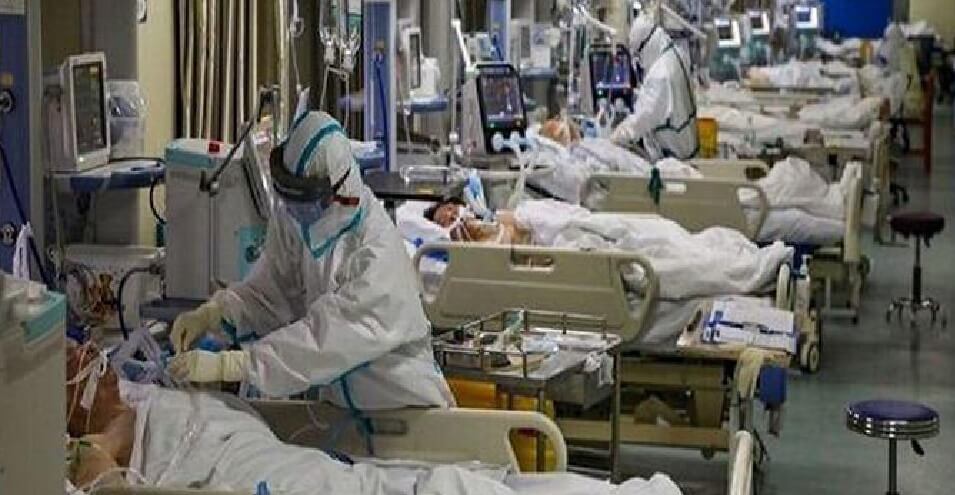
Meanwhile, it seems that in most provinces of Iran, the fourth wave of the coronavirus, which began at the beginning of this year, has passed its peak, and the number of new infections and victims is decreasing with fluctuations.
According to the Ministry of Health, 14,246 new cases of coronavirus have been identified in Iran in the past 24 hours, and 297 people infected with COVID-19 have lost their lives.
This is the second time since late April that the number of victims in a single day has been less than 300. On May 26, the number of victims in a single day reached nearly 500, the highest number of deaths from COVID-19 since the official confirmation of the coronavirus outbreak in Iran.
According to official statistics, 76,231 people have died from COVID-19 in Iran since the beginning of the coronavirus pandemic. Most experts estimate the real number to be much higher, at least two and a half times this number.
Source: DW