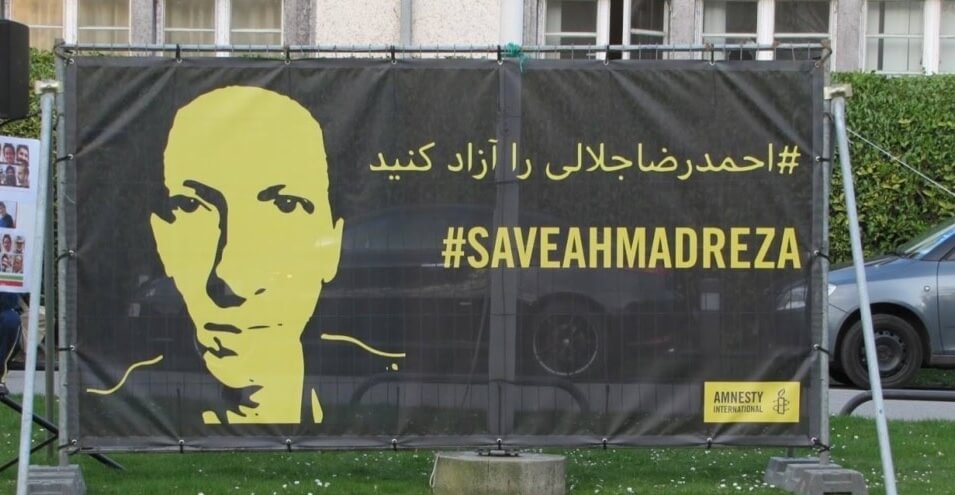
A young man who was sentenced to death for "swearing" at the age of 16 was acquitted of murder charges after 10 years.
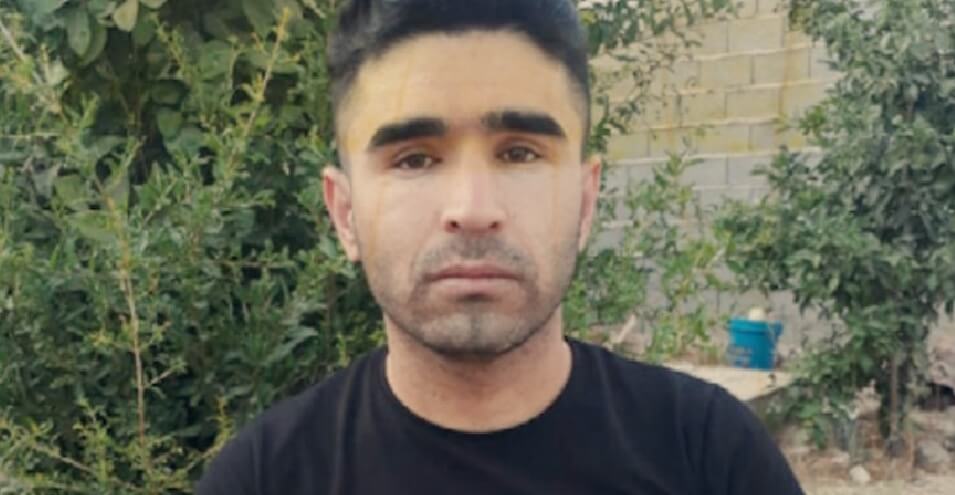
Saleh Shariati, a young man who was sentenced to death by "Qasamah" for murder at the age of 16, was released from Adel Abad Prison in Shiraz in recent days after the Supreme Court issued a ruling acquitting him after serving at least a decade in prison.
According to the Abdolrahman Boroumand Foundation, the situation of Saleh Shariati, who was released from Adel Abad Prison in Shiraz on Thursday, June 20, following his acquittal by the Supreme Court, is a clear example of the Islamic Republic's judiciary's blatant disregard for international human rights law, fair trial standards, and accountability.
Roya Boroumand, Executive Director of the Abdolrahman Boroumand Foundation for Human Rights in Iran, points out that "in the judicial system, punishment-oriented criminal laws and unfair trial processes endanger the lives of innocent people and sometimes even take their lives," and believes: "The tragedy that Saleh Shariati and his family suffered is the result of an ineffective judicial system."
According to this human rights organization, Mr. Shariati was sentenced to death for murder at the age of 16, even though he was initially summoned to the Assaluyeh Prosecutor's Office as an informant and witness in a case brought by the victim's family against the owner of a farm where their son, along with Saleh, worked as a laborer and was killed after falling into a well.
According to published information, Saleh Shariati was arrested 16 months after the death of a person he worked with on the farm, interrogated and tortured without access to his lawyer or family, and was finally sentenced to death by hanging on March 14, 2015, by judges of Branch 3 of the Fars Provincial Criminal Court.
A verdict that was approved by Branch 20 of the Supreme Court of Iran on August 20, 2018. This verdict was ultimately reviewed and the Judicial Deputy of the Judiciary assessed the verdict as contrary to Sharia law, and Branch 39 of the Supreme Court overturned the decision of the Fars Provincial Court and Saleh Shariati was acquitted.
Qasamah, which is one of the ways to prove the occurrence of murder and bodily harm in Islamic jurisprudence and Iranian criminal law, was introduced into Iran's Islamic Penal Code after the 1979 revolution, and according to it, a judge can only issue a verdict based on the oath of 50 male relatives of the victim's father.
The executive director of the Abdolrahman Boroumand Foundation, noting that the judiciary must compensate this young man for the lost years and the pain and suffering inflicted on him and his family, says: "The Islamic Republic of Iran must take the necessary measures to ensure that no child is subjected to such a horrific injustice."
Previously, Voice of America had announced in several reports, citing human rights organizations and Amnesty International, that at least 90 child criminals in Iran were at risk of execution.
Amnesty International has repeatedly called on Iranian authorities to completely abolish the death penalty for crimes committed by persons under the age of 18 by amending Article 91 of the Islamic Penal Code adopted in 2013.
Iran is one of the last countries in the world that, in violation of its obligations under the International Covenant on Civil and Political Rights and the Convention on the Rights of the Child, continues to apply the death penalty for crimes committed by persons under the age of 18.
The US State Department has also repeatedly and on various occasions condemned the repeated and persistent violations of the rights of Iranian citizens by the ruling regime in that country.
Source: Voice of America