A bitter tale of the end of a historical period of nomadic life in Iran / Kiomars Amiri
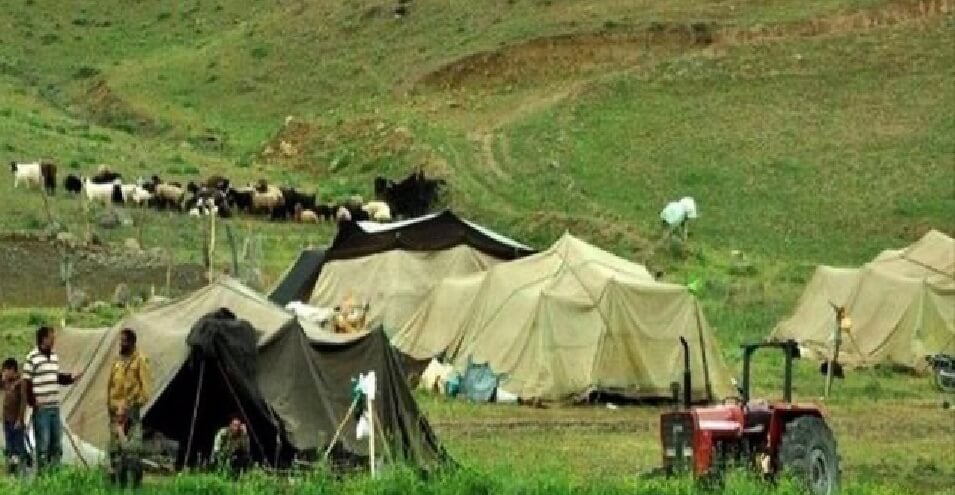
The tribal and nomadic society of Iran, which until a century ago had the first say in determining the fate of the country in macro-political, economic, and social matters, and which modernists and supporters of the transition of society from tradition to modernity have They were considered the biggest obstacle in the way, or in other words, their most powerful competitor, to the transition to modernity. Today, in the 15th century, after suffering heavy losses and injuries from the implementation of the Takhteh-e-Khapo law of forced settlement and monoculture of nomads, which was implemented at the request and order of Reza Shah, in these years, due to reasons such as mismanagement by the Islamic Republic's government officials, destruction of forests and pastures, the water crisis, environmental destruction and drought, and dozens of other small and large problems in their lives, they are desperate and driven from everywhere out of helplessness and are forced to end their tribal-nomadic life and step into an inevitable fate that will have no other outcome for them than misery, poverty, and displacement on the outskirts of cities.
The year 1401 AH should be considered the year of the end of an era and a historical period of tribal and nomadic life in Iran; a life that from now on should be read about in books or seen in photographs and paintings.
The arid nature and the wasted suffering of the nomads
To prepare a report on the situation of the Kermanshah nomads, who are currently living in difficult and unfortunate conditions, we head to the forest and mountainous areas in the southeast of Kermanshah province, and to see each of the nomads up close. Leaving Kermanshah city, after traveling a long distance on a non-standard sandy road - a road that screams that it has been built for years by heavy road construction machinery, but has long been abandoned to no avail - we find ourselves among the nomads who live among the mountains and forests. Along the way, every few miles, we see small herds of goats and sheep, which an old or teenage shepherd is leading through the dry, grassless soil and forest trees.
At the end of this road, which passes through the villages of Sarfirozabad, Jalavand, and Osmanvand, we reach several nomadic families in the village of "Peshtaleh"; a small village with seven to eight families located in the middle of the border of Kermanshah, Ilam, and Lorestan provinces, and is considered the last village in the Osmanvand village of Kermanshah.
These few nomadic families here and in this part of the central Zagros mountains and forests are the remnants of hundreds of nomadic families who had previously left their ancestral home and gone from here; where until a century ago it was a place of life and grazing for many tribes and tribes, and the noise, chatter, and din of their migration and migration with millions of livestock and black tents deafened the ears of the sky, today with a population of less than twenty people and with its inhabitants immersed in poverty and despair, in terrible isolation, they struggle with many problems and have no other way than to escape from it.
The nature whose inhabitants, not so long ago, would throw "thousand-year-old wood" into the air and, according to tribal and nomadic tradition, celebrate the number of their herds reaching a thousand heads, and continue their tribal and nomadic life with thousands of hopes and desires from generation to generation, has today reached the end of its life line here; because in its vast nature there is no longer any trace of water, development, or vegetation, and there is no mention of all kinds of wild animals such as deer, goats, deer, and beautiful birds such as partridges, geese, and pheasants, etc., and its dry and empty nature is in complete destruction.
The widespread destruction that has occurred in this region over the years has been caused by nothing other than the government's indifference to nature and the lives of the nomadic people, which has led to the destruction of nature, which has been followed by successive droughts that have led to the destruction and destruction of everything in it. As a result, no vegetation, water, grass, animals, or insects remain in it, and most of their descendants have become extinct and destroyed forever. There is no possibility of continuing life for the last survivors of the nomads in it. One after another, the owners of small herds there are forced to leave their places of residence by selling their livestock cheaply and taking refuge in the outskirts of the cities. It is in such circumstances that the destroyed nature seems to be mourning and dying away from its loved ones, and from now on, it will remain in its solitude and isolation until it rots.
A brief overview of the problems facing the nomads of the west of the country
The nomads we are currently among are part of the nomadic tribes of the independent Osmanvand tribe; a region where tribal and nomadic life was prominent in the past and was of particular importance to the nomads of the west of the country, unfortunately, all signs of life are now coming to an end.
In this mountainous region, where the sparse forests have resisted until now and where hundreds of nomadic families used to live and graze until just a few years ago, you now have to travel kilometers of difficult, mountainous roads to perhaps catch sight of a small herd of goats and sheep and a tired and helpless shepherd, huddled in a few tents or mud huts in a corner of the mountain at the bottom of a valley, watching the death and end of their lives and those of their livestock in an aura of poverty, misery, and lack of food and water, finding no hope or solution for their lives, future, or salvation.
The inattention and irresponsible actions of the country's administrators in matters of state management, and especially the continuous and long-term inattention to the problems and difficulties of the nomads, the severe problems of water scarcity, the rapid destruction and destruction of forests and pastures over the past half century, the high cost of shepherds' wages, inflation and the daily increase in the prices of nomad and livestock needs, the skyrocketing price of fodder, and in addition to these, the drought that has not left the region for years, are among the major factors that have permanently prevented the few remaining nomads from moving due to the Takhta Qapu law and the forced settlement of nomads, and are going to quickly end it and turn the forest into a barren desert, devoid of water, grass, and life.
The remnants of the nomads, who, with their persistence and habit of tribal and nomadic life, with all the difficulties, were struggling to maintain themselves in the face of modernist and modernist governments on the one hand, and the wrath and fury of nature and the indifference of the government on the other, to defend themselves in the face of modern life and their identity and survival, with their numbers dwindling every year, and due to one problem after another, they inevitably rushed to the outskirts of the cities, and finally, in the year 1401 AH, they witnessed the end of their tribal and nomadic life in Iran. The migration of the tribes stopped moving forever, and the last migration was a nomad who never returned, and in this way, after long centuries, the traditional nomadic life and animal husbandry in Iran were put to an end forever. What will emerge from this terrible destruction and event that occurred in tribal and nomadic life?
Among the afflictions and troubles of today's Iranian society, the lack of justice and the prevalence of unbridled chaos and lawlessness must be mentioned first and foremost, which has led all aspects of people's lives to a deep and insoluble challenge, and instead of solving it, the government itself has become the cause of chaos and chaos that has made society completely sick. It is in the shadow of the lack of justice and lawlessness that a young man was expelled from the university for false reasons after three and a half years of studying medicine at Kermanshah University of Medical Sciences, and the heartbroken and disappointed young man, out of helplessness and despair, has once again turned to the nomadic life of his ancestors, and this time he has faced an even more irreparable defeat.
This young man, expelled from university and stuck in the life of a shepherd, ended up bankrupt and desperate after ten years of shepherding and enduring the harsh nomadic life. According to his own words, he doesn't know what to do and his thoughts are getting nowhere.
We found him, a resident of "Peshtaleh," next to his herd, wearing ragged clothes and a tired, sunburned face that reflected defeat and despair.
Amidst the forest and the thin oak trees of the Zagros, he stands with a stooped and humiliated figure next to his small flock, leading them out to graze.
In the shepherd's sad gaze, each herd rubs its snout on the ground and goes in every direction in search of a tooth-biting plant that will satisfy their stomachs. The herd has traveled kilometers through mountains and forests to satisfy its stomachs, but by now, as it is approaching dusk, its stomachs have not been satisfied and it remains hungry due to the poverty of the vegetation. This is the daily pain of the animal and the insoluble problem of the shepherd, whose only concern is this small herd; a herd that, if it cannot satisfy its stomachs with the mountain plants, must buy fodder for it, and buying fodder, due to its high cost, means the shepherd's complete bankruptcy, and this problem has closed all avenues for the shepherd. Buying fodder is not cost-effective, and the shepherd has already sold more than half of his herd and bought fodder. In a quick calculation, he came to the conclusion that it wouldn't be long before he would have to sell the entire herd to buy fodder and be left empty-handed, driven from everywhere, and forced to sit on the black soil.
The fate of this shepherd, while inspiring regret and wonder, is a reminder of the suffering of his fellow countrymen and the chaos and chaos that has been created over the years, in addition to the unprecedented problems and suffering that it has caused in the field of higher education in our country, and the lives of shepherds far away from the city center have not been spared from its effects.
A shepherd who studied medicine
His name is Saifullah and he was born in 1973. His hunched figure and sad face speak of the suffering he has endured in his short life. He is single and says he has no dreams of marriage and no possibilities of starting a family. We ask him to tell us about his life and destiny.
He defines it with patience in words:
"I spent my entire childhood living as a nomad and shepherd with my family right where I live now. When I was a teenager, my father sent me to Kermanshah to study. In Kermanshah, I received my diploma with thousands of problems and, using the Basij quota, I entered the Kermanshah Faculty of Medical Sciences in 1993, majoring in medicine. After three and a half years of university study and completing sixty-one semesters, I was expelled from the university along with several others for false reasons and on the pretext that my Basij documents were corrupted. I ran for several years to return to university and continue my studies, but they all chased me away and there was no result. While those who were expelled with me returned to university and continued their studies, I was unable to return to university and complete my studies because I had no one. After several years of running around, knocking on doors and failing, while I was mentally exhausted, exhausted, and hopeless, and I couldn't find a job, I saw no choice but to return to my father's and ancestors' profession and resume my life as a shepherd. So I sold the small house we had in the city and used the money to buy about a hundred ewes and returned to my father's and ancestors' home. Over the course of eight years, with thousands of hardships and pains, I was able to increase the number of the herd to eight hundred ewes, and I was dreaming of planting the "millennium tree," when suddenly, during these two years, our lives turned dark.
I did not know that I was living in a country where, due to the sick economy of rentiers and brokers that prevails in it, some people become billionaires overnight, while hundreds of families fall into a deep depression overnight. I could not understand what a terrible fate awaited the nomads of Iran and me as a person living a nomadic life.
I was fed up with the hustle and bustle of the city and was living my life with hardship and suffering when suddenly everything changed in two years. Two consecutive years of drought, the lack of even the slightest support from the government for the nomadic community, and dozens of other problems caused us to be completely destroyed during these two years.
Two consecutive years of drought have prevented us from feeding our livestock with pasture plants and watering them with spring water as we had in previous years. Due to the destruction of vegetation caused by drought and government mismanagement, we have been forced to buy fodder and water for our livestock for two years; fodder that is becoming more and more expensive every day. To this day, the price of straw has reached six thousand tomans per kilo, barley ten thousand tomans per kilo, and hay fifty thousand tomans per bale, and it is becoming more and more expensive day by day. After becoming ill, I sold my livestock and bought straw, barley, and water by tanker to keep my livestock alive. "The government's wrong and rentier policies in the export and import of meat and fodder on the one hand, and the abundant supply of livestock due to the high cost and lack of fodder, which caused livestock farmers to sell their livestock, on the other hand, caused herders to lose their livestock, and no one was and is willing to buy livestock. In such a situation, everyone wants to sell, and in this way, we, the nomads, were trapped and destroyed in this predicament, and we have no way out."
He continues with a bitter expression: "I cannot let these animals, for whom I have worked hard for years and who are my hope and life, perish from hunger and thirst before my eyes. After all, I am a human being and I have a special emotional feeling for these animals. I understand; my conscience does not allow me to do this, otherwise, with the situation that has arisen, I would really have to let them go into the mountains and forests so that they would all perish from hunger and thirst and I would also be free from this deadly suffering. I am helpless and do not know what to do."
We leave Saifullah with his pain and suffering and go to another rancher.
I pay ten million in late payment penalties a year.
His name is Mohammad, and in response to our questions about the problems facing nomads these days, he says:
"Three years ago, I took out a Mudarabah loan of 100 million tomans and bought a number of mother ewes for my eldest son, who had been unemployed for years, at a price of 7 million tomans per pair. I have been extending the loan for three years now, and every year I pay the bank only 10 million tomans as a penalty for late payment. In these circumstances, I had to sell the livestock that I had purchased three years ago for a price of 7 million tomans per pair, now I have to sell it for a price of 3 million tomans per pair, and that too on a one-year credit. I don't know what my son should do from now on."
We ask him, "Where did you get drinking water for yourself and your livestock before?"
In response, he says:
"We used to get water for our livestock from a spring that had been sufficient for our livestock before these two years of drought, and we used water from this spring for ourselves and from water tankers that the district administration sent to the nomads."
We ask, why are you a district manager? Shouldn't the water authority have installed the pipes for you?
In response, he says, "Since we are considered nomads, our legal responsibility lies with the district administration."
We ask, doesn't the district administration still bring you water by tanker?
He replies: "Not anymore; the last water tanker the district administration sent was about a month ago, and that only reached two or three families and not us."
What does the district governor say? Through a person who is with us and is an acquaintance of the district governor of Firuzabad district, Kermanshah, we call Mr. Shafiei, the district governor, who is a young man in his thirties, and he says: "I have emphasized that a tanker of water be sent to those few families in "Peshtaleh" every ten days. I will emphasize it again."
Livestock insurance and the lack of insurance accountability to livestock farmers
Noorkhoda Jamshidi is a nomad living in the mountainous region of "Golzhiran." The problems of the nomads are common. When we ask him about the insurance of their livestock, he answers:
"Last year, the insurance company came and charged us 12,000 tomans for each animal, and they put earrings in the ears of our animals, saying that if any of your animals died, bring us the ear with the earrings and we will receive compensation. Unfortunately, the earrings caused the ears of some of our animals to become infected, and they died as a result of this infection. We took the ears and earrings and handed them over. The next time, we took the carcasses of the animals with the earrings and handed them over, but they did not even compensate us for the insurance loss. We had to travel nearly 150 kilometers and return, and they tired us out with "go today and come tomorrow," and the year ended and we did not receive any compensation for our losses."
He adds: "Three of my sons have been away from home for years due to poverty and deprivation; in fact, they escaped poverty and are unemployed and without income in the city. I stayed with my eldest son, who has a wife and children and about seventy ewes. We sold all our lambs and bought fodder for them, and now we have no money to buy fodder. I did the math and saw that each head of livestock costs about twenty thousand tomans of straw and barley per day, and there is no one to buy livestock for us to sell."
"We use water from a well about three kilometers away from our house," he says about providing drinking water for themselves and their livestock. "We don't know if the water is contaminated or not."
We ask, does the Agricultural Jihad, which claims to provide fodder to nomads at low rates, not help you?
He replies: "A few years ago, sometimes they would give so much that it was not cost-effective to bring it home, and the distance to deliver it was so long that it did not solve even one hundredth of the farmer's problem. Now, it has been completely stopped for some time and there is no more news."
On our way back from the nomads, with a heavy feeling in our throats, we think all the way about the nomads who have suffered such a dark fate; the nomads who once had a luxurious life with thousands of hopes and aspirations, and now have reached the end of their lives, and all roads are closed to them, and they are miserable and defeated, and no one can help them. The mountains and forests are silent and desolate, and not even a bird can be heard; the forest, whose freshness and beauty delighted people until a few years ago, and life flowed in it, and the occasional noise of livestock farmers with thousands of livestock did not stop; the livestock farmers who annually provided a large part of the country's meat, wool, and organic and healthy dairy products, are now disappearing forever.
How many families are there in the nomads in general? Can't the government save this hardest-working and poorest segment of society, who have been wiped out, by injecting a grant or providing a ration and helping them get through this period? Don't the officials' consciences hurt when they see the plight of these nomads?
And in the end, nothing comes of the country's situation except a lump in its throat and despair in its heart. With closed lips and a heart more painful than ever, it's as if someone is whispering sadly: The house is completely destroyed.
Source: HRANA