Khatibzadeh: Russia's withdrawal from the JCPOA is media speculation; Shamkhani: Prospects for agreement are unclear
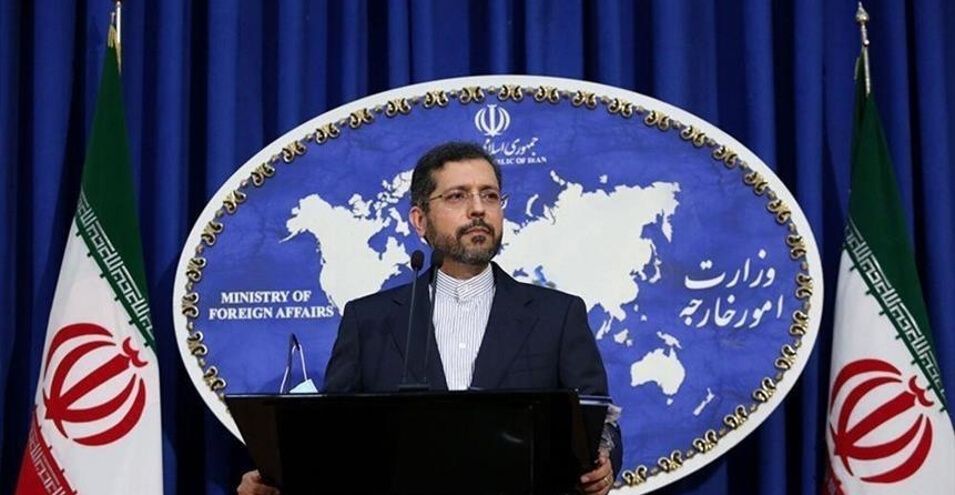
Saeed Khatibzadeh, spokesman for the Iranian Foreign Ministry, said that Iran will "never accept a deadline" for the JCPOA negotiations, noting that the Iran-US talks on the prisoner exchange, which took place simultaneously with the talks to revive the JCPOA, have made "progress."
Answering questions from reporters at a press conference on Monday morning, March 6, he called the news about Russia's possible withdrawal from the JCPOA "media speculation" and said Iran is waiting to receive details of Russia's request.
Russian Foreign Minister Sergei Lavrov said on Saturday that the United States must provide written guarantees that new sanctions imposed on Russia over its invasion of Ukraine will not negatively affect trade relations between Tehran and Moscow. There have been reports of a similar request from China.
An Iranian Foreign Ministry spokesman declined to answer questions about the details of China's request, saying, "I will not comment here on what is happening behind closed doors in Vienna."
Ali Shamkhani, Secretary of Iran's Supreme National Security Council, also implicitly referred to this issue in a tweet, writing that "the positive and negative actions of the countries present in the Vienna talks are carried out with the aim of securing interests and are understandable," and that Iran is "evaluating new components affecting the negotiations."
Russia's request had previously met with a negative response from the US government. US Secretary of State Antony Blinken said yesterday that sanctions imposed or to be imposed on Russia in the future have nothing to do with the JCPOA.
He called the request for guarantees from his Russian counterpart, Sergei Lavrov, "irrelevant."
At the same time, Saeed Khatibzadeh praised the approach of China and Russia in the Vienna talks, calling their role "constructive" and supporting Russia's request to the United States, saying: "Iran's peaceful cooperation with the countries involved, including Russia, should not be limited or bound by any sanctions."
Yesterday, IRNA news agency published an interview with Mikhail Ulyanov, Russia's senior representative during the JCPOA revival talks in Vienna, in which Ulyanov, referring to the sanctions imposed by the West against Russia, said that Russia would take "countermeasures" and sanction the West.
The Russian representative in the negotiations has said that Iran "achieved much more than it expected" during the ongoing negotiations.
He described China and Russia's engagement with Iran as "excellent" and said: "I feel sad when I see many assessments in the mainstream Iranian media and social networks that Russia is against Iran, that Russia is an enemy of Iran and is against the nuclear deal."
The Russian Foreign Minister's remarks about receiving written guarantees in Iran have also been met with criticism.
The Tehran-based newspaper Jomhuri Eslami reported today that Russia's request "could practically prevent the Vienna JCPOA negotiations from reaching a conclusion," and called it "taking the JCPOA hostage by Russia."
The newspaper also criticized Ulyanov's approach in the negotiations, writing that he "considers himself more as a representative of Iran or even a decision-maker on behalf of Iran than as a representative of Russia" and that he "exaggerates."
Prospects for agreement are unclear.
Ali Shamkhani, Secretary of Iran's Supreme National Security Council, tweeted in his latest position regarding the negotiations that "the prospect of an agreement in the Vienna talks remains unclear due to Washington's delay in making a political decision."
He has reiterated that "the priority of Iranian negotiators is to resolve and resolve the remaining issues that are considered red lines."
Iranian government officials have listed as their demands the lifting of all sanctions imposed by the Donald Trump administration, including nuclear and non-nuclear sanctions, the provision of a guarantee by the US government that it will not withdraw from the JCPOA again, and the closure of files related to Iran's nuclear program at the International Atomic Energy Agency.
US government officials, on the other hand, say that they are unable to provide guarantees that Iran will not withdraw again and can only lift sanctions that violate the JCPOA.
Regarding files related to Iran's nuclear program, the Atomic Energy Organization of Iran and the International Atomic Energy Agency agreed two days ago on a timetable that will continue until June 1401.
According to this understanding, Iran is to provide "written explanations" about three locations suspected of covert nuclear activities "by March 19th at the latest," and the Agency, after reviewing Iran's responses, will submit a final report "before the IAEA Board of Governors meeting in June 2022."
Source: Radio Farda