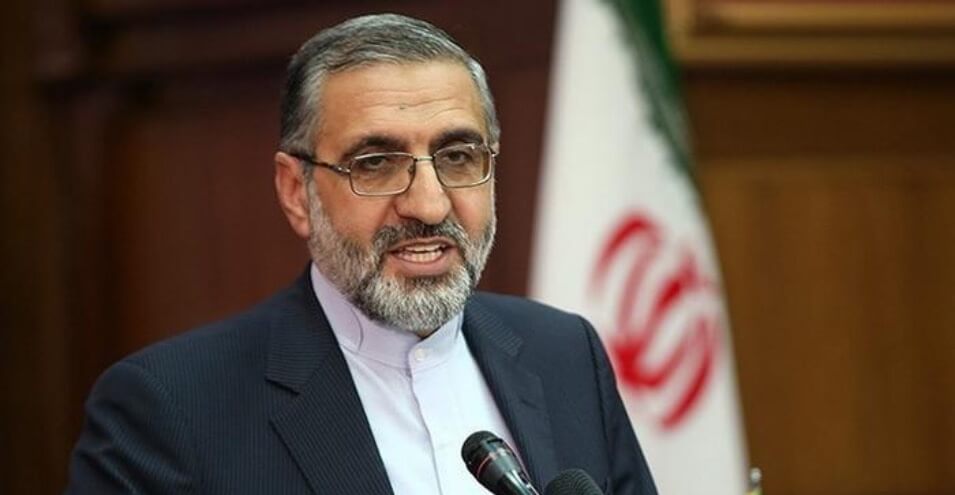
A summary of Hamid Nouri's first round of defenses; "I have the facts, from production to consumption!"
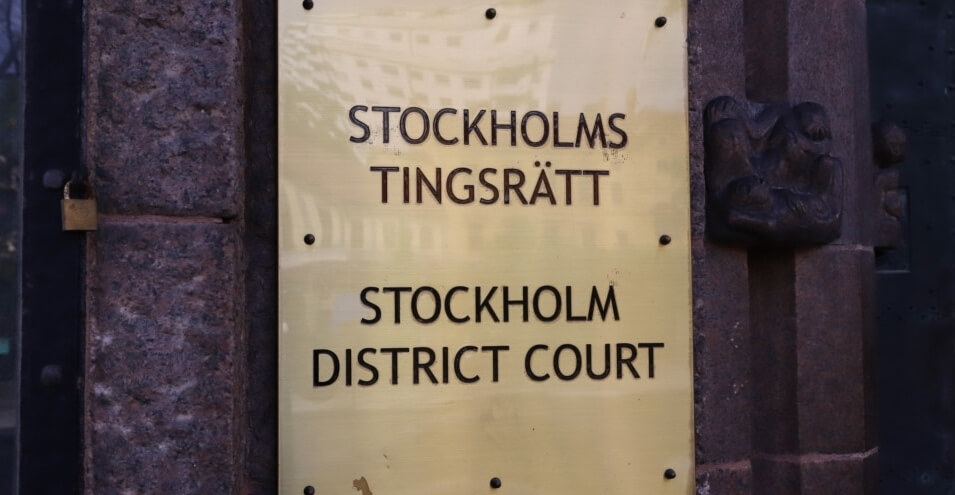
According to the indictment filed by the Swedish prosecutor, Hamid Nouri, alias Hamid Abbasi, is accused of having intentionally taken the lives of a large number of prisoners who were members or supporters of the People's Mojahedin-e Khalq Organization (MEK) and a group of members or supporters of left-wing groups in the summer of 1988, as an assistant deputy prosecutor or in a similar position. The charges against Hamid Nouri are based on the principle of universal jurisdiction and Swedish criminal law, committing war crimes and the intentional murder of political prisoners in the summer of 1988.
His arrest was pre-planned by Iraj Mosadaghi, a prisoner who survived the executions of the summer of 2018, a number of his fellow prisoners, and several lawyers. The defendant's final arrest warrant was issued five days after his arrest on November 12, 2019.
Hamid Nouri's trial began on August 19, 1402. Judge Thomas Sander presided over the trial during this period.
Important and key points of the first round of Hamid Nouri's defense:
The defendant said in the first phase of his defense (forty-third to forty-seventh) hearings:
- The accusations against him are a disgusting play written by his hero, Iraj Mosadaghi, and copied by the witnesses and plaintiffs in the court.
- He was on paid leave for his wife's delivery for a maximum of two months before the birth of his daughter on August 28, 1988 – the day the executions began – and two months after that.
- Most Iranians have a middle name and have mistaken him for someone else.
- The witnesses and plaintiffs in the case are liars and the testimonies are completely contradictory.
- His case has an international dimension and concerns 85 million honorable and dignified Iranians.
- The facts are with him, from production to consumption!
- In Iran, there is no organization called the People's Mojahedin Organization or a prison called Gohardasht.
- If he mentions the name of the People's Mojahedin Organization and Gohardasht Prison in court, he will be arrested upon entering Iran.
- He is the representative of the people from God to end the fictional story of the executions of the summer of 1988 after thirty-three years.
- The executions took place in Evin Prison, but he does not know how the executions were carried out.
- He has never heard a gunshot in prison.
- Perhaps group exercise for prisoners was banned in prison at some point, but he is unaware of it.
- During his ten-year service, he only went to Gohardasht Prison a few times on assignment.
- Between 1985 and 1988, he went to Gohardasht Prison about five or six times to carry out missions.
- He never went inside the cells of Gohardasht Prison.
- He claimed that he met someone with the pseudonym “Hamid Abbasi” in Gohardasht prison. He said that Hamid Abbasi’s real name in Gohardasht was “Hamid Rahmani” or “Hamid Ali Madadi.” The defendant refused to answer any of the prosecutor’s supplementary questions about this person.
- He was responsible for administrative matters and completing the files of prisoners whose leave or temporary release had been approved by the prison warden.
- He never conducted mass interviews with prisoners.
- He always treated prisoners and their families with respect.
- He was not aware of the transfer of prisoners from Qezel Hesar to Gohardasht and learned about this during his detention.
- He has never fought with anyone in his life and is not a violent person.
- His love for prisoners led him to choose to work in prison.
- He was crying for a prisoner who had killed three guards and was being executed.
- His harassment has never reached even a cat.
- In general, the executions of the summer of 1988 are essentially a "fictional and fabricated story."
- He called Ayatollah Khomeini's fatwa on the execution of prisoners a copied paper whose name, like the People's Mojahedin Organization and Gohardasht Prison, is a 33-year-old fake.
- The children of Rajai Shahr Prison wrote an identical list, led by Iraj Mosadaghi and Mehdi Aslani, and set aside 18 days for the execution of "hypocrites" and 9 days for "communists."
- In Operation Mersad or Forough Javidan, 7,000 people, whom he considered "hypocrites," attacked Iranian soil and massacred people, especially in Kermanshah.
- The high number of deaths of the "Mnohakin group" is a reason for creating the story of the executions of 1988 by that "group".
- The prosecutor has confused another operation with Operation Mersad or Forough Javidan.
- ISIS is the "illegitimate child" of the Mojahedin-e Khalq Organization.
- There are no political prisoners in Iran, and the prisoners at that time were all from small groups or sects.
- He turned down a position as deputy assistant prosecutor in the prison.
- No one has the right to insult any prisoner in Iranian prisons.
- Prisoners are not tortured in Iran.
- He confirmed the existence of death tunnels, whips, and sticks not in Iranian prisons but in Iraqi detention centers, and cited Masoud Deh Namaki's film "The Deportees."
- He ruled out forcing prisoners to confess.
- He claimed that the interviews were at the prisoner's own request and had no value.
- Group interviews and the presence of other prisoners as spectators are the will of the prisoner being interviewed and are a form of entertainment and a way for prisoners to meet together.
- He called reports by international organizations such as Amnesty International on the torture and execution of prisoners in Iran "worthless" and said they were not even worth responding to.
- Prison directors, not their assistants and deputies, are responsible for authorizing the transfer of prisoners to other prisons.
- The prison warden and his deputies have no authority in the prison. They are just like warehousemen whose inventory is in the prison, and whatever orders the judicial authorities give them must be carried out and recorded in their prison files.
- It happened that one person was the assistant prosecutor of two prisons at the same time.
- He claimed that during Naserian or Haddad's time in Evin Prison, no documents for arrest and detention were sent to the registry office.
- Of the several thousand prisoners, who he described as "displaced" and "refugees," no documents in favor of the Islamic Republic have been seized.
Hamid Nouri called for an inquiry by Iranian war experts into the Iran-Iraq War and prison affairs regarding the identities of the prisoners as plaintiffs and witnesses in the prosecutor's indictment. He faces a maximum sentence of 25 years in prison if convicted.
Source: Voice of America