US State Department refuses to comment on news of "disagreement with Tehran over Qassem Soleimani case"
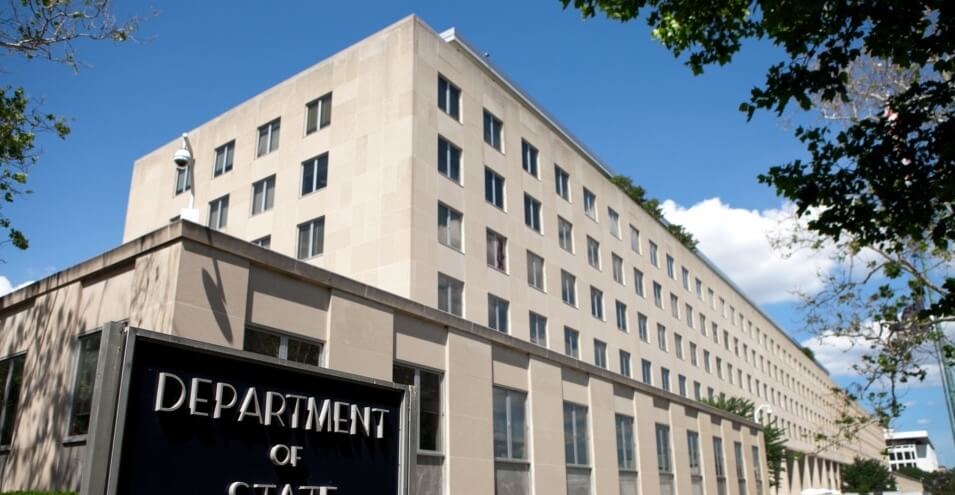
The US State Department declined to comment on reports of its dispute with Tehran over the case of Qassem Soleimani, the former commander of the IRGC's Quds Force.
On Wednesday, April 1, Radio Farda reported, citing a source familiar with the JCPOA revival talks in Vienna, that one of the main US conditions for removing the IRGC from the terrorist list is the Islamic Republic government's commitment to halting operational follow-up to the case of the killing of Qassem Soleimani, and this issue has become the latest obstacle in the nuclear talks.
In this regard, Radio Farda asked the US State Department for an explanation, but a spokesperson for the ministry remained silent on the issue and emphasized that Washington's negotiations with Tehran were not public.
The Islamic Republic emphasizes revenge against those American officials who allegedly played a role in the killing of Qassem Soleimani.
In this regard, in late March, the Associated Press reported, based on a number of documents, that the US government was spending $2 million a month on 24-hour protection for former Secretary of State Mike Pompeo and former US Special Representative for Iran Brian Hook. The two were at the forefront of the Donald Trump administration's "maximum pressure" campaign against the Islamic Republic, and Iranian officials have repeatedly named them as "responsible" for the killing of Qassem Soleimani.
Radio Farda's report on Wednesday also stated that US security agencies have detailed information about Tehran's plans to take action against some officials of the former US administration, and therefore, in response to Tehran's request to remove the Revolutionary Guard from the list of terrorist organizations, Washington has put forward the condition that the Islamic Republic stop its plans to avenge the killing of Qassem Soleimani.
But a US State Department spokesperson told Radio Farda: "We are not negotiating in public and will not respond to specific claims about which parts of the sanctions we are prepared to lift in order to return bilaterally to the JCPOA."
According to statements by officials involved in the Iran nuclear talks and world powers, the talks are nearing their final stages, but some remaining issues have left the outcome uncertain.
According to Josep Borrell, the European Union's foreign policy chief, Iran has demanded "guarantees regarding the Revolutionary Guard Corps," which has made negotiations to revive the JCPOA difficult.
In recent days, American media outlets have written in numerous reports that failure to reach a compromise with the Islamic Republic over the IRGC may cause the Vienna talks to collapse.
The Trump administration designated the IRGC as a terrorist organization in 2019, accusing it of “funding and encouraging terrorism.” The Biden administration, however, says that the current situation “has not made America safer” and that the IRGC has actually “been strengthened” in the process.
US State Department spokesman Ned Price also reiterated this analysis on Wednesday, saying that since Washington's withdrawal from the JCPOA, the designation of the Revolutionary Guard Corps as a terrorist organization, and the killing of Qassem Soleimani, Iran's nuclear program and attacks on American facilities and Washington's partners in the region have increased significantly.
Ned Price: The appropriate solution is to return to the JCPOA
According to freelance journalist Lara Rosen, Mr. Price stated in a press conference: “From 2017 to 2018, there were no significant attacks on American forces and US diplomatic facilities in Iraq.”
He added: "This situation changed since 2018. So that from 2019 to 2020, attacks by Iranian-backed groups increased by 400 percent. This happened after the withdrawal from the JCPOA, the placing of the Revolutionary Guard Corps on the terrorist list, and the killing of Soleimani."
Mr. Price continued: “Efforts to contain Iranian proxies with the strategy we inherited have not worked. We want to have a strategy that works. And we continue to believe that returning to the JCPOA is the right solution.”
However, a US State Department spokesperson acknowledged in his press conference on Wednesday that "some important issues still remain" to reach an agreement to revive the JCPOA, although he did not name these issues.
Source: Radio Farda