US court orders Iran to pay over $14 million to political prisoner
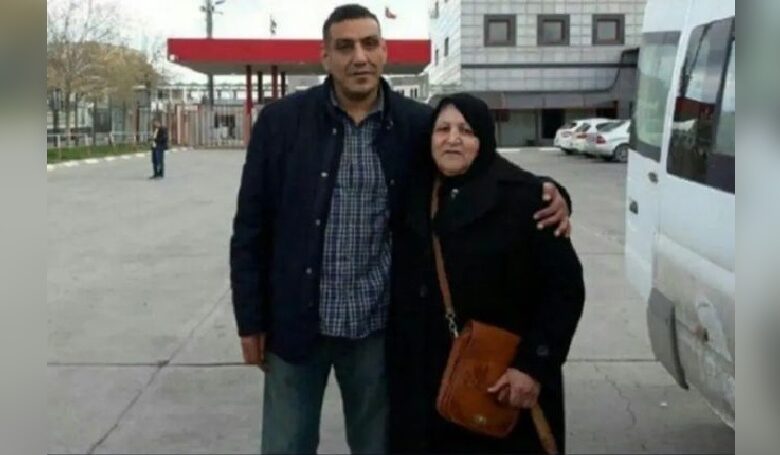
A US court has ruled that Iran is responsible for the physical and mental pain and suffering inflicted on former political prisoner Akbar Lakestani and must pay more than $14 million in compensation.
A federal court in the United States has sentenced the Islamic Republic of Iran to pay $14,233,000 and 2,088 cents for torture, unlawful detention, and permanent physical and mental harm to Akbar Lakestani, a political activist and dual-citizen prisoner.
The verdict is a combination of compensation for damages and a fine or punitive aspect to deter future repetition of such acts. Akbar Lakestani had filed a complaint against Ali Khamenei and Hossein Salami (former commander of the Revolutionary Guards), arguing that his detention was unlawful, that he was subjected to torture, and that he did not receive proper medical care.
In her ruling, Judge Jia Cobb said she accepted the bulk of Lakestani’s claims and, given his injuries, considered “punitive damages” necessary to ensure Iran’s actions were deterrent. Citing similar legal precedents, the court emphasized that Iran’s actions were “extraordinarily deterrent” and amounted to torture and state detention.
Lakestani's complaint alleges that he was subjected to mental and physical torture while in detention in Iran: from lengthy interrogations, beatings, death threats, to being denied medical attention for his diabetes. He also said that his diabetes was not treated and that he was deprived of essential medications, such as insulin.
According to his lawyer, these conditions led to infection and ultimately the amputation of three toes on his right foot and then part of his foot.
Lakestani has gone on hunger strike several times in prison to protest the horrific conditions in the prison. He also claims that he was tied to a hospital bed while unconscious and beaten by officers in the hospital; he was then transferred to a psychiatric hospital and given unspecified medications.
He also said: "Since I returned to America, I have been unable to sleep and am undergoing psychiatric medication."
In addition to seeking personal compensation, Lakestani has a broader goal; he has said he wanted to be a voice for political prisoners and prevent others from repeating what happened to him.
According to his lawyer, the process of proving the claims in the US court was more difficult than in typical cases because Iran did not participate in the trial and was not represented.
Under U.S. law, part of the compensation will go to the Human Rights Victims Fund. Part of the damages (the part that is actual compensation, not punitive) must come from this fund. Lakistani’s lawyer said the fund would come from fines issued against companies or individuals who violated sanctions.
However, his lawyer says the fund doesn't pay out a lot of money to plaintiffs each year, usually only a very small percentage of the fines imposed each period are paid to victims.
Lakestani, a veteran of the Iran-Iraq War and who, according to his statements, served in the Khorramshahr Liberation Operation, was arrested at the border after returning to Iran in 2019 to visit his ailing mother. After being questioned and answered at various interrogation centers, he was first transferred to Urmia Prison and then held in solitary confinement.
During his detention, he was taken to the hospital unconscious due to a hunger strike. After that, according to him, he was told by a crane and a stool that he might be executed. According to Lakestani, after his temporary release, he left Iran and returned to the United States; he underwent psychiatric treatment in the United States and his memory was damaged.
The ruling by the court is an example of an international legal mechanism that allows individuals to hold governments accountable for human rights violations. For the Christian community, it is a message that the value of human dignity and justice is morally important, even when governments violate it.
Lakstani did not seek personal redress with his complaint, but spoke on behalf of many political prisoners. This spiritual and moral representation can be inspiring among Christians, as it shows that the voices of the oppressed can be heard and justice can be pursued across borders.
The punitive part of the sentence is not only to ease Lakstani's pain, but also as a warning message to other states. Such sentences can make states more cautious about human rights violations and help reduce such behavior in the long run. Also, from the perspective of human rights and the Christian faith, not only financial compensation, but also psychological recovery and restoration of personal dignity are very important.