The second "Women, Peace, and Security" conference was held at Georgetown University with the participation of women's rights activists.
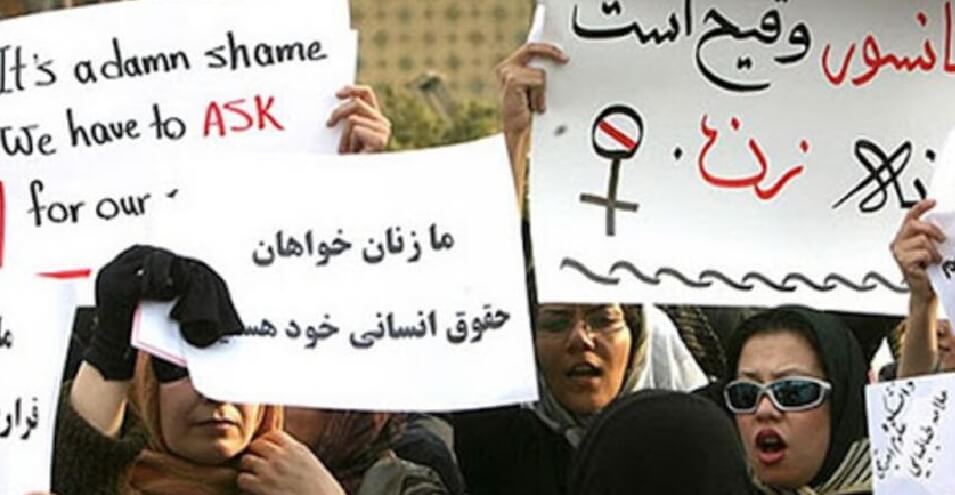
The second meeting of the Institute for Women, Peace and Security at Georgetown University in Washington, DC, was held virtually on September 7th under the title "Women on the Frontlines, Strategies for Change."
The meeting was hosted by Narges Mohammadi, Narges Mansouri, and Giti Pourfazel, three women's rights activists and signatories of Statement 14 from within Iran, who discussed ways to change the status of women in Iran.
Lawyer Giti Pourfazel was one of the special guests at the meeting. He has been in prison since August 2020, but is on leave due to contracting COVID-19 and will return to prison.
Ms. Pourfazel said at the meeting: "Women's organizations must increase day by day. Now we have organizations like the Mothers of Peace that are taking effective steps and protesting, and we must revive those organs and organizations that we had before."
For example, she pointed to the "Women Lawyers' Union, which was founded by Dr. Mehrangiz Manouchehrian and was a member of the International Women Lawyers' Union," and said: "We were able to reflect our legal issues, including cases of violations of women's rights, to the international community. Since she was invited to the United Nations and gave speeches there as an Iranian woman, she was very useful, and this laid the foundation for women to realize their rights and demand them."
He emphasized: "The right must be demanded. It is not given to man just like that, unless man fights for his right."
Narges Mohammadi, a labor and women's rights activist, said at the meeting, referring to the existing solutions in the field of women's activism: "This is the strength of the women's movement in Iran, which has adopted diverse solutions in different periods and has achieved serious achievements."
For example, he pointed to the turn of a large portion of women in social movements of different periods in Iranian society to "civic activities" and said that women from different backgrounds "have been able to create a new chapter in creating change in the status of women."
Narges Mansouri, a labor rights activist, also named people such as Giti Pourfazel, Fatemeh Sepehri, and Shahla Entesari, saying: "Due to the deplorable situation in Iranian society, we considered it our national and patriotic duty to sign and publish a statement called the Statement of 14 Iranian Women Civil Activists. The dictatorial government ruling Iran wanted to take away our civil rights and, in an extralegal action without an arrest warrant, kidnapped us by the IRGC security agency and subjected us to long interrogations, mental and psychological torture, and solitary confinement - which itself is an example of torture - and even death threats. We were convicted and imprisoned in a court of law without a revolutionary court, and a case was fabricated with false charges such as acting against the security of the country."
Shahrzad Samsar, Nazanin Bonadi, Masih Alinejad, and Azadeh Pourzand, women's rights activists, were among the other participants in the meeting who emphasized the need for unity and assistance from the international community, regardless of political, economic, and social orientations, with the aim of changing the status of women in countries such as Iran and Afghanistan.
Source: Voice of America