The footprint of the Iranian Ministry of Defense in food exports to Venezuela
The Iranian Defense Ministry's Etaqa organization has opened a food store in Venezuela, operating in conjunction with a Venezuelan government emergency food program run by the country's military.
The US government says this food program is a cover for money laundering activities and has been sanctioning it since August 2019.
On July 1 of this year, Hojatollah Soltani, Iran's ambassador to Venezuela, announced the sending of food to Venezuela by an Iranian ship and the opening of an Iranian food store in the country.
The Wall Street Journal, in a report published on Sunday, July 5, wrote: "Among the products of this huge store are brands ranging from tomato sauce and canned tuna "Delnoush" to sunflower oil "Varamin," all of which are subsidiaries of the Etka Company."
Issa Rezaei has been the CEO of the Ataka Organization since January 2018. Mr. Rezaei is a senior military manager who has a background in the Basij Cooperative Foundation, the Khatam al-Anbia Construction Headquarters, and the IRGC Cooperative Foundation.
The Wall Street Journal report mentions that the Atka organization belongs to the Revolutionary Guard Corps. However, this statement is not true and the Atka organization is run under the supervision of the Iranian Ministry of Defense.
The foundation of the Etka Organization dates back to 1955, when it began its activities as a military force consumption cooperative and later changed its activities to the Armed Forces Consumption Cooperative Organization.
After the revolution, this organization was placed under the Ministry of Defense, and its CEO and board members are appointed by the Minister of Defense.
The presence of the Iranian Ministry of Defense in the discussion of food exports to Venezuela comes at a time when, during 2017 and 2018, Iranian Defense Minister Amir Hatami had said that, based on the order of the Leader of the Islamic Republic, the ministry had limited its economic activities and divested more than 130 of its companies.
According to a report by the Wall Street Journal, the store affiliated with the Iranian Ministry of Defense has been set up in a location that previously belonged to the "Emergency Food Program" affiliated with the Venezuelan military.
The Venezuelan government's "Emergency Food Program," which was supposed to provide 15 percent of the country's food needs, is run by the country's military.
In August 2019, the United States sanctioned this program, announcing that the three adopted sons of the Venezuelan president and seven other businessmen, one of whom is Colombian, had laundered money for drug gangs, manipulated their audit statistics and imported goods to hide their income and expenses, and stolen government property under the guise of this program.
One of the most important businessmen active in this program was Alex Saab, a Colombian businessman and close associate of Venezuelan President Nicolas Maduro, who was arrested by Interpol police at the airport on Sal Island in the Cape Verde archipelago in late June of this year while traveling to Iran.
In addition to bribery and money laundering charges in Venezuela, he is accused of collaborating with drug trafficking cartels.
The Venezuelan government has said that he was a representative and liaison between Iran and this country for the supply of food, medicine, and humanitarian items, and has condemned Mr. Saab's arrest.
According to a report by the Wall Street Journal, Etka has already entered the Iraqi and Tajik markets and has begun negotiations with Moscow and Damascus to enter the Syrian food market.
Iran and Venezuela are both under severe US sanctions. The US has sanctioned dozens of tankers in recent weeks as part of a broader plan to cut off oil supplies between Iran and Venezuela.
However, Ali Rabiei, a spokesman for the Iranian government, said in an interview with the Russian news agency Sputnik on July 4 that US pressure would not hinder trade relations between the two countries and that if the Venezuelan government requested the shipment of goods, it would be considered "seriously."
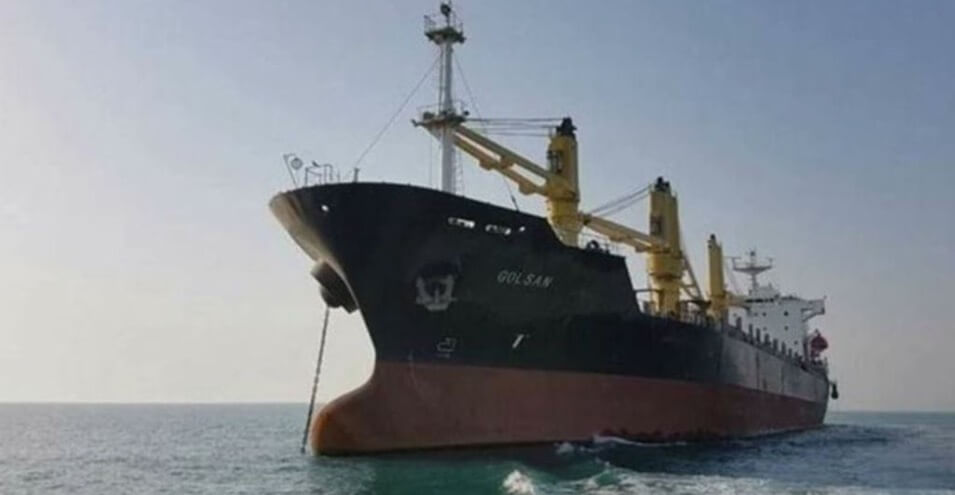
The Iranian Ministry of Defense sent food products to Venezuela via the Golsan ship. The Golsan ship, which unloaded its cargo in Venezuela on July 24, belongs to the Islamic Republic of Iran Shipping Company.
The US State Department announced on June 9 this year that sanctions against the Islamic Republic of Iran Shipping Company had been implemented. The company was placed on the US sanctions list for transporting weapons and participating in the IRGC's missile program.
In another part of the report, the Wall Street Journal referred to a US intelligence document that said Iranian companies need the consent of the Revolutionary Guard to operate and trade abroad, and that Iranian authorities appoint military retirees to manage companies to circumvent sanctions.
"Several officials" told the newspaper that the United States, in addition to Iran's efforts to circumvent sanctions, is also concerned about the transfer of IRGC weapons-making technology and experience to Venezuela.
A Western diplomat said an intelligence report showed that Iran had also transported military equipment, in addition to the equipment and services it had sent on Mahan Air to restart some Venezuelan refineries.
Mahan Air, which has been sanctioned for transporting IRGC military personnel and weapons to Iranian proxy forces in the region, sent engineering equipment to Venezuela a few months ago to revive its refineries, and the Wall Street Journal, citing its sources, writes that along with this equipment, weapons manufacturing technology was also sent.
Reuters also reported last month that Iran had restored some of the disabled capacity of Venezuela's refineries by sending equipment, engineers and services on Mahan flights. The equipment and services belonged to the IRGC's Khatam al-Anbiya base.
Sending gasoline from Iran to Venezuela has been another challenge in recent months.
Five Iranian tankers last month transported 1.5 million barrels of gasoline and chemical products to increase the octane of gasoline in refineries to Venezuela.
US officials say that Venezuela sent 9 tons of gold to Iran via Mahan flights at the same time as sending gasoline.
In response to these deals, US Secretary of State Mike Pompeo described the Venezuelan president's entourage as "thugs," saying they were "the world's biggest thieves" and were partnering with the Islamic Republic, which is considered "the largest regime sponsoring terrorism."
The US government also placed five Iranian captains on its sanctions list on July 24 for violating sanctions on shipping by the Islamic Republic and the National Iranian Tanker Company, as well as transporting gasoline to Venezuela.
On the other hand, US federal prosecutors filed a lawsuit on July 2 to seize the cargo of four oil tankers that were en route from Iran to Venezuela.
The Wall Street Journal previously reported that US prosecutors intend to block Iran from receiving oil revenues sent to Venezuela and stop such shipments in the future.
Source: Radio Farda