Taliban Leader: Women’s Voice is Forbidden Even if Reciting the Quran
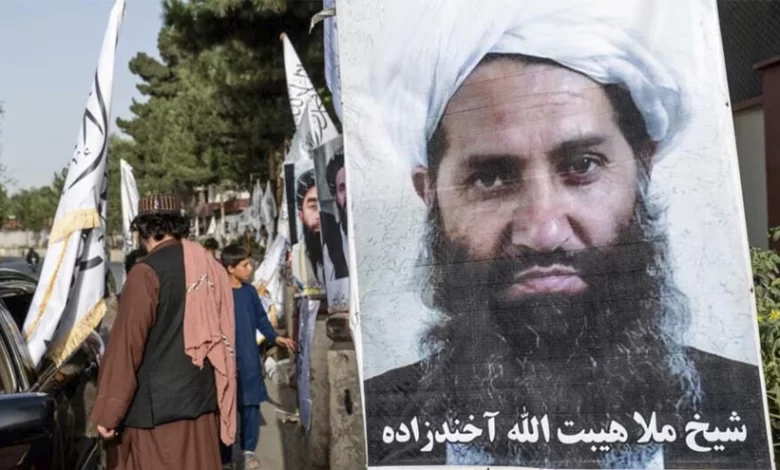
The Taliban leader has issued a new law whereby women’s voices, even if reciting the Quran, are declared forbidden.
“Mulla Hibatullah Akhundzada,” the Taliban leader, has issued new laws titled “Commanding Right and Forbidding Wrong” to the Taliban government for implementation, in which emphasis is placed on restricting women’s voices and faces.
According to the report from Radio Free Europe’s Afghanistan Service, the new law issued by the Taliban leader, which was sent to the Taliban government’s Ministry of Commanding Right and Forbidding Wrong two days ago, affects many people, particularly women and their lives. In Article 13 of the new law announced by the Taliban government’s Ministry of Justice, covering women’s entire bodies is deemed mandatory, and according to this law, “due to fear of temptation, covering women’s faces is necessary.” Furthermore, based on the aforementioned law, women’s voices, even if reciting the Quran, are declared against Islamic law and forbidden.
According to statements by “Abdul Ghafar Farooq,” spokesman for the Taliban’s Ministry of Commanding Right and Forbidding Wrong, yesterday Thursday, August 22, he stated: “The Taliban assure that this Islamic law will greatly help in promoting virtue and preventing vice.”
Women and girls in Afghanistan, in response to this law, considered it “strict restrictions on Afghan women.” Similarly, some women from Kabul and Nimroz criticized the issuance of this law and said: “The Taliban want to draw the world’s attention to themselves by imposing strict laws against women.”
“Heather Barr,” deputy director of Human Rights Watch’s Asia division, in response to this circular, stated: “The Taliban’s new law has restricted human rights for women, and the international community has given the Taliban the audacity to do so. Now it appears that the Taliban feel greater power and boldness, and they are continuing on their path with great enthusiasm.”
According to the report from “Associated Press,” the 114-page, 35-article document of the Taliban’s new law is the first official codified legal document on the subject of Commanding Right and Forbidding Wrong of the Taliban government following their return to power in Afghanistan.