The never-ending process of security clashes with independent lawyers in Iran
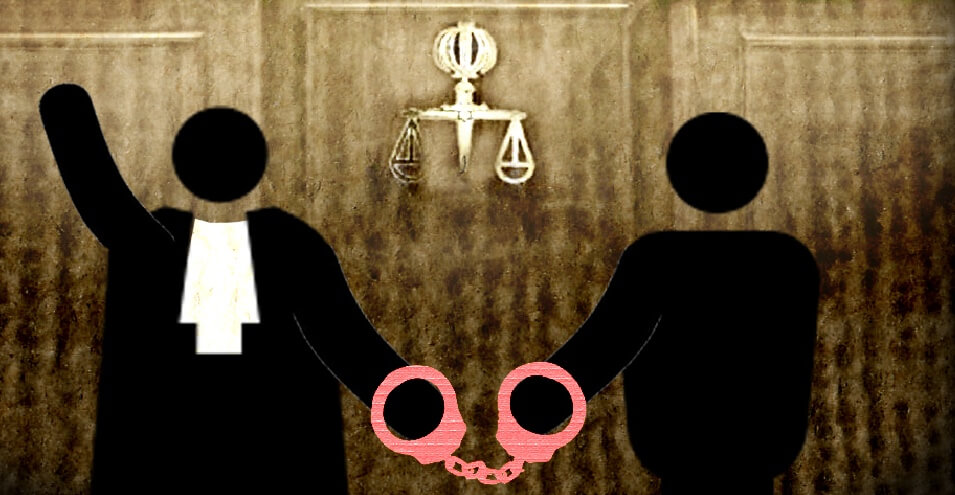
The methods and techniques of the authorities of the Islamic Republic of Iran's judiciary in exerting security pressure on independent lawyers have become a permanent and systematic practice in recent years; the filing of a case against Farzaneh Zeilabi, a lawyer for a group of Haft Tappeh workers, and the six-month ban on this lawyer from working, or the sentencing of Mohammad Hadi Erfanian Kasab, another lawyer, to 95 days in prison, are among the latest clear cases of continuing pressure on independent lawyers in Iran. The issuance of heavy prison sentences to human rights lawyers in Iran, such as Nasrin Sotoudeh, Mohammad Najafi, Amirsalar Davoudi, and Giti Pourfazel, is the result of the government’s ongoing narrative of the activities of independent lawyers in Iran, claiming that these lawyers’ actions constitute “propaganda against the regime” and “against national security.” These false accusations were made in response to the lawyers’ legal and professional activities in defending political and ideological defendants.
The insistence of the judicial authorities of the Islamic Republic of Iran in dealing with independent lawyers is in line with the systematic security pressures in the judiciary against independent lawyers; not long ago, a group of representatives of the Islamic Consultative Assembly signed a plan to "investigate and investigate the authorities issuing attorney licenses," which, according to many, is a new tactic to put pressure on the independence of lawyers and limit the powers of the Iranian Bar Association.
Security crackdown on independent lawyers continues
A cursory look at the actions of the judicial authorities of the Islamic Republic of Iran in the past decades, including in dealing with lawyers in human rights cases and attempts to weaken the Iranian Bar Association, shows that senior judicial officials have used every trick and trick to achieve their goal; the suspension of the professional activities of Farzaneh Zeilabi, the lawyer in the Haft Tappeh sugar factory case, based on a piecemeal interpretation of the Criminal Procedure Code, is the latest example of this trend in the judiciary of the Islamic Republic of Iran.
Shortly after the announcement of the "disqualification" verdict in the Haft Tappeh factory case, Farzaneh Zeilabi was accused of gathering and collusion, propaganda activities against the regime, spreading lies, and membership in hostile groups in a case, and the investigator issued an order banning her from practicing law for six months.
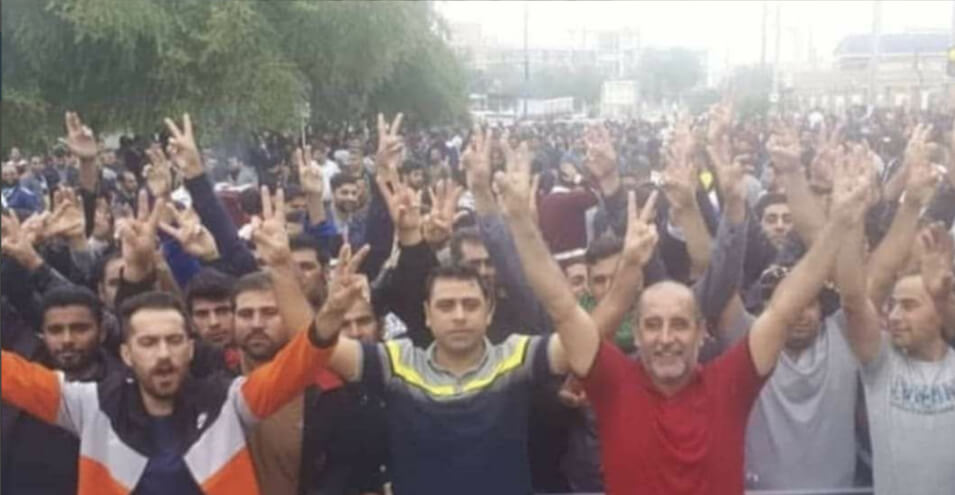
This judicial order was issued at a time when the Haft Tappeh sugarcane factory was recently taken back from the private sector. The demand for the private sector to take over Haft Tappeh was the main demand of the protesting workers of this large factory. In the process of realizing this demand, a number of workers, and of course, workers' rights activists, faced severe security and judicial confrontations.
Nasser Zarafshan, Ms. Zeilabi's lawyer, told the Human Rights Campaign in Iran about the order banning his client from working: "This order was issued based on Article 247, Section 5 of the Code of Criminal Procedure, according to which the investigator can, in addition to issuing a security order, issue a judicial supervision order that includes one or more of the aforementioned orders for a specific period, in accordance with the crime committed."
Nasser Zarafshan, noting that this judicial order was issued in accordance with paragraph 5 of this article, which means “prohibition of engaging in activities related to a committed crime,” told the Campaign for Human Rights in Iran: “Emphasis on this paragraph of the legal article implicitly implies the assumption that we are dealing with a committed crime. With this interpretation of paragraph 5 of this article, the inferred meaning is that advocacy is related to committed crimes.”
According to Nasser Zarafshan, Article 247 of the Code of Criminal Procedure relates to the powers of the investigator and the supervisor in cases that are still in the investigation stage. Therefore, just as it is likely that the defendant will be found guilty after this stage, there is also an equal chance that the charges will be unfounded and the defendant will be acquitted in court.
Explaining that "crime" has a specific definition in judicial language and that a person's crime is only determined before the court, lawyer Farzaneh Zeilabi said: "When a case is in the investigation stage, it means that no crime has yet been determined. In other words, the accused in the investigation is still in the accusation stage, and at this stage, we cannot speak of a crime in any way."
According to Nasser Zarafshan, "Given the issuance of an order denying access to the contents of the case, my client did not have access to these contents, and the charges that the investigator explained to my client include gathering and collusion, propaganda activities against the regime, spreading lies, and membership in hostile groups."
Nasser Zarafshan believes that such interpretations of Article 247 of the Criminal Procedure Code are a dangerous heresy that specifically targets the independence of the legal profession.
In response to the question of what is the reason for the security and judicial pressures in Ms. Zeilabi's case, Nasser Zarafshan told the Campaign for Human Rights in Iran, "If we go beyond the purely legal arena, it is clear that the issue is political and class-based; it is natural that those who take over the national wealth and common property of the people at a cheap price under the guise of privatization have power, influence, and connections in the government and are not sitting idle."
According to Nasser Zarafshan, "Ms. Zeilabi is actually paying the price for defending the Haft Tappeh workers, and there is no material element in Ms. Zeilabi's accusations at all, and it is clear that this is a form of revenge against my client."
In another recent crackdown by the judiciary on independent lawyers, attorney Mohammad Hadi Erfanian Kassab was sentenced to 95 days in prison for what he described as an interview about the killing of his client, political prisoner Alireza Shirmohammadi. Alireza Shirmohammadi, a political prisoner of conscience, was attacked in prison by two other prisoners on June 10, 2019 and died.
Amirsalar Davoudi, Nasrin Sotoudeh, and Mohammad Najafi are among the independent lawyers whose main charges have been brought against them solely because of their work in human rights cases.
The government's determination to destroy the independence of the Iranian Bar Association
Regardless of security clashes with independent lawyers, the process of weakening the independence of the Iranian Bar Association is being pursued seriously by the country's judicial authorities. A process whose roots can be traced back decades; from the establishment of an institution parallel to the Bar Association called the "Center for Lawyers, Experts and Family Advisors of the Judiciary" in April 1990 to the addition of a note to Article 48 of the Criminal Procedure Code and limiting the selection of lawyers by political defendants from among the list of lawyers approved by the head of the Judiciary in June 2015; or from the establishment of the General Directorate of "Supervision of Lawyers" within the structure of the Judiciary in October 2019 to the plan to "investigate and investigate the authorities issuing judicial attorney licenses" in May 2019.
Nasser Zarafshan evaluates the ban on Farzaneh Zeilabi on a larger scale, apart from the unprecedented treatment of lawyers themselves. Noting that a lawyer must have “immunity” and “freedom” in order to defend himself, he told the Campaign for Human Rights in Iran, “The court can reject or accept the lawyer’s defense, but it cannot prevent the lawyer from speaking by applying pressure or other means. When there is a threat that the lawyer will lose his job due to his professional work by invoking this clause (clause c of Article 247 of the Code of Criminal Procedure), it means that they have already prevented him from performing his professional duties as a lawyer, and this is a clear example of censorship.”
Stating that a lawyer cannot be "persecuted" for performing his professional duties, Nasser Zarafshan told the Campaign for Human Rights in Iran: "If invoking Article 247, Section 5 of the Code of Criminal Procedure to prohibit lawyers from practicing or revoke their law licenses becomes a procedure in the judiciary, then a lawyer will no longer have freedom in his position of defense, nor will immunity for lawyers in performing their professional work have any meaning."
Emphasizing that the incident of issuing a judicial order for Farzaneh Zeilabi is a warning to the legal community, Nasser Zarafshan says: "If citing this clause of Article 247 of the Code of Criminal Procedure becomes an innovation, then this issue will fall like a sword on the heads of lawyers, especially in cases like this, and the lawyer will not be able to defend himself fully and freely for fear of losing his job and life by citing this clause."
According to Nasser Zarafshan, "The current issue is not unique to Ms. Zeilabi's case, but is a general issue that requires bar associations and unions to also get involved, because the first duty of a trade union is to protect trade union interests."
According to Nasser Zarafshan, the behavior of the judicial authorities is in line with a long process of depriving freedom and weakening the institution of the Bar Association, and is in complete contradiction with the bill on the independence of the Iranian Bar Association.
The issuance of a ban on Farzaneh Zeilabi, the lawyer in the Haft Tappeh sugar factory case, prompted 366 lawyers to write a statement, declaring the issuance of this judicial order "a strange heresy, contrary to the law and fairness," and calling for it to be overturned.
In a statement in response to the issuance of this judicial order, the Gilan Provincial Bar Association considered this action to be equivalent to "disregard and disbelief in the principle of independence of this civil and professional institution," which is emphasized in Article 1 of the bill on the independence of the Bar Association, and its requirement is to remain immune from professional threats and restrictions from the security and judicial apparatuses.
Source: Iran Human Rights Campaign