Economic Background of the Protests in Khuzestan

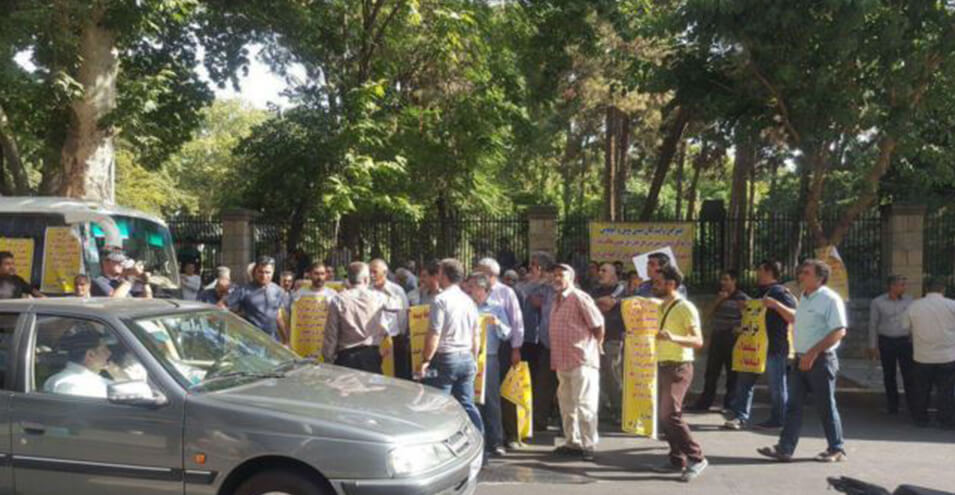
Demonstrations and protests against water shortages continue in various cities in Khuzestan, and what makes understanding these protests possible is examining the most important characteristics and economic and social bottlenecks of Khuzestan province.
Demonstrations and protests against water shortages continue in various cities in Khuzestan, and what makes understanding these protests possible is examining the most important characteristics and economic and social bottlenecks of Khuzestan province.
Despite its many rivers, Khuzestan has been one of the most water-rich provinces in the country. At the same time, the agricultural, horticultural, and livestock sectors of this province are dependent on access to water.
Therefore, the shortage of water access is severely affecting the economy of this region of the country and, combined with the constraints of its damaged economy, is quickly turning into an economic crisis.
Some of the most important features and economic bottlenecks of Khuzestan
According to the latest statistics published by the Statistics Center, Khuzestan was ranked fifth in the country in terms of population in 2019 with a population of more than four million and 800 thousand people. Based on the same statistics, Khuzestan province ranked second in terms of GDP after Tehran province, with more than 14 percent. The majority of this added value is, of course, based on the production of the oil industry.
Statistics related to Khuzestan in terms of population and share in GDP should be compared to the province's low participation rate (percentage of citizens participating in the labor market and job search), which is 40 percent and ranks 18th in the country.
Unemployment among the population between the ages of 15 and 24 in this province is more than 33 percent, and the total unemployment rate in this province is more than 25 percent, according to some officials. Confirming this, Habib Aghajari, a representative of Mahshahr, said recently that despite the large industries in this region: “The unemployment rate in this region is about 25 percent.” He also mentioned the water crisis and marginalization as other problems in this region.
The lack of use of local labor in provincial projects is also considered one of the reasons for this high unemployment rate. Thus, despite the increase in the number of university graduates, the provincial labor market is unable to absorb them.
In this regard, more than 26 percent of the households in this province are defined as households below the poverty line. Also, the business ranking of this province is 19, which is not very consistent with the GDP ranking of this province in the whole country.
According to the report of the Ministry of Welfare, Cooperatives and Labor titled "A Brief Look at the Development Indicators of Khuzestan Province (First Edition)," the most important bottlenecks of the province are: the widespread level of poverty and marginalization, as well as the second rank of marginalization in the country. In addition, the large number of families without guardians, abusive guardians, and child marriage are other problems of this province.
According to the Ministry of Welfare, Cooperatives and Labor in the aforementioned report, in terms of social problems, Khuzestan is higher than the national average in terms of theft and is also the third province in terms of the growth of addiction. The murder rate in the province is also higher than the national average.
The low employment rate of women (ranked 24th in the country) and the low rate of health service indicators compared to the rest of the country are other bottlenecks in this province. Overall, these chaotic conditions have caused Khuzestan to lose the ability to attract immigrants and become an immigrant-first province.
Rentier government: resource distribution based on proximity to the top of the governance pyramid.
The water crisis in Khuzestan is not a new predicament, and despite the promises of the authorities and the political and security risks related to water for the government, this problem still persists. In an economy based on the distribution of privileges among power blocs and rent-seeking and rent-seeking, long-term economic priorities and growth capacity do not determine the distribution of resources.
Therefore, public goods such as water, security, education and training also enter the cycle of rent and privilege distribution and become a kind of rent. In this regard, it is proximity to the centers and power groups, and especially the person and team of the government leadership, that determines the distribution of resources. Similarly, in the conflicts between the government and the parliament, it is ultimately the interests of the power groups at the top of the government that shape the budget structure.
Therefore, areas that are not close to these centers in terms of geography, politics, ethnicity, and rent distribution do not benefit much from economic, political, and status resources. Therefore, it can be said that Khuzestan, despite being the second-ranked economy in the country in terms of GDP, is not a priority in terms of resource distribution from a governance perspective.
Although the government and the ruling parliament claim to be managing the Khuzestan water crisis immediately and on an emergency basis, overcoming the water crisis requires access to time, and at the same time, long-term economic resources, including credit and investment, as well as transparency, accountability, and efficiency of organization and management. None of these resources are, at least in actual form, available to the government.
Implementing emergency and emergency plans to solve the accumulated problems of this province, which are tied to its economic structure, is nothing more than a waste of resources and temporarily hiding the crises in the current situation and transferring them to the future. Crisis management goes through the path of solving the root causes of crises that are structural and institutionalized, and requires structural transformation in the economic and, of course, political arenas.
Source: Radio Farda