"Alliance Against Nuclear Iran" Organization: Iran's judicial system is one of the most cruel and unfair judicial systems in the world
The "Unity Against Nuclear Iran" organization has published an article on its website, examining the issue of the brutal suppression of opponents of the ruling regime in Iran and its leaders by the Islamic Republic's judicial system.
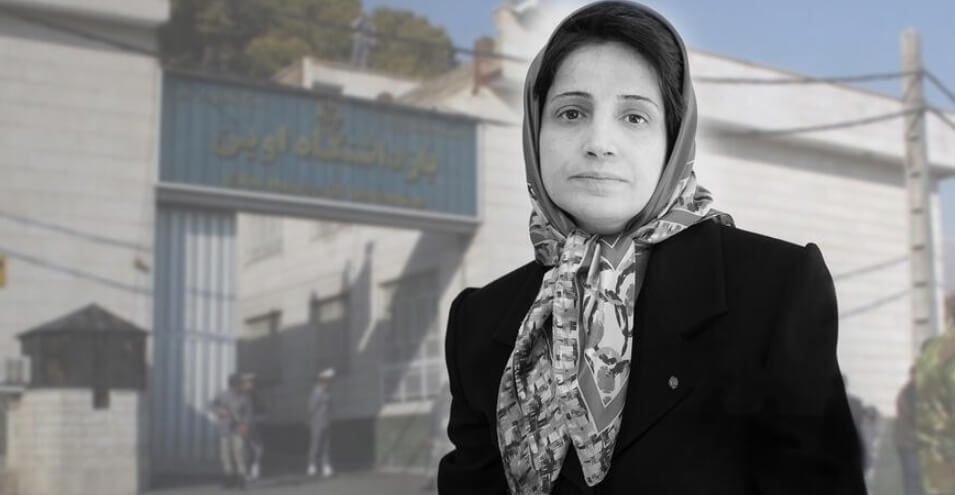
At the beginning of this article, the "Unity Against Nuclear Iran" organization raised the issue of a decade of government repression against Nasrin Sotoudeh, a lawyer and imprisoned human rights defender, who ended her hunger strike after 49 days last week due to her deteriorating physical condition.
The article states that Ms. Sotoudeh, who was first arrested by Iranian regime officials 10 years ago, risked her physical health to draw attention to the poor and unjust conditions of political prisoners.
In 2019, Ms. Sotoudeh was sentenced to one of the harshest sentences ever handed down by the Iranian judiciary to a human rights defender, namely 38 years in prison and 148 lashes, on trumped-up charges including gathering and colluding against national security, spreading lies, and disturbing public opinion.
The Coalition Against a Nuclear Iran organization has republished an article by Jason Rezaian, a Washington Post writer and former hostage in Iran. Mr. Rezaian writes that the Iranian regime is increasingly targeting activists like Ms. Sotoudeh for their role in defending freedom and fundamental human rights.
One of the resources from the Coalition Against Nuclear Iran, titled “Iran’s War on Protesters: Death, Detention, and Darkness,” provides an overview of the leaders of the Islamic Republic, whose job it is to suppress dissent and violently target civilians and protesters in that country.
In this article, the "Unity Against Nuclear Iran" organization, by providing another source titled "Cruel and Inhumane: Executions and Other Punishments in Iran," has described the injustices of the Islamic regime's judicial system and the shameful violation of human rights in that country.
The organization has also introduced Ebrahim Raisi, head of the judiciary and a potential candidate to succeed Khamenei, and Abolghasem Salavati, known as the "Judge of Death" and one of Iran's most notorious judges.
The "Unity Against Nuclear Iran" organization continues this article by calling Iran's judicial system one of the most brutal and unjust judicial systems in the world, and writes that the Iranian regime violates the human rights of its citizens by arresting, detaining, imprisoning, and often executing individuals - for committing "crimes" that are in fact considered violations of basic and fundamental rights and freedoms.
The article goes on to say that many of these crimes are vaguely defined, allowing the regime to use them to arbitrarily detain and punish people. These crimes include charges such as “propaganda against the government,” insulting government officials, and women attending public gatherings without adequate head coverings.
The United Against a Nuclear Iran organization has noted that the brutality and inhumanity of Iran’s penal system is not limited to executions. Individuals may be arrested without having committed any crime, on false and fabricated charges, and detained indefinitely, and subjected to degrading treatment – including torture and denial of access to lawyers and legal counsel – in order to extract confessions. They also hold prisoners in Iran’s overcrowded prisons, where they are subject to torture, rape, and other crimes.
At the end of this article, it is stated that just last week, 38 people were arrested across Iran after protests in support of the Republic of Azerbaijan.
The Coalition Against a Nuclear Iran is a bipartisan, nonprofit group that works to prevent Iran from achieving its nuclear weapons ambitions.
Source: Voice of America