The pillars of ISIS's economy have collapsed.
Note – In the global history of terrorism, which has very ancient roots, no terrorist network has achieved financial resources at the level of the caliphate known as the "Islamic State of Iraq and the Levant" (ISIS). But ISIS's rich treasury did not last long, and following the defeats it suffered over the past year, which ultimately led to the liberation of the large Iraqi city of Mosul, its financial resources have also deteriorated sharply. Today, it is safe to say that the backbone of the "economy" of this self-proclaimed state has been shattered.
The birth and survival of a terrorist group is tied to financial resources. Terrorists need money to protect themselves from the risk of persecution and arrest, as well as to move, to provide food and shelter, and, most importantly, to obtain weapons and explosives. Maintaining a terrorist network in a city and a region over a more or less long period of time (the terrorists of September 11, 2001, or the terrorists responsible for the massive Paris attacks of November 2015) requires considerable financial resources that are not easy to obtain painlessly.
When a terrorist organization establishes a permanent and organized presence in a territory and takes control of it (the establishment of al-Qaeda in Afghanistan, the Taliban, or the establishment of ISIS in Iraq and Syria), the costs increase astronomically. At its peak, ISIS controlled a population of eight million people over a relatively large territory.
In these circumstances, this terrorist organization, like a government, sets up a ministry, appoints a ruler and governor, has thousands of salaried employees, and its military expenses skyrocket. Let's not forget that "ISIS" turned to the most important manifestation of sovereignty, which is "coining," to prove its "statehood." In fact, this terrorist organization, imitating the Umayyad monetary system, issued gold, silver, and copper coins in the lands under its control, hoping that one day it would end the "arrogant" dominance of the dollar with these coins.
Where does such a vast organization get its funding from? Before it faced massive attacks in Mosul and Raqqa, ISIS mainly financed itself from eight main sources:
1) Oil – At the height of ISIS's power, 25 to 35 percent of its financial resources came from the sale of oil extracted from about eight to ten oil fields in Iraq and Syria, which were under the organization's control.
To manage the fields, refineries, and oil-related business, ISIS had created an organization similar to a real national oil company, composed of some of the old Syrian and Iraqi oil personnel and even highly paid experts from outside the region who had come to serve the organization. ISIS supplied its oil to customers, especially in Syria and Iraq, as well as neighboring countries, at a level much lower than the market price, and in this area, it used the infrastructure that Saddam Hussein's regime had created during the sanctions.
Before ISIS's oil fields and facilities were destroyed under the pressure of coalition attacks and a large part of the lands of the "Islamic Caliphate" were lost, the organization's income from oil was estimated at around two to four million dollars per day.
2) Taxes – ISIS, which considers itself a state, collects taxes from the population living in the territories under its control. This includes taxes on consumption, on communication services, on the movement of trucks, the collection of a tax on the “People of the Book”, etc. Of course, given the poverty prevailing in these territories, the income generated from this place is most likely not high.
3) Seizure of people’s property – The property of people fleeing areas under ISIS control or those accused of violating the laws imposed by this organization is seized. At the height of its power, ISIS seized a large portion of agricultural land as well as real and movable property of people in the territories under its control and earned huge income from their exploitation or sale.
4) Financial Aid – There are conflicting reports about direct financial aid from some governments to ISIS. However, there is no doubt that the wealthy in the Gulf Arab countries have helped the birth and rise of ISIS with their financial aid. It is even said that the aid from this source was, in the beginning, the most important source of financing for this organization.
5) Hostage-taking - Capturing citizens of Western countries and representatives of international organizations and releasing them in exchange for large sums of money has been another source of income for ISIS over the past few years.
6) Bank looting – In all the cities that ISIS occupied, the money in the bank branches fell into the hands of the organization. The most important booty that poured into the ISIS treasury in this way was obtained with the conquest of Mosul in the spring of 2014. It is said that about five hundred million dollars were looted by ISIS from the branch of the Central Bank of Iraq in this city.
7) Selling human organs – Both Iraqi medical sources and the High Commissioner for Human Rights say that ISIS makes money by selling the organs of prisoners and executed prisoners, as well as wounded soldiers.
8) Selling Antiquities – ISIS shows the destruction of historical monuments in its propaganda videos. Today, it is safe to say that before explosives are used in these monuments, parts of them that seem saleable are separated from the whole and placed at the disposal of other mafia networks that specialize in selling historical monuments.
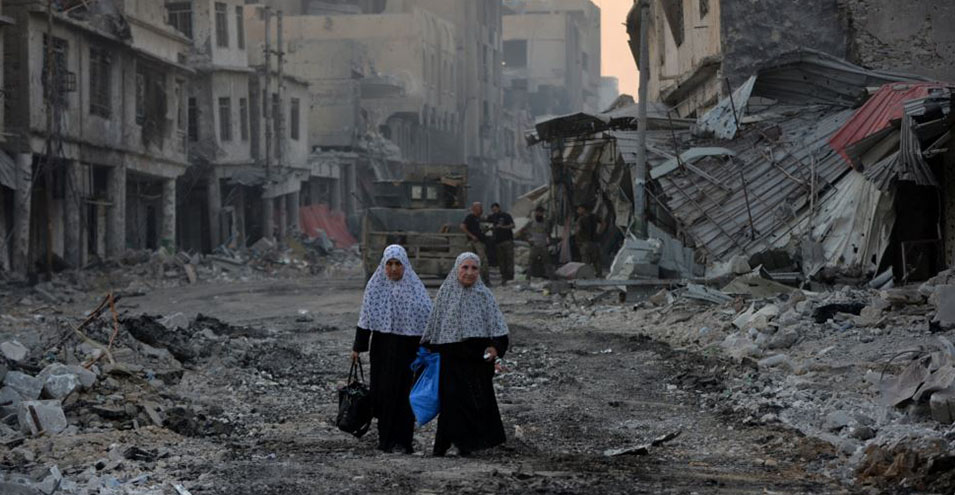
With the liberation of Mosul from ISIS, the self-proclaimed Islamic caliphate has entered the final stages of collapse, having lost more than sixty percent of the territory it controlled compared to its peak. Along with this significant retreat, the terrorist organization's financial resources have also collapsed significantly.
According to sources familiar with ISIS’s financial capabilities (including IHS Markit), the organization’s revenues have fallen by a fifth over the past two years. With the loss of territory and the destruction of oil fields due to airstrikes, the organization’s income from oil has fallen by a tenth. Under pressure from financial constraints, ISIS has significantly reduced the salaries of its fighters.
The collapse of economic resources, like the heavy military defeats, portends the complete collapse of the self-proclaimed Islamic caliphate in the near future. Of course, this collapse does not mean the end of ISIS terrorism. There is a risk that, at least in the short term, the fighters of the defeated ISIS state will intensify their terrorist attacks. However, as the organization’s financial sources dry up, it seems unlikely that these attacks will continue for long.
Source: Radio Farda