Radar silence of the USS Abraham Lincoln is a worrying sign of escalating military tensions between the US and Iran
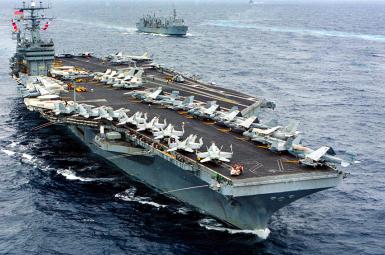
The radar blackout of the Abraham Lincoln and the simultaneous US military movements in the Middle East have made radar silence one of the most serious signs of escalating military tensions between the US and Iran.
Reports based on maritime surveillance data indicate that the USS Abraham Lincoln strike group deactivated its Automatic Identification System (AIS) as it approached Middle Eastern waters, an action known in military literature as "electronic silence" or entering a quasi-stealth state, and is usually considered a precursor to deployment in advanced operational or security situations.
Military analysts have warned that turning off a carrier's positioning transponders, especially in times of regional tension, often means moving beyond the staged deterrence phase and into the operational readiness phase. The disappearance of the USS Abraham Lincoln from public ship tracking maps has quickly raised the level of alarm about the possibility of direct conflict between the United States and Iran.
At the same time, reports have emerged of an unusual increase in U.S. Air Force refueling flights to the Middle East, a pattern that in U.S. military doctrine usually coincides with preparations for large-scale air operations. Three to four of the planes are reportedly headed to Al Udeid Air Base in Qatar, while others have landed at bases in Europe.
The Wall Street Journal also reported that Patriot and THAAD air defense systems have been moved to the Middle East, a move generally linked to concerns about missile attacks or Iranian retaliation.
While the military activity continues, the US embassy has announced that operations at Al-Udeid Air Base have returned to normal. The embassy also advised US citizens and personnel to continue to strictly follow security guidelines. Al-Udeid, which is home to about 10,000 US troops, is the largest US base in the Middle East and any changes in its status are closely monitored by regional observers.
The news website "The New Arab" also described this decision as a sign of a reduction in the threat level, writing that this action was taken after the partial withdrawal of American forces last week and amid escalating tensions.
On the political level, the rhetoric has escalated dramatically. US President Donald Trump said in an interview with News Nation on Tuesday, January 20, that “very strong orders have been issued and if Iran launches any attack, they will be wiped off the face of the earth.”
In contrast, Iranian Foreign Minister Abbas Araqchi warned in a note in the Wall Street Journal that if Iran is targeted again, Tehran will respond with full force.
"Contrary to the restraint Iran showed in June 2025, if we are attacked again, our powerful armed forces will have no hesitation in using their full might. This is not a threat, but a reality that I feel compelled to state clearly because, as a diplomat and a veteran, I find war deeply abhorrent," he wrote in his message.
Araqchi also added: "Any full-scale confrontation would undoubtedly be horrific and would last much longer than the imaginary timelines that Israel and its agents are instilling in the White House. Such a battle would encompass the entire region and affect the lives of ordinary people around the world."
Simultaneously with these positions, the US Central Command (CENTCOM) announced that F-15E fighter jets had arrived in Jordan and that the Abraham Lincoln Strike Group, along with destroyers, F-35 fighters, and electronic warfare aircraft, was moving towards the region.
These developments come as Araqchi was barred from attending the World Economic Forum in Davos over the killing of protesters in Iran, and domestic protests remain a source of tension between Tehran and Washington. Videos released despite widespread internet blackouts in Iran show security forces firing directly at unarmed protesters, images that Iranian officials have not commented on.
Meanwhile, there have been reports of an Iranian drone and missile attack on a base of an Iranian Kurdish group in Iraq, which, if confirmed, would be Iran's first overseas operation since the protests began. Restrictions have also been imposed on the movement of US diplomatic staff in Kuwait and Qatar to military bases.
According to these reports, Gulf Arab diplomats have urged the US government to refrain from any direct attack on Iran. Iran also sent a signal of preventive preparedness against possible military scenarios by closing its airspace last week.
The shutdown of the Abraham Lincoln's radar, although not alone a sign of imminent war, along with air movements, the transfer of defense systems, the intense verbal war, and the unstable domestic situation in Iran, presents a worrying picture of a region that is on the verge of a costly decision; a decision whose consequences could affect the lives of millions of defenseless people beyond the Middle East.