Death toll from Yurt mine explosion reaches 35
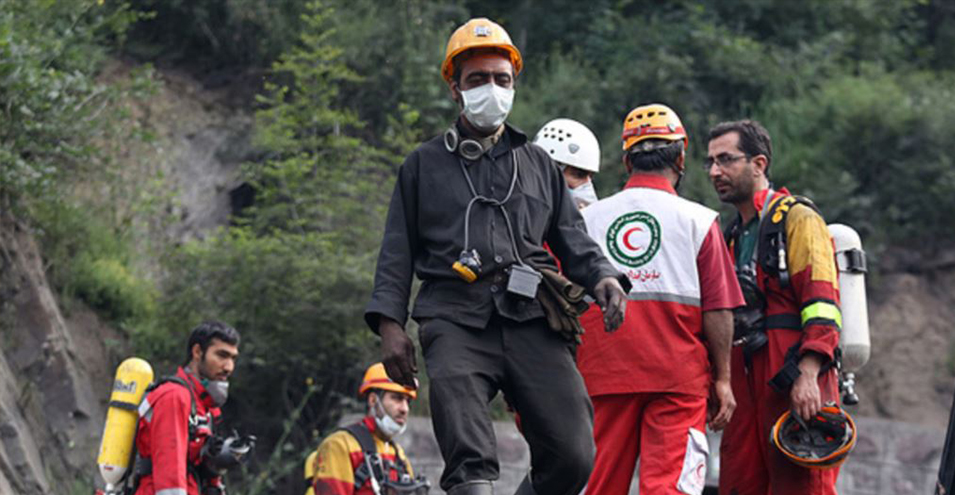
The head of crisis management for Golestan Province announced on the morning of April 8th the discovery of 13 more miners’ bodies in the depths of the disaster-stricken Yurt mine. With this count, the death toll from the explosion in this mine has reached 35.
Iranian news agencies, citing senior officials from Golestan Province’s crisis management, say efforts to extract the newly found bodies are ongoing. No reports have yet been released regarding the transfer of the bodies out of the mine site.
Sadegh Alimoghaddam, the head of crisis management for Golestan, told reporters that rescuers have managed to reach the location where miners’ bodies were trapped through tunnel number two. Hamidrezaa Montazeri, his deputy, also told ILNA news agency that the identity of the deceased has not yet been determined.
Previously, Ismail Najjar, the head of the Crisis Management Organization, had stated that following the Yurt incident, 35 workers were trapped in the tunnel. However, Montazeri told ILNA that “search operations have not concluded” and the search “continues to find possible additional bodies.”
The number of bodies found or transferred out of the mine by the morning of Monday, April 12th was reported to be 22.
The Yurt mine disaster occurred in Azadshahr, Golestan Province, on April 8th following an explosion. Government officials say an investigation into the cause or causes of the accident is underway.
On Sunday, Hassan Rouhani, Iran’s president, who had gone to the site for a visit, was confronted with protests and chants from a number of demonstrators at the location. Rouhani left the site amid the protests.
Iran’s president, however, told the families of the deceased: “Those responsible for the accident and anyone who bears fault must be identified, and they must be dealt with proportionally to their wrongdoing. There are no exceptions in this regard, and this is a matter that the government and I personally emphasize.”
The Yurt mine in Azadshahr had five active tunnels for extracting “coke stone” and one tunnel ready for exploitation, with an annual extraction capacity of 100,000 tons.
Source: Radio Farda