Record Low Rainfall Registered in Iran Over Past 50 Years
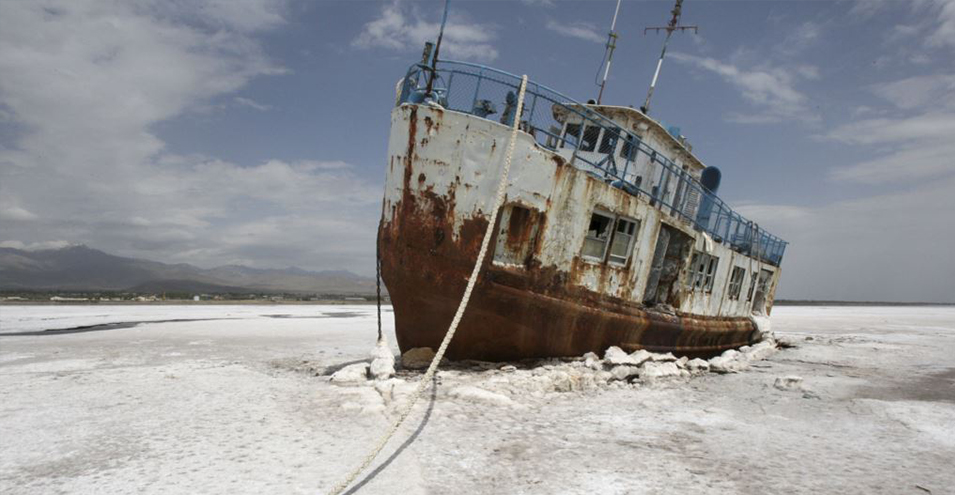
A senior official from the Ministry of Energy says the current solar year has recorded the lowest rainfall over the past five decades in Iran. The Organization of Forests, Rangelands and Watersheds also stated that out of 600 plains in the country, 355 plains are “without water.”
Rahim Midani, Deputy for Water and Wastewater Affairs at the Ministry of Energy, warned on December 24 about the decline in rainfall in 1396. Mr. Midani said that water inflow to major dams in Iran in the current year has been 30 percent less than the same period last year.
From Mr. Midani’s remarks, it appears that the current year’s rainfall is significantly lower than the initial forecasts of the Meteorological Organization.
In addition to some drainage basins such as the Persian Gulf experiencing a 67 percent drop in rainfall, some provinces that were “expected to have good rainfall” also experienced rainfall decreases between 40 to 75 percent.
As Iran’s Deputy Energy Minister stated in his remarks on Sunday, “the rainfall situation was only normal in Ardabil and Golestan provinces.”
Simultaneously, a senior official from Iran’s Organization of Forests, Rangelands and Watersheds also warned about “the destruction of water-preserving resources” and “increasing water scarcity problems.”
Negahdar Eskandar Shirri, on December 24 in an introductory session, said “the rate of groundwater depletion in the country due to excessive withdrawals has been about six billion cubic meters per year.” According to Mr. Eskandar Shirri, “this process has caused concern among many experts in the field of water and soil.”
These statements came only a few days after Tehran’s governor warned about drinking water shortage in the capital. Isa Farhadi, last Thursday, made similar remarks to those of the Energy Ministry official and said that over the past five decades, the lowest water level has been recorded in Tehran.
Experts, analysts, and a number of government officials have warned in recent years about the crisis caused by drought and water shortage. At the same time, reports about securing necessary funding to address this crisis have been published. For example, Tabnack news agency on December 9, referring to the “five billion dollar withdrawal” by the government from the foreign exchange reserve fund in 1387 to deal with the consequences of drought, states that the current government has difficulties even in “securing much smaller amounts.”
Alongside these, however, criticism about budget allocation to other issues has been raised. Following the publication of the details of the 1397 budget, campaigns emerged in cyberspace titled “changing the budget in favor of the people;” some of these campaigns called for reducing budgets for seminaries, radio and television, and military institutions.
Drought and its consequences in Iran have also been accompanied by civil and citizen protests. Last week, the scientific journal Scientific American, in an analysis, said the consequences of climate change, drought, or mismanagement are alongside important challenges facing Iran. According to this publication, this crisis could be one of the reasons for recent protests in Iran and may lead to other protests in the years to come.
Source: Radio Farda