Raisi Should Be Tried for His Crimes, Not Become President
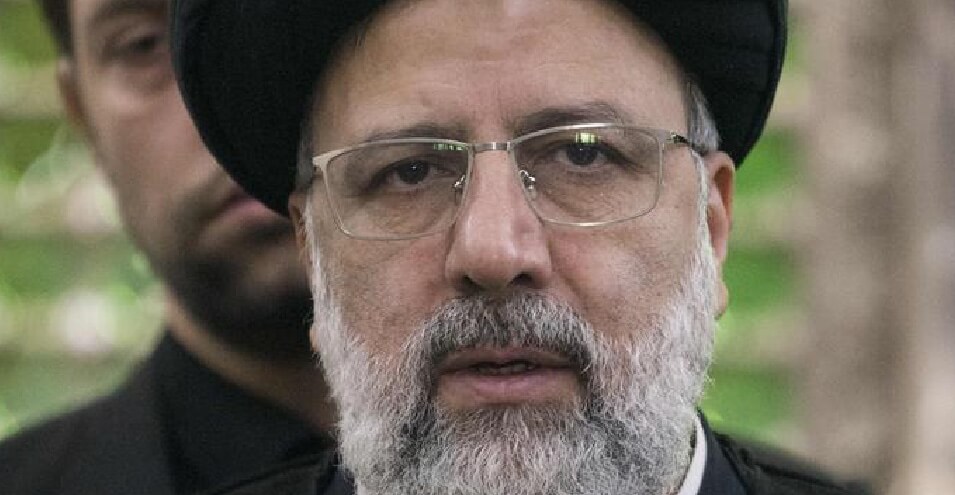
A number of Iranian civil activists and human rights defenders have called for the trial of Ibrahim Raisi on charges of “crimes against humanity.” They have pointed to Raisi’s role in the “Death Committee” and stated that his place should be in prison, not in the presidential palace.
A France 24 correspondent, citing a report published by the French news agency, has reviewed Ibrahim Raisi’s record since the victory of the Islamic Revolution to the present and reflected the assessments of Iranian civil activists and human rights defenders regarding this candidate in the 1400 (2021) elections.
Based on polls published by Iranian media, it appears that Ibrahim Raisi’s chances of winning in the elections on Friday, the 28th of Khordad (June 18), are higher than other candidates in these elections.
In this regard, a number of human rights defenders, relying on statements from international bodies, have called for Raisi’s trial in an independent international court.
In the France 24 report, it is stated that Ibrahim Raisi, as head of the judiciary, has committed gross violations of people’s fundamental rights and played an active role in the massacre of political prisoners in the summer of 1988.
The report states that Ibrahim Raisi was one of four members of the “Death Committee” and on the orders of this committee, thousands of prisoners who were serving their sentences were executed in the summer of 1988.
These civil activists have said that Raisi’s victory in Friday’s elections, and after even his conservative rivals have been disqualified, is very likely, and therefore they have emphasized that Raisi should be tried by world judicial authorities for the crimes he has committed, rather than taking charge of Iran’s affairs.
Raisi from Yesterday to Today
In the France 24 report, it is stated that Ibrahim Raisi’s political rise began in his youth and he has served in sensitive positions since the day after the victory of the Islamic Revolution.
Abraham Raisi, at the age of 20 and in the very first days after the formation of the Islamic government, was appointed as the prosecutor of Karaj.
Afterward, Raisi took on the role of prosecutor of Hamadan and in 1985 (year 64) continued his work as deputy prosecutor of Tehran.
In this report, it is stated that Raisi, in the position of deputy prosecutor of Tehran, played a key and decisive role in the execution of thousands of political prisoners opposed to the regime and mostly members of the People’s Mujahedin Organization of Iran.
It is said that as one of the members of the “Death Committee,” he handed these prisoners to the firing squad without trial.
Raisi, who is referred to as a possible successor to Ayatollah Khamenei, although denies his role in the 1988 executions, has defended the decision to carry out these executions.
Following the executions of summer 1988, Raisi was chosen as prosecutor of Tehran and took on a more important role in the judiciary. In 2004, he was chosen as deputy head of the judiciary and remained in this position for about 10 years.
Raisi has headed the judiciary since 2019. In this report, the statements of Shadi Sadr are mentioned, who believes that Raisi’s place is currently on the trial bench, not the presidential chair.
Shadi Sadr is the executive director of the “Justice for Iran” organization.
According to Shadi Sadr, the fact that Raisi, while serving as head of the judiciary, has become a candidate for the position of president of Iran, suggests immunity from punishment for one of the perpetrators of these heinous crimes in the Islamic Republic of Iran.
Dealingwith the executions of summer 1988, which took place on the orders of Ayatollah Khomeini, remains a political “taboo” in Iran.
Human rights groups and historians believe that between June and September 1988, approximately four to five thousand political prisoners, especially those affiliated with the People’s Mujahedin Organization of Iran, were executed.
This is while the National Council of Resistance announced the number of those killed in the summer of 1988 as approximately 30,000 people.
Raisi’s Sanctions by the United States
Last year, one of the United Nations reporters, referring to the executions of 1988, recalled the Iranian government’s responsibility in the “crimes against humanity” case.
On the other hand, Amnesty International in its 2018 report identified Raisi as one of the members of the “Death Committee” and said that he played a role in the execution of thousands of prisoners in Evin and Gohardasht prisons.
Raha Bahrani, one of the members of Amnesty International, also said that Raisi should be tried in connection with “crimes against humanity” and torture of prisoners.
Based on an audio file from Ayatollah Montazeri released in 2016, Montazeri told the members of the “Death Committee,” including Raisi, in August 1988 that what was happening in the prisons was “the greatest crime in the history of the Islamic Republic.”
Hossein Abedini, one of the members of the International Affairs Committee of the National Council of Resistance, called Raisi “a cold-blooded murderer” who has “40 years of oppression” in his record.
A number of prisoners who survived the 1988 executions said at a conference held last week by the National Council of Resistance that they personally saw Raisi in the “Death Committee” while imprisoned.
For example, Reza Shemirani, who was imprisoned for ten years and now lives in Switzerland, told the French news agency that he saw Raisi in Revolutionary Guard uniform in prison.
Shemirani said that Raisi was “the most active member of the Death Committee.” Mahmoud Royaei, who was imprisoned between 1981 and 1991, says that Raisi showed the most effort in executing individuals.
Royaei said that Ibrahim Raisi knows nothing of mercy and compassion.
France 24 has referred to Ibrahim Raisi’s sanctioning by the U.S. Department of the Treasury in November 2019 and says that one of the reasons for his sanctioning by the United States was the role he played in the “Death Committee.”
Raha Bahrani also refers to Raisi’s role in the bloody crackdown of November 2019 (Aban 1398), which resulted in the death of hundreds of people.
Hadi Ghaemi, executive director of the Center for Human Rights in Iran in New York, said: “Raisi is one of the pillars of the Islamic Republic system who imprisons, tortures, and kills critics of government policies.”
Hadi Ghaemi said that instead of Raisi being present in the presidential election campaign, he should be tried and punished by an impartial court.
Source: DW