Letter from Families of Three Lawyers and Civil Activists to Heads of Three Branches: “Why Are Our Loved Ones Still in Solitary Confinement?”
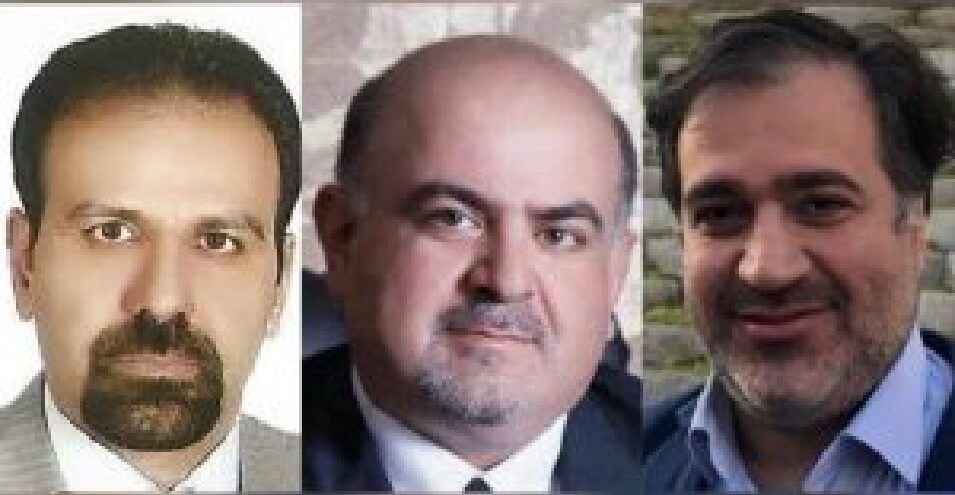
More than three weeks have passed since the arrest of several lawyers and civil activists in Tehran. Despite the issuance of an indictment and referral of the case to the Tehran Revolutionary Court, Mostafa Nili, Arash Keikhosravi, and Mahdi Mahmoudian remain held in solitary cells in ward 241 of Evin Prison under the supervision of the Judiciary’s Information Protection Organization.
The families of these three citizens have written a letter addressed to the President, the Head of the Judiciary, and the Speaker of the Islamic Consultative Assembly. In the letter, referring to the unclear authority, order, and institution of the detainers, they stated: “Despite the oral announcement by the respected prosecutor of branch 2 of the Evin Prosecutor’s Office regarding the completion of interrogations and the announcement of an indictment and referral to court, our children—lawyer Arash Keikhosravi, lawyer Mostafa Nili, and civil activist Mahdi Mahmoudian—remain in solitary confinement without the right to communicate with their families and without access to a trusted lawyer to defend themselves.”
According to the Hrana news agency, citing Emtedad, the families of Arash Keikhosravi, Mostafa Nili, and Mahdi Mahmoudian have called for clarification regarding the detention of these citizens in their letter to the heads of the three branches.
In a section of this letter, referring to the fact that the families “have exhausted all legal remedies by visiting and submitting petitions to the Judiciary’s People’s Office, the Tehran Prosecutor’s Office, the Judicial Protection of Tehran, and the Evin Prosecutor’s Office,” it states: “We received only one response—that in temporary detention everything depends on the case prosecutor’s discretion, and we have no right to interfere. So where is the role of oversight institutions? Isn’t it true that the investigations have been completed and the case has been referred to court? Then why are our loved ones still in solitary cells?”
The full text of this letter follows:
“Esteemed Head of the Judiciary
Esteemed President
Esteemed Speaker of the Islamic Consultative Assembly
With greetings and respect,
Our story is very simple. In a country governed under the Constitution, several citizens, using their right to seek justice and within the framework of the law and faith in its implementation by officials, intended to file a complaint with the Judiciary after reviewing laws and assessing capabilities, demanding investigation and identification of those responsible for shortcomings in controlling the coronavirus pandemic, which has caused the increasing death of our compatriots. Of course, they intended to do so, and before taking any action, while they were in a session of cooperation and consultation, they were attacked and arrested by an unknown institution with unclear authority and unspecified order. Despite 25 days passing, the release of some of their companions, and the oral announcement by the respected prosecutor of branch 2 of the Evin Prosecutor’s Office regarding the completion of interrogations, the announcement of an indictment, and referral to court, our children—lawyer Arash Keikhosravi, lawyer Mostafa Nili, and civil activist Mahdi Mahmoudian—remain in solitary confinement without the right to communicate with their families and without access to a trusted lawyer to defend themselves.
We, the families, are simple citizens committed to the laws of our country. It is not right that in complete ignorance of the situation of our loved ones, we should be subjected to attacks of contradictory news, biased scenario-making, pressure, threats, and psychological intimidation.
Because of our belief in the rule of law, we have exhausted all legal remedies by visiting and submitting petitions to the Judiciary’s People’s Office, the Tehran Prosecutor’s Office, the Judicial Protection of Tehran, and the Evin Prosecutor’s Office. We received only one response—that in temporary detention everything depends on the case prosecutor’s discretion, and we have no right to interfere. So where is the role of oversight institutions? Isn’t it true that the investigations have been completed and the case has been referred to court? Then why are our loved ones still in solitary cells?
We remain with thousands of ambiguities, concerns, doubts, and one great unanswered question: Is filing a complaint and seeking justice from the responsible branch and demanding investigation not the very implementation of the law!?
If our understanding is correct, we request your kindness and that you stand with us—the complaining elderly and sick mothers and concerned family members.
We thank you in advance for your attention and consideration.”
It should be noted that on the 23rd of Mordad, 9 lawyers and civil activists, including Arash Keikhosravi, Mostafa Nili, Mahdi Mahmoudian, Mohammad Reza Faqihi, Mohammad Hadi Erfanyan Kaseb, Maryam Afrafrazi, and Leila Haidari, were arrested during a meeting held at the office of the Civil Rights Support Association in Tehran.
Among these individuals, Mohammad Hadi Erfanyan Kaseb and Leila Haidari were released hours after their arrest, and Mohammad Reza Faqihi, a lawyer, and Maryam Afrafrazi, a civil activist and member of the Imam Ali Society, were released on the 7th of Shahrivar.
Meanwhile, the arrest of Maryam Afrafrazi and Mostafa Nili took place while both of these citizens had recently completed their quarantine period following their own coronavirus infection and did not have appropriate physical condition. Additionally, Maryam Afrafrazi was solely responsible for recording the meeting minutes as the meeting secretary.
Despite the issuance of an indictment, the referral of the case to the Revolutionary Court, and the completion of the interrogation process, Mostafa Nili, Arash Keikhosravi, and Mahdi Mahmoudian remain held in solitary cells in ward 241 of Evin Prison under the supervision of the Judiciary’s Information Protection Organization.
Source: Hrana