Scattered cases of Amicron identified in Iran; increase in coronavirus hospitalizations in some provinces
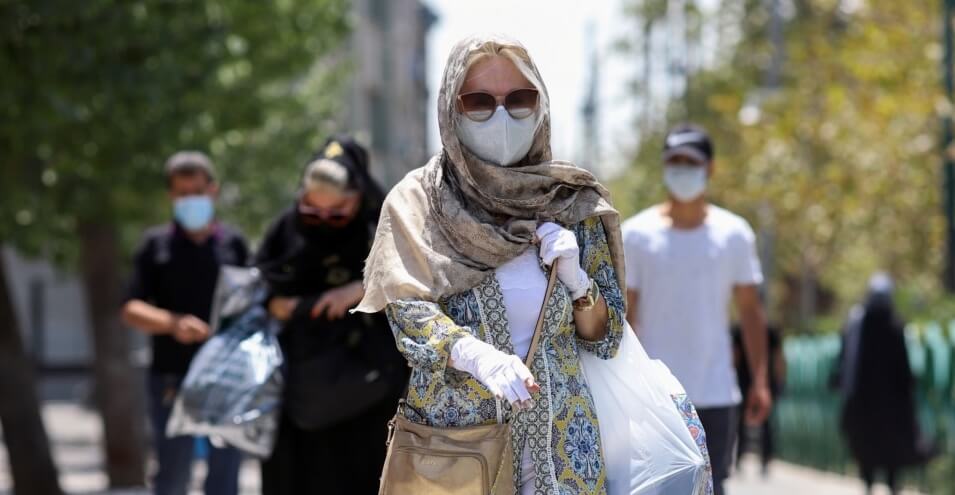
Two weeks after the first case of Amicron was identified in Iran, the Deputy Minister of Health of the Ministry of Health announced that the total number of Amicron patients in the country is 194, and the head of the Pasteur Institute has announced that their number has increased to 244.
This is despite the fact that the transmission rate of Amicron is extremely high, and in a country like the United States, according to the Centers for Disease Control and Prevention, it rose from 6/10 of a percent to 77 percent in twenty days, and currently accounts for more than 95 percent of coronavirus cases. Europe also reported more than five million new cases of coronavirus in the last week of 2021.
In Iran, confirmation of Amicron cases has been slow. The head of the health department at the Saveh Faculty of Medical Sciences announced the arrival of Amicron in Saveh and the confirmation of two cases, saying that the virus is now “circulating” in the city. Mojtaba Zakaei said that the people of Saveh have contact with the cities of Arak, Qom, and Tehran due to their proximity and the movement of trucks from the Kaveh Industrial City to the south of the country, which increases the likelihood of further Amicron infections in Saveh.
A spokesperson for Isfahan University of Medical Sciences has also announced that 24 people in this province have been infected with Amicron.
The actual number of cases of the Amicron variant of the coronavirus in Iran is questionable. Earlier, a member of the scientific committee of the National Headquarters for Combating Coronavirus had also emphasized that the statistics of Amicron infections are higher than the available figures.
Alireza Biglari had said: "One day we will reach 70, 80,000 or 100,000 infections."
In Iran, due to a shortage of diagnostic kits and limitations in genomic sequencing, few samples are tested.
Only 20,000 coronavirus tests are conducted in the country daily, and suspected cases are sent to special laboratories for diagnosis of Amicron.
Payam Tabarsi, a member of the National Scientific Committee to Combat Corona, says that Iran, with a population of 80 million, must conduct one million tests per day, or at least 100,000 tests per day, in order to obtain accurate statistics on cases of Amicron.
At the same time, a number of regions in Iran have reported an increase in the number of coronavirus hospitalizations.
The head of the Information Committee of the Coronavirus Management Headquarters at Kermanshah University of Medical Sciences has said that the number of hospitalizations in the province's medical centers has reached 121, which is 11 more than the previous day.
In Yazd, a spokesperson for the University of Medical Sciences announced an increase in the number of hospitalizations for "suspected coronavirus" in the province.
The president of Yasuj University of Medical Sciences also says that the number of people infected with the coronavirus has increased in Kohgiluyeh and Boyer-Ahmad.
However, there are still no red or orange dots on the color-coded map of the coronavirus outbreak in Iran.
The current color scheme of the coronavirus outbreak map is based on the hospitalization index, and for some time now, the National Coronavirus Task Force has announced its decision to change the color scheme, which has not happened to date.
Official statistics from the Iranian Ministry of Health show that on January 6, 1,579 new patients with coronavirus were registered in a single day.
Source: Voice of America