Final verdict on Professor Shajarian's complaint issued after more than 11 years; IRIB acquitted
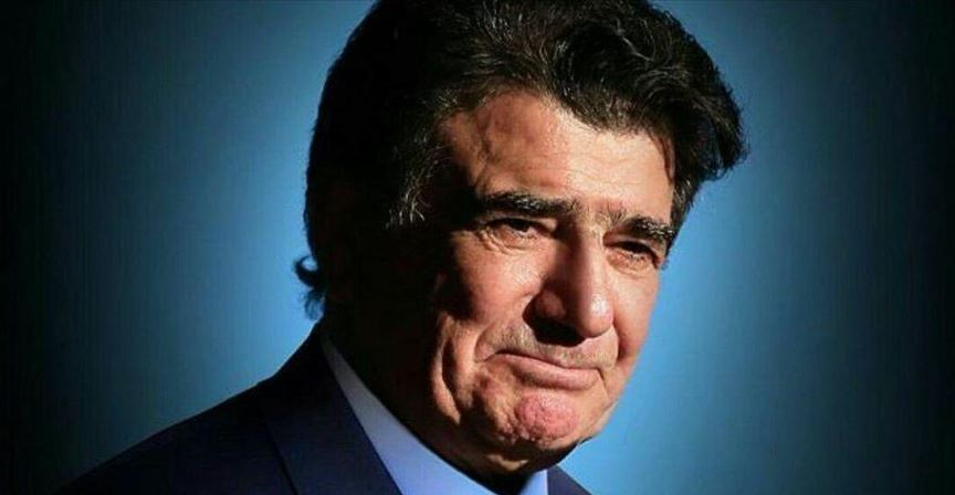
HRANA News Agency – Attorney Mohammad Hossein Aghasi announced the issuance of a final verdict in the case of Professor Shajarian’s complaint regarding the unauthorized broadcasting of his works on the Iranian Radio and Television. According to the attorney, the court’s verdict, which was issued 11 years and 4 months after the complaint was filed, and the court, in an unjustified argument in its ruling, stated that the then deputy heads of the Iranian Radio and Television Organization for Audiovisual Affairs did not order the broadcast and that they simply did not prevent the broadcast. Accordingly, Mr. Shajarian can claim damages from the Iranian Radio and Television.
According to HRANA News Agency, the news agency of the Human Rights Activists in Iran, Mohammad Hossein Aghasi, a lawyer, announced the acquittal of the Iranian Broadcasting Corporation in the case of Mohammad Reza's lawsuit for broadcasting his works without a license.
Mohammad Hossein Aghasi, Mohammad Reza Shajarian's defense lawyer, told HRANA regarding the appeals court's decision: "The appeals court's ruling states that the broadcasting of Professor Shajarian's works on the Iranian Radio and Television from July 2004 onwards is subject to retroactive time, and that works broadcast on the Iranian Radio and Television from July 2004 until the date of filing the complaint (July 2009) are a crime."
Mohammad Hossein Aghasi stated that the court, in an unjustified argument, stated that Mr. Mohammad Sofi and Hassan Khojasteh, who were the deputy heads of the IRIB for audio affairs during this period, did not order the broadcast and that they did not simply prevent the broadcast. He added: "The court stated in its ruling that the order to broadcast Master Shajarian's works was issued by the old deputies and has continued to this day. Mr. Sofi and Khojasteh should have prevented the broadcast, but in fact they failed to act, and this failure to act does not constitute a crime. Accordingly, Mr. Shajarian can claim damages from the IRIB."
Lawyer Mohammad Reza Shajarian continued: "This case has been deliberately delayed for eleven years and four months in some cases and at certain points. Among them, we can mention the 47-month delay by Abbas Jafari Dolatabadi, the then prosecutor of Tehran. Also, the process of hearing in the Court of Appeals took two years and two months from the time the trial session was held and the verdict was issued. However, the verdict should have been issued within a week. At that time, Masoudi was the judge of the case and the case was delayed so much that Mr. Masoudi left that branch and was appointed as the head of the Economic Affairs Judicial Complex branch, and two other judges issued the verdict. Such cases caused the case to take 11 years to be heard."
It should be noted that in July 2009, due to the broadcasting of Professor Shajarian's works on the Iranian Broadcasting System without his consent, he filed a complaint against this organization with the Civil Service Prosecutor's Office based on Article 23 of the Law on the Protection of the Rights of Authors, Composers, and Artists.
This legal article explicitly states that if someone's works are published, distributed, or disseminated without permission, the penalty is six months to two years in prison.
Mohammad Reza Shajarian, who passed away in October of this year, had repeatedly openly criticized the Iranian government in the final years of his life and stood by the protesters during the popular protests following the 2009 elections.
Source: HRANA