Soheila Hijab's beating and hunger strike in Kermanshah Women's Prison
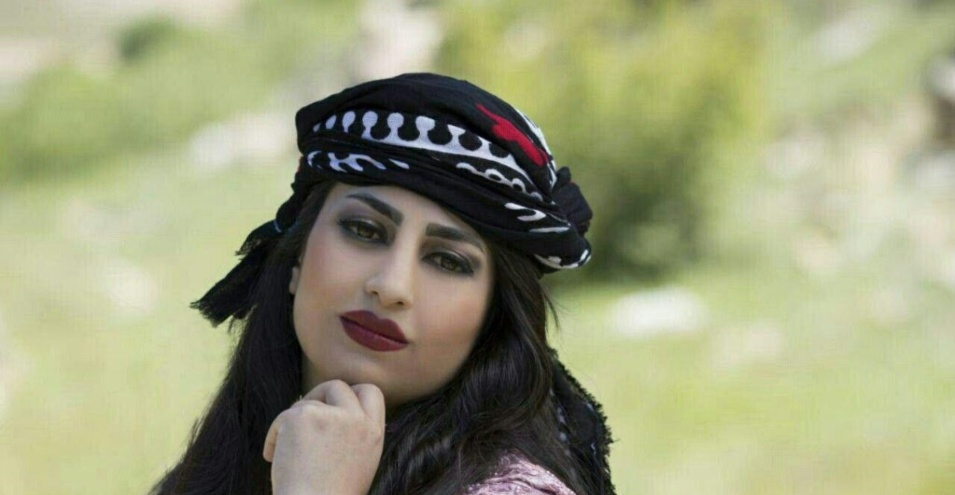
HRANA News Agency – Soheila Hijab, a political prisoner imprisoned in the women’s ward of Kermanshah Correctional Center, announced her hunger strike in a letter. The political prisoner was also beaten by prison guards on Monday, April 29, and was prevented from meeting her family.
According to HRANA News Agency, the news agency of the Human Rights Activists in Iran, Soheila Hijab, a political prisoner in the women's ward of Kermanshah Correctional Center, announced her hunger strike in a letter.
In part of his letter, he stated that the reasons for his hunger strike were the influence of security agencies, preventing him from being sent on leave, and the lack of medical attention, and said, "I see no other way but to go on another hunger strike."
Also, according to a source close to Ms. Hijab's family, on Monday, April 29, she was severely beaten by prison guards and, despite the presence of her family, was denied access to them.
The full text of Soheila Hijab's letter, which was provided to HRANA for publication, is below:
"We all need justice, at every age, period, and in every position. Have you ever heard someone say that a country does not need justice? Justice is a concept that humanity has strived for since the beginning of civilization. One of the subjects for establishing laws in human social relations is the institution of justice, which, as a fundamental part of the country's fundamental heritage, has a direct connection with the social rights and citizenship of the people."
The peace and psychological security of a society can be measured by measuring the justice in the country's judicial system. No person can be found guilty before a fair trial, and no country's judicial system can deprive someone accused of violating the social contract of public protection. We were unfairly tried.
In accordance with Articles 38 and 39 of the Constitution of the Islamic Republic of Iran, it emphasizes two axes: Prohibition of persecution and torture in obtaining confessions, testimony, or oaths. The second axis is the prohibition of defamation of convicts and defendants. What is necessary is to respect the freedom of individuals to express their opinions, and relying on coercion by any means possible is wrong and will cause irreparable harm and injury to the mental and physical health of individuals.
Article 17 of the International Covenant on Civil and Political Rights also refers to the protection of the privacy and family life of individuals. Article 18 of the Islamic Declaration of Human Rights emphasizes this issue in a statement to which the Islamic government considers itself bound. However, all of these issues that were addressed are only on paper. This is because the country's judicial system is not independent, and the interrogators of the IRGC's intelligence and security agencies, who are referred to as judicial officers, play a significant role in both suppressing the people and issuing cruel sentences and tolerating illogical and vulnerable statements.
In the Iranian judicial system, judicial officers have absolute authority, which has led to the deprivation of citizens' freedom and gross violations of human rights, and no standardization has been formed in the conduct of judicial officers. That does not prevent arbitrary interference and the complex and dark guilt of the interrogator. To date, I have met with 17 high-ranking judicial officials in prison. I have had many conversations with Ansiyeh Khazali, advisor to Ebrahim Raisi on women's affairs, and Mr. Moghaddisharifar, advisor to the head of the judiciary on political and security prisoners, and with the prosecutor and chief justice of Tehran, and the secretary of the human rights headquarters of the judiciary. In this regard, I have repeatedly spoken to reduce the pressures of the intelligence and security institutions, and the common denominator of all the above personalities has been that I am a peacemaker. But the security pressures have continued, and I have repeatedly gone on hunger strikes, which have resulted in serious damage to the health of my internal organs, and each time I have gone on a hunger strike, I have ended my hunger strike with many promises from a large number of officials.
I once again request that the judicial opinion of the head of the judiciary, which you published in the media in Shahrivar 1400, regarding the reduction of interference and influence of judicial officers, be followed up. The influence and interference of intelligence and security agency interrogators, pressures, threats, and the creation of cases against my family members have led to the collapse of the family institution and the private lives of individuals and family members, and have caused irreparable damage to my family. I would like to point out that my mother’s physical and mental health, especially her eyes, are in danger of complete blindness. All of the above, according to the opinion of the forensic medicine and neurologists, my heart and eye require treatment outside of prison, which has been prevented from granting me medical leave due to the influence of intelligence agencies. I see no other option but to go on a hunger strike again.”
Soheila Hijab was arrested by security forces in June 2019 and released from Evin Prison on March 14, 2019 after posting bail of 3 billion Tomans pending the completion of the trial.
Branch 28 of the Tehran Revolutionary Court, headed by Judge Mohammad Moghiseh, convicted her on charges including “propaganda against the system, gathering and collusion, inciting public confession with the intention of rioting, and forming an illegal group,” which, by applying Article 134, would result in the most severe punishment of 5 years of imprisonment. Ms. Hijab was arrested on Saturday, June 22, 2020, after the verdict was confirmed by Branch 36 of the Tehran Provincial Court of Appeal, and transferred to Qarchak Varamin Prison to serve her sentence. She was exiled from Qarchak Varamin Prison to Sanandaj Prison some time before, and was transferred to Kermanshah Correctional Center on January 7, 2021.
HRANA had previously reported on the beating of Soheila Hijab by the prison guard and the threat of filing a case against her and deporting her again. On Saturday, February 16, 2021, Soheila Hijab was summoned to Branch 2 of the Kermanshah Prosecutor's Office regarding a case that had recently been opened against her while she was in prison. Ms. Hijab refused to attend the interrogation session due to failure to observe the legal time interval between the date of notification and the date of summons, as well as lack of access to a lawyer.
Source: HRANA