Araqchi: We will not make any agreement without addressing our important concerns
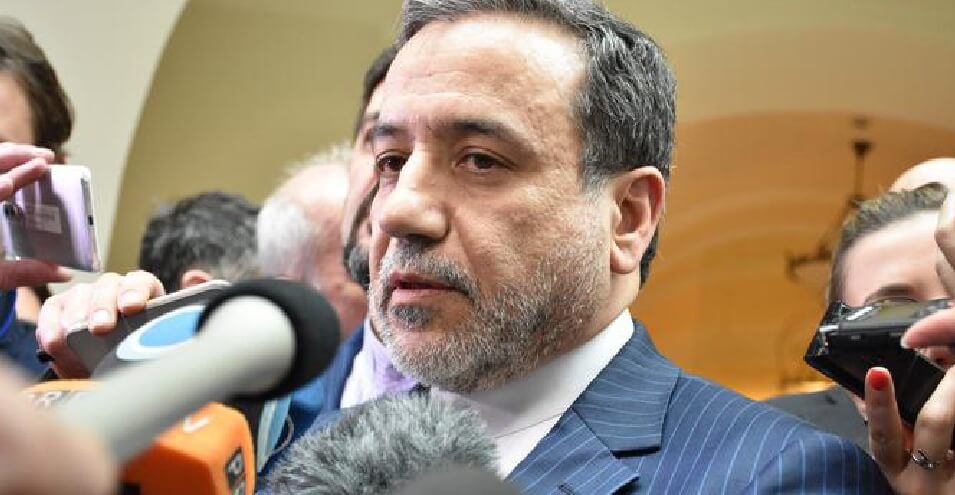
Abbas Araghchi, the head of the Islamic Republic's negotiating team at the Vienna meeting, stated in an interview with Press TV, "A good agreement will be reached when our important concerns are addressed, and we will not make any agreement without their realization."
The sixth round of negotiations between the Islamic Republic and the P4+1 countries to return to the JCPOA began in Vienna on Friday, June 11. Abbas Araghchi, Iran's chief negotiator in these negotiations, said in an interview with Press TV, the English-language channel of the Islamic Republic of Iran Broadcasting, about whether an agreement will be reached in this round: "We must have a good agreement. A good agreement will be reached when our important concerns are addressed and our key goals are achieved. We will not make any agreement without fulfilling these things."
Many observers and experts say that the preference of all negotiating parties is to reach an agreement before the presidential elections in Iran (this Friday).
This is while Araqchi has said in this regard: "We are continuing the negotiations. We are not in a hurry. We have not set any deadlines for ourselves. What is important is a good agreement that contains our key and important requirements and includes the positions that we have announced so far."
The main point of disagreement in these negotiations is that Iran says that all sanctions imposed by the United States must be lifted and then the country will return to its commitments under the JCPOA, from which it has gradually withdrawn. This is while the United States and European countries are not willing to lift sanctions related to Iran's human rights violations and missile activities.
Araghchi, however, once again implicitly repeated Iran's demand and clarified: "The Islamic Republic of Iran has made its difficult decisions up to this point, (i.e.) after the illegal withdrawal of the United States from the JCPOA, when Iran decided to remain in the agreement (the JCPOA). We made our difficult decision at that time, but now it is the other side's turn. If they want to return to the JCPOA and if they want the Islamic Republic of Iran to return to full implementation of its JCPOA obligations, they must also make their difficult decisions."
The Iranian Deputy Foreign Minister stressed that the US must ensure that the withdrawal from the agreement will not happen again. He also said about the next rounds of negotiations and the possibility of their conclusion: "We will continue these discussions and talks - as long as necessary. I do not think that we will be able to reach a final result in this round, we cannot even predict that the next round will be the final round. We do not count the number of rounds of negotiations, but we count our interests."
Iran's extended deadline for lifting all sanctions is June 24. If sanctions are not lifted by that date, Iran must suspend implementation of the Additional Protocol, according to the resolution of the Islamic Consultative Assembly.
Araqchi, however, expressed hope that this would not happen. He said: “Nobody wants to reach such a stage, because it will make our talks even more difficult. Of course, the timeline between Iran and the IAEA has its own effects on our talks, but we are trying to minimize the effects of this issue.”
He added: “It is still too early to get to that point. We still have enough time to get to a point where Iran can once again return to full implementation of the Additional Protocol. Let’s not judge now but wait and see how the situation develops in the coming days.”
The Vienna talks are taking place between the Islamic Republic and the countries of Britain, France, Germany, China, and Russia, with the indirect presence of the United States.
Source: DW