Sydney disaster, a worrying alarm in the Western world
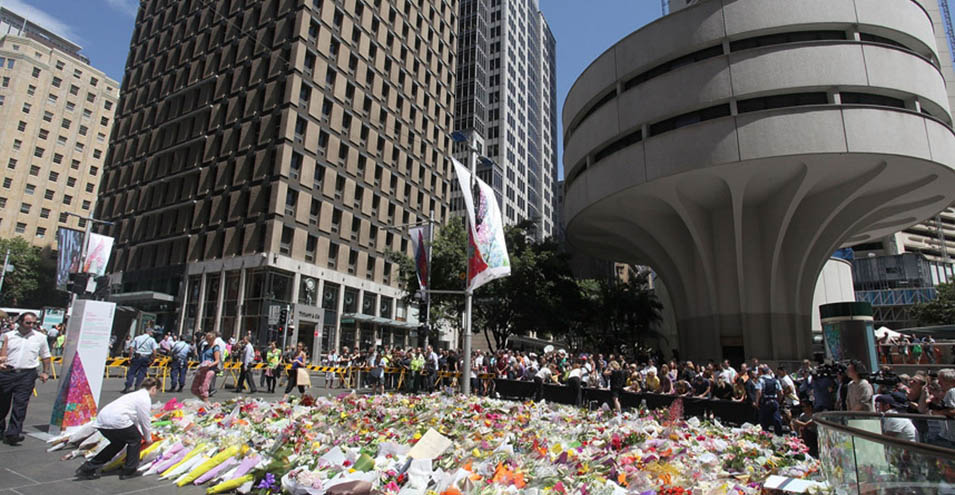
According to the Persian-language Christian News Network and quoted by Voice of Russia: Recently, the West has increasingly faced threats from Islamic terrorism at home, which is causing xenophobia and protests among the indigenous people.
The Australian cafe hostage-taking incident appears to be over. The terrorist was identified as Haroon Monis, a 50-year-old Iranian-born man who had been granted political asylum in Australia. However, local Muslims believe that Monis fraudulently claimed the titles of sheikh and ayatollah. According to some reports, he was a Shiite Muslim who had converted to Sunni Islam. It is worth remembering that the “Islamic State” as the most hated terrorist organization identifies itself with Sunni Islam.
But many experts believe that paying attention to these details is not worth much. In their opinion, it is important that until the last moment Australian law enforcement authorities were very lenient with Harun Mons, who had problems with the country's judicial system. Moreover, 14 years ago, Australia opposed the extradition of Harun Mons to Iran, given the evidence of his criminal activities. The question of the reasons for this unpredictability is increasingly being raised not only among Australians, but also in Western public opinion, why the government treats immigrants from third world countries so liberally, who do not want to live under the laws of their host country. All this leads to a crisis of trust in the state, although the state is often unable to neutralize the threats in a timely manner. Yevgeny Vogin, associate professor at the Russian State University of Finance, says:
“The principle is that the actions of individual terrorists are unpredictable. It is very difficult to predict the details of their behavior. The authorities do not have the resources to thwart such actions. It is also impossible to eliminate them completely. And Australia is no exception to this rule. But this trend is very unpleasant for Australia.”
It is unlikely that Australia's foreign policy will change after this incident. But experts expect a change in approach to domestic issues, especially among those who supported a policy of appeasement of immigrants, whose weakness in hospitality has been proven. This situation is observed not only in Australia, but also on the other side of the world, in Europe. For example, recently, protesters in Dresden, Germany, expressed their opposition to the Islamization of the West.
European experts have long been observing the rapid growth of followers of radical Islam in European countries, which naturally leads to the growth of xenophobia there. The potential escalation of the conflict could be caused by militants from radical groups in Syria and other hot spots who have now returned to Europe. This is causing concern and fear among local populations about the increasing number of refugees, economic migrants and their indifference to their integration and integration into society. Alexey Martynov, director of the International Institute for New States, says:
“Of course, xenophobia is growing and spreading. First of all, it is due to the inadequate preparation of Europe for the influx of immigrants from Islamic countries. This is not just native European nationalism. This is a natural reaction arising from the desire to protect one’s living space. We see the threat of an uncontrolled flow of immigrants. If at first they seem like decent and sociable people, they soon sink into their own societies, where Islamists are active. Of course, after a short time, many immigrants become activists of extremist organizations.”
It is clear that the protests by indigenous Europeans against liberal government policies on immigration have gone beyond the margins. They have become a larger civil movement, uniting people of all ages. The recent tragedy in Sydney is proof of this fear.