Donald Trump's executive order for maximum pressure on Iran
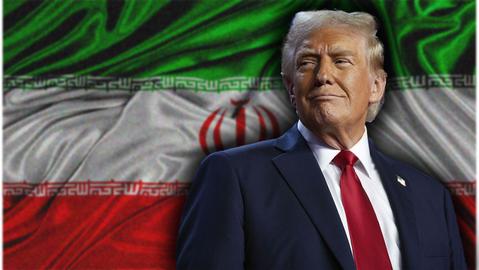
Donald Trump called for maximum pressure against Iran in an executive order.
US President Donald Trump announced in an executive order titled "National Security Directive" on Tuesday, February 4, that "the behavior of the Islamic Republic is a threat to the national interests of the United States and it is essential that maximum pressure be applied to the Iranian regime to end its nuclear threat. Its ballistic missile program is limited and its support for terrorist groups is also stopped."
In the introduction to this executive order, Donald Trump emphasized the need to exert maximum pressure on the Islamic Republic, saying: "Since its establishment in 1979 as a revolutionary government based on religion, the Islamic Republic has declared its hostility to the United States and its allies."
The Islamic Republic is the world’s largest state sponsor of terrorism and has supported groups such as Hezbollah, the Houthis, the Taliban, al-Qaeda, and other terrorist networks. The Iranian government, including the Revolutionary Guard Corps, uses cyber actors and tools to target U.S. citizens inside the country and around the world, including through attacks, kidnappings, and assassinations. It has also directed its proxies, including the Islamic Jihad Organization and Hezbollah, to establish sleeper cells inside the United States and to operate in support of the Iranian government’s terrorist activities.”
The aforementioned decree, while referring to the history of the Islamic Republic's actions against the United States and its allies, gives specific instructions to the Secretaries of the Treasury, State Department, Commerce, Justice, and the US Permanent Representative to the United Nations to apply maximum pressure against Iran.
In this executive order, the political axes and goals of the United States towards the Islamic Republic are stated as follows: "Preventing the Islamic Republic from acquiring nuclear weapons and intercontinental ballistic missiles, neutralizing the Iranian regime's network and campaign of regional aggression, weakening the Revolutionary Guard Corps and its proxies and depriving these forces of the resources that support their destabilizing activities, and countering the Iranian regime's development of missiles and other conventional and asymmetric weapons capabilities."
The five specific instructions given to the US Treasury Secretary in this executive order are: “1. Immediately impose sanctions or appropriate enforcement actions against all persons with evidence of violations of Iran-related sanctions; 2. Launch a strong and sustained campaign to enforce Iran sanctions to deny the government and its proxies access to financial resources; 3. Review or revoke any general authorization or directive that provides economic or financial relief to the government of Iran or its proxies; 4. Provide new instructions and guidance to commercial sectors, including shipping, insurance, and port operators, and inform them of the risks of violating US sanctions; 5. Maintain measures developed by the FATF Financial Action Task Force to counter the actions of the Islamic Republic and financial oversight to prevent the government of Iran from generating illicit profits.”
The duties that the Secretary of State is required to perform according to Donald Trump's executive order are also specified in four sections, which are: "1. Revoke or modify sanctions exemptions, especially those that grant economic or financial privileges to the Iranian government, including exemptions related to the Chabahar Port project, in a way that will cause the Islamic Republic to cease benefiting from the privileges arising therefrom; 2. Reduce Iranian oil exports to zero, including to China, in cooperation with the Secretary of the Treasury; 3. Lead a diplomatic campaign to isolate the Islamic Republic in the world, including in international organizations; 4. Prevent the Islamic Republic from using the financial system of Iraq and the Persian Gulf countries to circumvent sanctions."
In an executive order issued to the US Permanent Representative to the United Nations, Donald Trump asked him to work with allies to pave the way for the return of international sanctions against the Islamic Republic. He also called on the Islamic Republic to hold it accountable for violating the Nuclear Non-Proliferation Treaty and, at the same time, convene Security Council meetings to highlight the threats posed by the Islamic Republic.
Trump's executive order to the US Attorney General is as follows: "1. The Attorney General is required to take all legal measures to identify, disrupt, and prosecute financial and logistical networks affiliated with the Iranian government; 2. Seize Iranian oil shipments that are being illegally transported; 3. Identify Iranian government assets in the United States and abroad and prosecute leaders and members of terrorist groups supported by the Islamic Republic; 4. Use all legal and cyber tools to counter espionage, foreign influence, and other threats related to the Iranian government."
The Secretary of Commerce is also required, under this executive order, to launch a strong and sustained campaign to enforce export controls to limit Iran's access to military technologies.
Donald Trump also blamed the Islamic Republic for the October 7, 2023 Hamas attack on Israel, calling it a “barbaric massacre.” According to his statements, the Iranian government is responsible for the Houthi’s continued attacks on the US Navy, its allied fleets, and international commercial shipping in the Red Sea.
Continuing his remarks, Donald Trump referred to the Islamic Republic's gross violation of human rights and the illegal detention of American citizens based on false charges and their torture, and emphasized that the United States stands with Iranian women who have always been oppressed by the Iranian government.
He also referred to Iran's nuclear and missile program, calling it an existential threat to the United States and the entire civilized world, and emphasized that an extremist government like the Islamic Republic should never be allowed to acquire nuclear weapons or use the threat of acquiring and using them to blackmail the United States and its allies.
At the end of his executive order, the US President, while referring to the Islamic Republic's cover-ups and its refusal to cooperate with the International Atomic Energy Agency, said: "We must block all of the Islamic Republic's paths to obtaining nuclear weapons and end the Iranian regime's nuclear blackmail."