Iranian Parliament Must Pass Bill on Rights of Persons with Disabilities
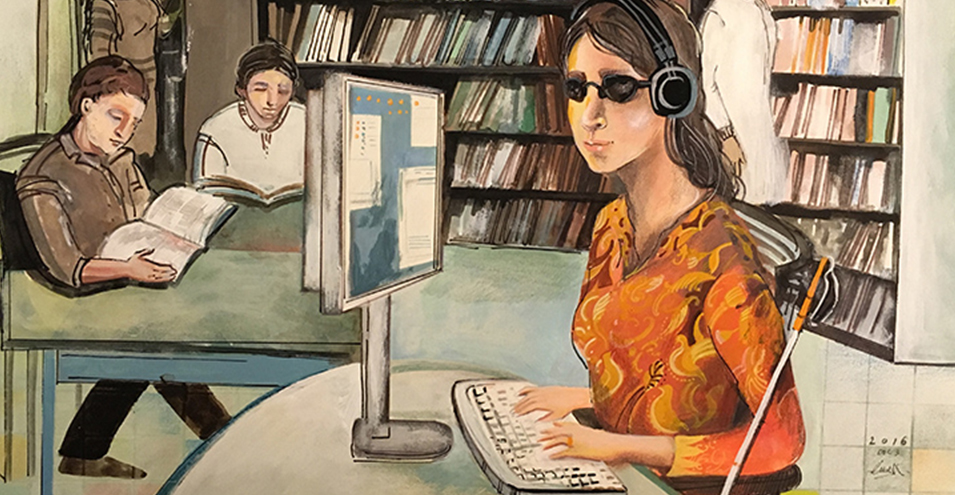
December 29, 2017 – A new bill to protect the rights of people with disabilities, if passed, would be a step towards advancing the rights of Iranians with disabilities. Coinciding with December 3, the International Day of Persons with Disabilities, the Human Rights Campaign in Iran called on the Islamic Consultative Assembly to put on the agenda the passage of a vital bill on the rights of people with disabilities in a manner that is consistent with international obligations.
Hadi Ghaemi, director of the International Campaign for Human Rights in Iran, said: “People with disabilities in Iran have always faced social stigma and discrimination, and their rights and needs have been ignored by the Iranian government. But now is the time for the government to fulfill its international obligations towards this group of people in accordance with international standards.”
Iran has been a party to the UN Convention on the Rights of Persons with Disabilities since 2009, but its domestic laws and practices are still not in line with the principles enshrined in the Convention. Persons with disabilities in Iran continue to be denied equal access to transportation, public places and spaces, government services, education, and effective legal protection. Persons with disabilities also face widespread discrimination in access to employment.
The Welfare Organization, as the main provider of services to people with disabilities in Iran, provides limited services to 1.3 million to 1.5 million people, while according to some members of parliament, there are more than 11 million people with disabilities living in Iran. The reason for this stark difference is the adoption of a very narrow definition of disability that only includes people with moderate to severe disabilities.
Hadi Ghaemi, director of the Human Rights Campaign in Iran, said in this regard: "If the authorities do not change the definition of disability and adapt it to global standards, millions of people with disabilities in Iran will remain deprived of the services provided to this group, and the new bill will not benefit them."
Among the services provided by the Welfare Organization is the payment of a monthly pension of 53,000 Tomans to a limited number of people with disabilities, which is not enough to meet their basic needs. Health insurance also does not cover many medical and rehabilitation services that are vital to the quality of life and independence of people with disabilities. In addition, the disabled community faces severe discrimination in the field of employment.
The text of the bill has not been officially published for the public, especially experts in this field, to comment on. However, the latest draft of the law, which was obtained by the Human Rights Campaign in Iran, includes positive points that, if implemented, could bring about significant changes in the lives of disabled people in Iran. For example, municipalities are required to refrain from issuing construction and completion permits for public places and streets that are not accessible to people with disabilities.
It is also anticipated that the rehabilitation services and tools needed by people with disabilities, such as occupational therapy and physiotherapy, will be covered by general and supplementary health insurance. In the context of solving the unemployment crisis of people with disabilities, the draft also includes the establishment of a job opportunities fund for people with disabilities and the consideration of incentives for employers who hire these people. It should be noted that the unemployment rate among people with disabilities is much higher than that of other people in society, and some activists have estimated it to be 3.5 times higher than that of non-disabled people.
However, the proposed law also has significant shortcomings. Among other things, it does not provide for any specific provisions or services to protect people with disabilities from abuse and violence. It does not mention the need to ensure access to inclusive education for all children with disabilities, especially those with intellectual or mental disabilities, and it does not include legal measures to prevent the promotion of negative views of disability in state media. Another important point is the lack of effective legal mechanisms for complaining about violations of the rights of people with disabilities and for redressing the damages caused.
In 2015, the Rouhani government, after consulting with some activists in the field of disabled people’s rights, approved a bill to improve their situation. In the same year, part of this bill was approved as an executive resolution by the government council and is now in effect as the “Comprehensive Program for Supporting Disabled People.” Another part of this bill went to the parliament and was approved. However, in April 2016, the Guardian Council returned the bill passed by the parliament to the parliament due to non-compliance with the approval procedures. After returning to the parliament, a committee of parliamentarians and representatives of the Welfare Organization made changes to the bill and sent a new version of it to the parliament. The bill is currently awaiting review by the representatives in the parliament.
Prior to the law currently awaiting approval in the parliament, the Comprehensive Law on the Protection of Disabled Persons in Iran was passed in 2004. Although this law was a positive step in the field of legal protection for these individuals, it failed to bring about a tangible change in the lives of disabled Iranians due to its lack of comprehensiveness and the failure to provide the necessary enforcement guarantees.
According to activists of the "Campaign to Follow Up on the Approval of the Comprehensive Bill to Protect the Rights of Persons with Disabilities," the delay in approving and implementing this bill has created serious problems for the lives and livelihoods of persons with disabilities.
An activist in the field of disability rights in Iran, who himself has a disability, told the Campaign for Human Rights in Iran: “The delay in approving and implementing the necessary laws for disabled people in the country means nothing other than that officials and representatives do not give special priority to ensuring the rights and needs of disabled people. Every other law, plan, and bill takes precedence over our demands and problems. While we, like the rest of the people, participate in the elections, hoping that they will take us into account and approve the necessary laws to improve our living conditions.”
Hadi Ghaemi, director of the Human Rights Campaign in Iran, emphasized that the Iranian government should view citizens with disabilities as rights holders and useful elements of society and fulfill its responsibility towards them, saying: "The era of a charitable view of people with disabilities is over. The government must take serious steps to achieve real equality between people with disabilities and other citizens and work diligently to realize their human rights."
Source: Iran Human Rights Campaign