UN General Assembly adopts resolution condemning Iran's human rights violations
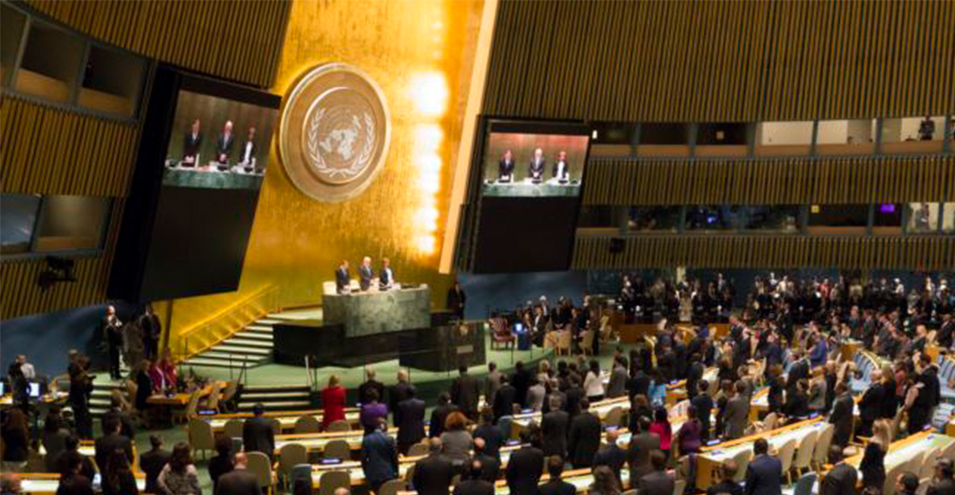
On Tuesday, December 18, the United Nations General Assembly adopted a resolution protesting human rights violations in the Islamic Republic, proposed by Canada, with 81 votes in favor, 30 against, and 70 abstentions.
Human rights activist Hassan Nayeb Hashem wrote on his Twitter page that the resolution was passed "by a very high vote" in the plenary session of the UN General Assembly.
Some Iranian news agencies have also published similar reports.
According to these reports, this resolution was proposed by Canada and the Syrian representative to the UN has objected to it.
The draft resolution also included clauses expressing concern about the human rights situation in North Korea, Syria, and the Crimean Peninsula, all of which were approved.
Meanwhile, according to Fars News Agency, Mohammad Hassannejad Pirkouhi, the second counselor of the Iranian Permanent Mission to the United Nations, has criticized the adoption of the resolution against North Korea and Syria.
Also, according to the Iranian Broadcasting Agency, the Iranian mission to the United Nations issued a statement addressed to the organization's Secretary-General, calling Canada's move to propose a resolution against the Islamic Republic "regrettable" and saying that the country "is eager for this directional resolution, regardless of Iran's repeated requests for respectful dialogue."
On the other hand, the "Foreign Policy Canada" Twitter page, referring to the UN General Assembly's vote on the country's proposed resolution, announced that Canada will pursue support for human rights in Iran.
On November 13, the Third Committee of the UN General Assembly also adopted a resolution with 83 votes in favor and 30 against, criticizing the continued violation of the freedom of religious and ethnic minorities and organized state discrimination against minorities in Iran.
The committee's resolution expressed concern about the high number of executions, poor prison conditions, torture, and arbitrary detentions in Iran.
Bahram Qasemi, spokesman for the Iranian Foreign Ministry, called the resolution "rejected," "invalid," and "political."
In September of this year, Asmeh Jahangir, the Special Rapporteur on human rights in Iran, stated in her first report that no significant improvement has been achieved in Iran's human rights record, and that restrictions on freedom of expression and discrimination against women and religious minorities in the country continue.
This report was immediately denied and met with a strong reaction from the Islamic Republic authorities, but Ms. Jahangir stated in an interview with Radio Farda that Tehran had not been able to provide any documented objections to her report.
Source: Radio Farda