Masoud Pezzekian: Even former detainees stand by Iran
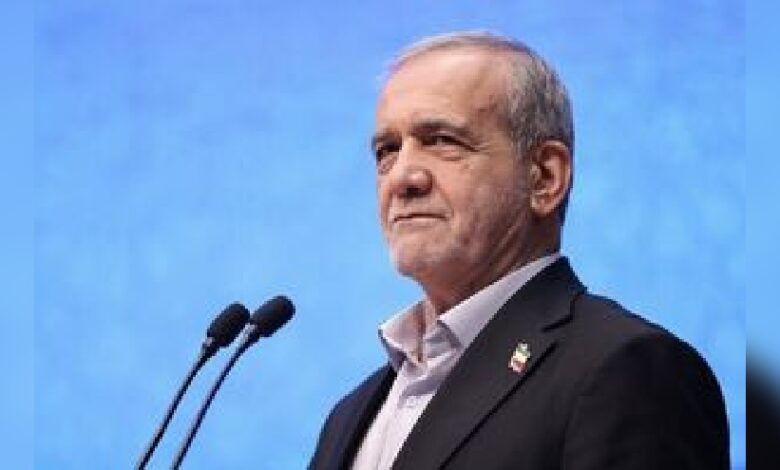
In a speech, Masoud Pezzekian announced the detainees' commitment to the Islamic Republic regime.
In a speech on Saturday, August 9, on the occasion of Journalist Day, Masoud Pezhakian spoke about the commitment of detainees and former prisoners, while critics declared that true unity only makes sense with media freedom.
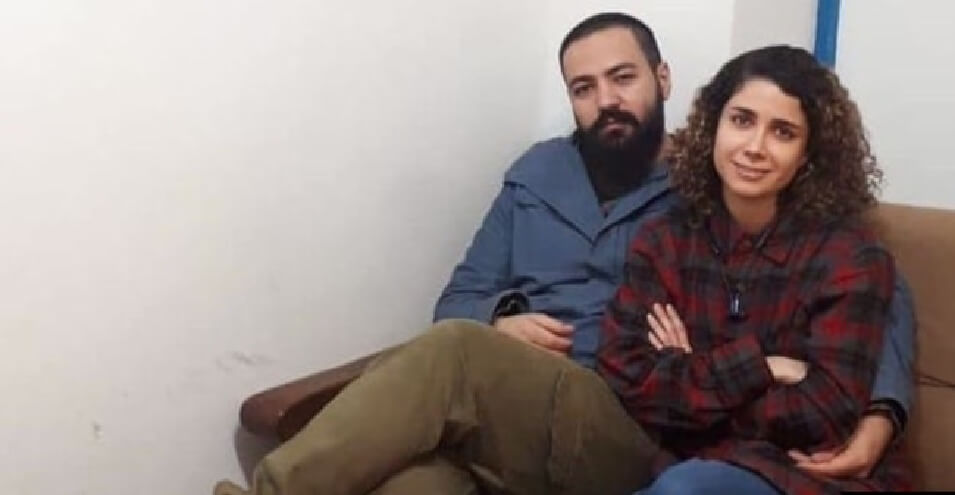
In an interview with Khabar Network on the occasion of Journalist Day, Iranian President Masoud Pezzekian spoke of the formation of an “unprecedented solidarity” in recent days, claiming that this solidarity has transcended political and social boundaries. He added: “Even those whom we did not expect, some of whom we had imprisoned, who had acted in ways that were right or wrong, came and stood by Iran.”
According to the President, during this period, the government was committed to providing public services and basic goods without interruption, and no shortages or shortages were observed in any sector. He continued that this stability in providing essential needs and services was the result of extensive cooperation between various agencies, including the army, the IRGC, the air force, and the defense.
In another part of his speech, Pezzekian praised journalists and the media for their continuous coverage of the news, claiming that in the recent crisis, even people with different tendencies and lifestyles, and those who do not align with the official views of the government or the mandatory hijab, took to the streets and united in slogans of support for the leadership and defense of Iran's territorial integrity. He described this approach as "an important lesson in accepting differences."
Pezizkian also stated: "Disagreements in society are natural and should not be interpreted as hostility. In families, between spouses, or in society, there are always differences of opinion. These differences should not lead to separation and confrontation. The media should convey the message that it is possible to focus on common points despite differences."
He also emphasized the role of the media in strengthening the culture of dialogue, adding: "If the media can promote this culture, many conflicts will be transformed into dialogue and social cohesion will be strengthened. Iran belongs to all Iranians, and both at home and abroad, everyone stands to defend the country."
Despite these statements, the Iranian media landscape continues to face severe restrictions on independent media. Many journalists are under judicial and security pressure for publishing critical views or working outside the official framework. The Islamic Republic Radio and Television has also been repeatedly criticized by international institutions and domestic activists for its one-sided coverage of news and suppression of alternative narratives.
Analysts say that while the president's call for national unity can have a positive message in times of crisis, this message will only be effective if there is a basis for freedom of expression and all parties, from critics to supporters, have an equal opportunity to appear and express their opinions in the domestic media. Otherwise, the alleged unity will remain only within the scope of the official narrative.