Iranian Christians at the Center of Gross Human Rights Violations and Intensified Repression After the 12-Day War
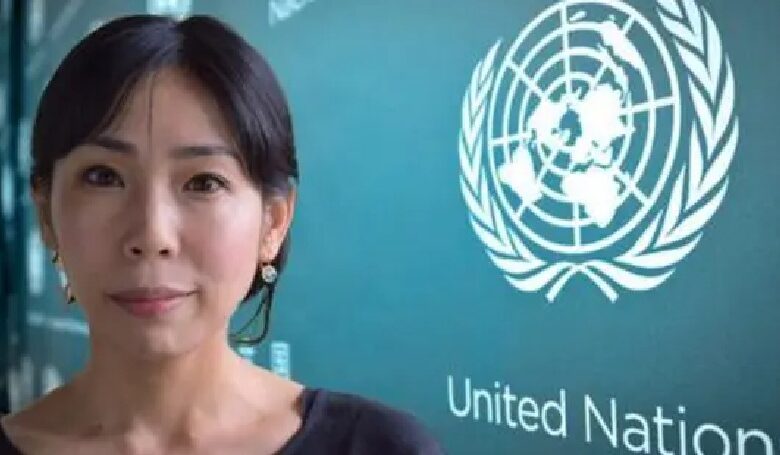
Mai Sato reported on the intensification of post-war repression and the widespread arrest of Christian citizens, a repression that reflects the dire state of religious freedom in Iran.
At a recent meeting of the Third Committee of the United Nations General Assembly, Mai Sato, the Special Rapporteur on human rights in Iran, warned of the intensification of repression of civil society and religious minorities in Iran, especially after the 12-day war between the Islamic Republic and Israel.
In his speech, he said, "During this period, the widespread arrests of journalists, human rights defenders, and members of religious and ethnic minorities, including Christians, have intensified." According to him, after the clashes, the Iranian government has further restricted the space for civil society, and many civil society activists and members of the religious community, including Christians, have been arrested on charges of espionage or collaboration with Israel.
Before Ms. Sato, Sarah Hussein, head of the UN Fact-Finding Commission on Iran, had also said: "Since the beginning of the war, civil space has become increasingly restricted, and members of ethnic and religious minorities, including Baha'is, Christians, Jews, Kurds, and Baluchis, have been arrested on charges of collaboration or espionage."
At the same time, the Islamic Republic’s Ministry of Intelligence announced that it had arrested 53 Christian citizens on charges of “anti-security activities.” The ministry claimed that the detainees had been working under the cover of Zionist Christian evangelization and had received training abroad, adding: “The activities of this organization were thwarted.”
In September, eleven UN special rapporteurs, including Mai Sato and Nazila Ghane, expressed concern in an official letter to the Islamic Republic about widespread and systematic human rights violations in Iran. The letter referred to the arrest of civil society activists, the repression of religious minorities, and the increase in executions.
A UN fact-finding mission reported that human rights violations in Iran have increased dramatically during the 12-day war with Israel. The report said that more than 21,000 people, including lawyers, human rights activists and journalists, have been arrested during the events.
Mai Sato stressed that the Iranian people have suffered both from “external attacks” and the “internal repression” that has since intensified. “These military attacks have caused immense suffering, suffering that deserves reparation and compensation,” she added. She also said that the attacks are a clear violation of the United Nations Charter.
In response, the representative of the Islamic Republic of Iran, as in the past, called the criticisms about the human rights situation in Iran "baseless" and rejected them.
In another part of her report, Sarah Hossein said that the repression of ethnic and religious minorities in Iran has intensified under the pretext of “preserving national security.” She and Mai Sato both warned of the increase in executions and the dire conditions in prisons, and spoke of the dangerous situation of political and ideological prisoners.
According to them, after the Israeli attack on Evin Prison, many prisoners were only released at the threat of guns and handcuffs, and their families remained unaware of their fate for weeks.
In her official report entitled "The Situation of Human Rights in the Islamic Republic of Iran" ( document number A/HRC/58/62), which was presented to the UN Human Rights Council, Mai Sato raised the following issues:
- A dramatic increase in executions and the use of the death penalty as a tool of repression.
- Structural and systematic discrimination against religious minorities, including Christians, Baha'is, and Sufis.
- Violation of freedom of religion, expression, assembly and association.
- Torture, sexual harassment and pressure on prisoners of conscience.
- Widespread disregard for the medical condition and health of prisoners, especially women and minorities.
In this report, he called for immediate action by the Iranian government and made a set of key recommendations as follows:
- An immediate halt to the execution of death sentences, especially against prisoners of religious and ideological minorities.
- End arbitrary detention, torture and prolonged detention without fair trial.
- Guarantee freedom of religion and belief and repeal vague laws that criminalize religious activities.
- Full and unconditional access for the Special Rapporteur to Iran to directly examine the situation in prisons and civil society.
- Urgently amend legal articles related to national security that are used to justify the detention of Christian citizens and other minorities.
- Ensuring medical and humanitarian services for prisoners, in accordance with international human rights conventions.
Mai Sato also called on the international community to support Iranian victims and provide refuge by granting humanitarian visas to those who have fled the country because of their faith or belief.
Representatives from the United Kingdom, Canada, the Netherlands, Germany, Switzerland, and the European Union responded to the Sato and Hossein report, strongly criticizing the situation of religious minorities in Iran. The United Kingdom stated that “minorities are disproportionately targeted for harassment, arbitrary arrest, and detention.”
The EU representative spoke of “systematic discrimination,” and the Netherlands described the current situation as “an example of organized and systematic repression.”
Recent UN reports, including those by Mai Sato, paint a clear picture of the growing repression in Iran, which has not spared the Iranian Christian community. While the Iranian government denies any criticism, the evidence shows that detention, torture, executions and pressure on prisoners of conscience continue, and the international community must act more than ever to defend freedom of faith and conscience in Iran.