Miankaleh and masked hunters; Wildlife trafficking turnover threatens "Birds' Paradise"
Hossein Ali Ebrahimi Karnami, head of the General Department of Environment of Mazandaran Province, has announced that all 100 hunters who recently raided the Miankaleh Wetland have been arrested.
Since Wednesday, February 10, numerous reports have been published in local media and later in official Iranian media regarding armed clashes between masked individuals and environmentalists in the Miankaleh Wetland and Ashuradeh Island.
Three days later, the commander of the Iranian Environmental Protection Agency's protection unit announced the end of a 72-hour armed clash between 100 hunters and environmentalists in the Miankaleh Wetland Protected Area.
Colonel Jamshid Mohabbatkhani said on Friday: "For the past three days, about 100 hunters with their faces covered and wearing masks have stormed into protected areas to protest the lack of hunting permits issued over the past two years and clashed with rangers, resulting in four rangers being lightly injured in the clash."
Ali Kalane, head of the Miankaleh Wildlife Sanctuary, said that "poachers carried out these destructive actions in an organized manner through coordination through cyberspace."
The Miankaleh International Wetland is one of the nine biological reserves on Earth and the first Iranian wetland registered in the World Convention on Wetlands, and is an important habitat for migratory birds.
The Miankaleh Peninsula, Gorgan Bay, and Ashuradeh Island are part of the 68,800-hectare Miankaleh Wildlife Sanctuary, which covers 2.8 percent of the total area of Mazandaran Province.
The Miankaleh Wetland, whose territory extends from Behshahr to Bandar Turkman, hosts a variety of migratory birds in winter, such as swallows, egrets, terns, herons, and guillemots, and is known as a bird paradise.
But the wetland has experienced events in recent years, including drought, frequent fires, and bird deaths. In 2019 and 2020, more than 80,000 birds died in the wetland due to botulism. This year, the number of birds entering the wetland has been very low compared to previous years.
The turnover of the wildlife trade market is very high; according to Alireza Sajedin, head of the Cyber Emergency Center of the Environmental Protection Unit, wildlife trafficking is the second most lucrative market after drugs.
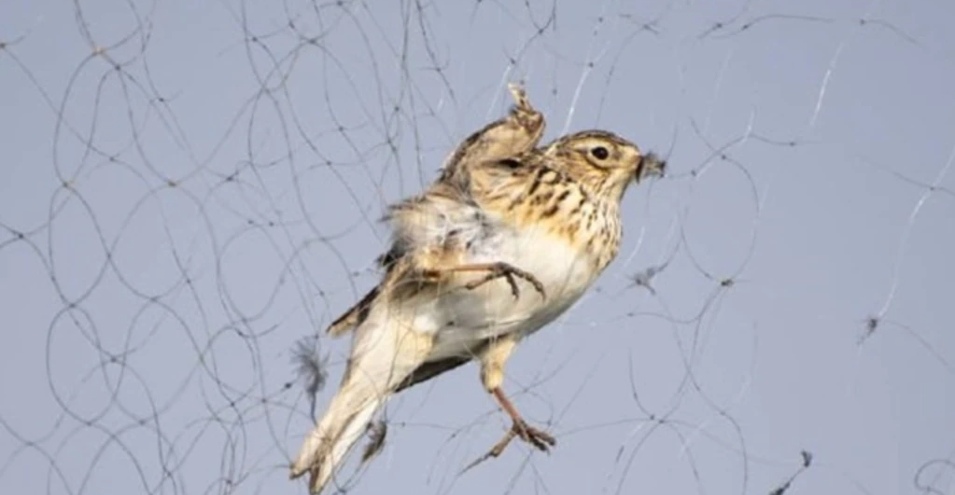
As the autumn and winter seasons arrive and birds migrate to the wetlands of northern Iran, many of these travelers end up on restaurant menus. On the other hand, during the bird migration season, the market for renting livestock farms on the edge of wetland lands is hot, and farmers rent their lands for tens of millions of tomans during the hunting season.
The head of the General Department of Environment of Mazandaran Province told ILNA about bird smuggling: "In Fereydoun, wildlife smuggling occurs alongside it, and the turnover of this smuggling is very high. The bulk of its profits also go to the middlemen, i.e. the sellers of smuggled birds."
One of the markets that, despite its illegality, simply deals with the sale and smuggling of birds is the Fereydounkenar market. As the only market for wild and migratory bird carcasses in northern Iran, this market continues to operate despite the hunting ban and even the coronavirus pandemic that has caused many businesses to close.
The Aftab Yazd newspaper wrote some time ago: About 9,000 citizens have asked the head of the judiciary to close this market, a task that no one has been able to do for years despite existing laws. But many believe that due to the long history of this market, no one can or wants to close it.
According to the newspaper, a businessman who has been selling fish next to the Fereydounkenar bird market for years said about buying and selling rare species: "Since last year, when the prices of all kinds of meat have become more expensive, the work of hunters has become more prosperous. They spread their traps at night and during the day, in the presence of law enforcement officers, they bring the prey and deliver it to the sellers. The prices are also high. In this season, each hunter, even if he is not looking to take rare species alive, earns up to 2 million tomans per day, and this is a tempting figure."
According to some activists, given that the February clashes between local hunters and environmentalists are not the first this year or the only one in recent years, it is likely that with increasing economic pressures and a decrease in environmental attention in the Islamic Republic's major programs and government budget, other similar incidents will occur in this area or other protected areas in Iran.
Source: Voice of America