The Islamic Republic of Iran began its efforts to expand influence in Latin America several years ago and strengthened these efforts during the presidency of Mahmoud Ahmadinejad and his special relationship with Venezuelan President Hugo Chavez.
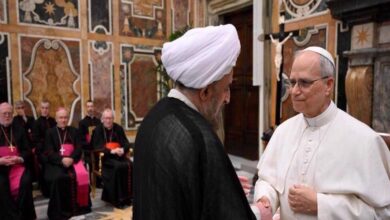
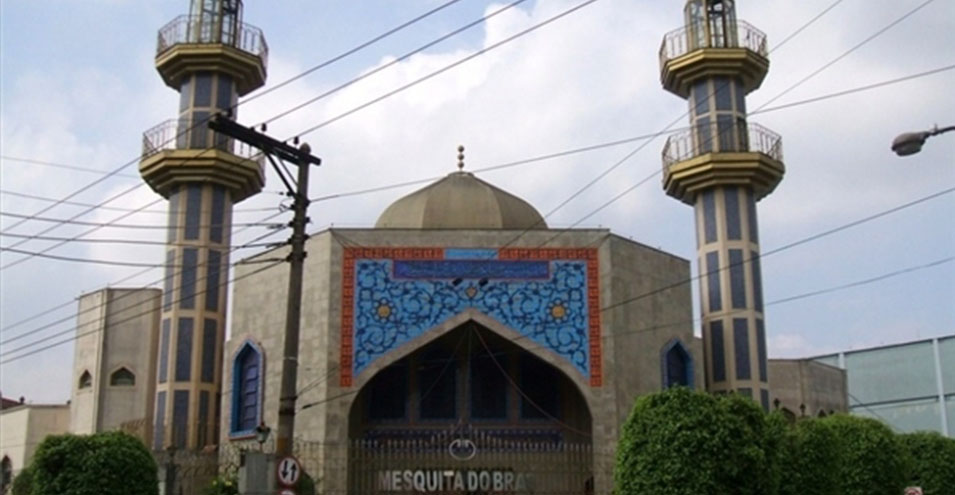
The National Interest magazine examined various aspects of these efforts in a report, writing that Iran’s public face in Latin America appears peaceful and harmless through mosques, cultural centers, schools, halal meat inspectors, and even boys’ scout groups. However, beneath the guise of piety and interfaith dialogue, Tehran uses its connections with anti-American regimes and movements to find a foothold in the region and promote revolutionary Islam to local Muslims, and rather than relying on traditional tools of diplomacy, it advances its agenda through mosques and religious organizations.
According to National Interest, Tehran’s use of Iranian and Lebanese Shiite seminary students as informal agents of the Iranian revolution is not a new matter. Mohsen Rabbani was the first clergyman to arrive in Latin America, entering Argentina in 1983 to direct the Al-Tawhid Mosque and work as a halal meat inspector in Buenos Aires. Both activities appeared harmless, but Rabbani had close ties to the bombing of a Jewish cultural center in Argentina’s capital in 1994.
Rabbani was not alone. Shortly after his arrival in Buenos Aires, another seminary student named Sheikh Taleb Husein al-Khazraji went to Brazil. Alberto Nisman, an Argentine prosecutor who was recently killed, mentioned both of them in a 2013 report on Iranian networks in Latin America.
National Interest adds that the dual role of Shiite clerics as religious and political envoys of the Islamic Revolution was highlighted in 2010, when the U.S. Treasury Department identified another sheikh as a Hezbollah representative in Latin America and stated that Bilal Mohsen Wahbi “relayed information and instructions between Hezbollah leaders in Lebanon and Hezbollah elements in South America” and oversaw counterintelligence activities on the triple front of Argentina, Brazil, and Paraguay. He continues his propaganda and religious activities unhindered.
National Interest further reports that they are not alone. Alongside dozens of Iranian and Lebanese Shiite clerics, a new generation of locally born seminary students have joined them. Those who convert to Islam are regularly sent to the seminaries in Qom at Iran’s expense, and they return to their countries as Iran’s informal envoys.
The U.S. State Department recently announced that Iran’s presence in Latin America appears diminished due to reduced trade and official visits since the Hassan Rouhani administration came to power.
Nevertheless, National Interest argues that Iran’s influence should not be measured by the number of official visits. Today this work is carried out by religious envoys, who wield influence and convey anti-American messages and hatred of Israel.
Source: Voice of America