Serious violations of women's rights in rape cases
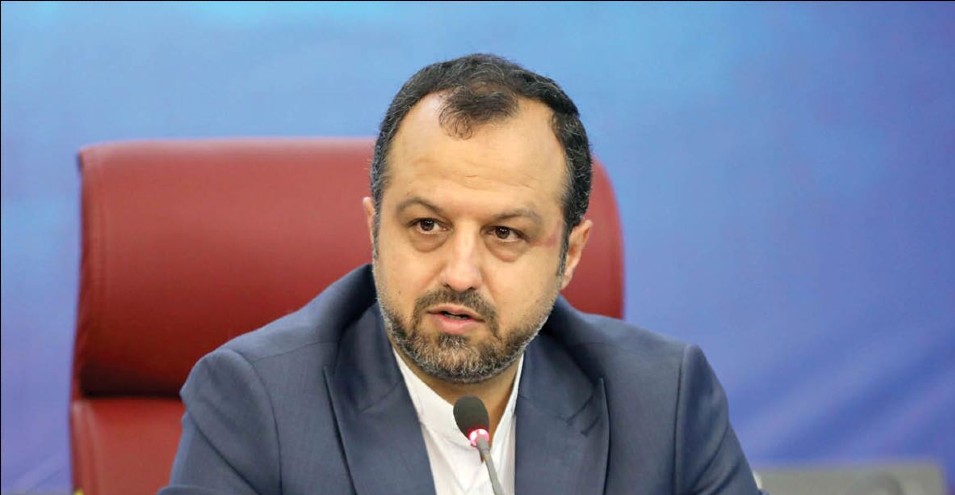
Hossein Raisi, lawyer and attorney: Proving rape is very difficult for any woman in the Iranian legal system, especially if the accused is somehow connected to the power structure and government.
The story of Zahra Navidpour, a 28-year-old woman from a village in Malekan County, East Azerbaijan, who in recent months posted a video and audio file on social media, claiming that Salman Khodadadi, a representative of the same county in the parliament, had raped her about four years ago and then threatened her and her family, has once again raised the issue of obstacles to handling complaints related to sexual harassment and rape against women in the Iranian judicial system.
Ms. Navidpour had announced that the Malekan County Prosecutor's Office had rejected her complaint on the grounds that the authority lacked the authority to investigate the complaint, and that her follow-up with the Board of Oversight of the Conduct of Members of Parliament had also been unsuccessful. On January 8, 2018, the Malekan Prosecutor's Office announced that she had committed suicide.
Since no final judicial verdict was ever issued in this case, the authenticity of the audio file was released, and the cause and manner of Ms. Navidpour's death were not determined by legal authorities, it is not possible to express a legal opinion on it. However, raising such an issue has once again drawn public attention to the obstacles and shortcomings of the provisions contained in the Islamic Penal Code and the Criminal Procedure Code. Provisions that have made proving rape so difficult that, except in very rare cases, no one is convicted of rape in Iranian courts.
A review of the laws related to the crime of rape indicates that the Iranian legal system is not at all willing to prosecute sexual crimes and, in line with the traditional and jurisprudential view of the matter, is trying to cover up cases of sexual crimes. However, this practice is a clear violation of women's fundamental rights and their right to be safe from violence and abuse. On the other hand, providing for the death penalty for the perpetrator is against the fundamental principles of human rights and increases the violence of the crimes committed. Reforming Iran's laws in the field of prosecuting and punishing rape is the only solution to this vicious and criminal cycle.
What is commonly known as rape in common usage and literature is defined in the Islamic Penal Code of Iran as "forcible adultery" and, according to Article 224 of this law, carries the death penalty for the perpetrator. In addition to having sexual intercourse by force and coercion, "forcible adultery committed through deception of an underage girl or through kidnapping, threatening or intimidating a woman, even if it causes her to submit," will also be considered forcible adultery, or rape.
Also, Note 2 of Article 225 states that "If a person commits adultery with a woman who does not consent to adultery while she is unconscious, asleep, or drunk, his behavior is considered forcible adultery." However, according to lawyers, the severity of this punishment on the one hand and the difficulty of proving the crime on the other hand have practically resulted in no one being convicted as an adulterer in the courts, and the adulterers remain unpunished.
Proving rape in Iranian courts is very difficult, if not impossible.
The approach of Iranian law, which is derived from Shiite jurisprudence, is strict in proving sexual crimes. In principle, investigation into the commission of an act contrary to chastity is not permissible in the absence of a private complainant. Therefore, the judge is not required to acquire knowledge and certainty that the act was committed. Even if such knowledge were to emerge and in the absence of a private complainant, he cannot rely on it.
Explaining the obstacles to proving rape claims to the Human Rights Campaign in Iran, Hossein Raisi, a lawyer and women's and children's rights activist, said: "Analysis of the relevant legal provisions shows that the Iranian legislature has tried as much as possible to prevent individuals from being punished for rape and other sexual crimes. This policy is exactly the opposite of the common practice in many countries, which try to investigate sexual crimes as much as possible and not leave them unpunished."
He continued: "A woman who wants to convict a rapist in court must prove both the existence of sexual intercourse and the existence of force or coercion. The big problem is that if she succeeds in proving sexual intercourse but cannot prove that the intercourse was forcible and without her consent, she herself will be convicted of adultery, the punishment for which is 100 lashes for single people and stoning for married people. Therefore, a woman who claims to have been raped may end up being flogged or even stoned herself instead of witnessing the punishment of her rapist. Awareness of this has caused many women to refrain from filing complaints and pursuing cases of rape in court."
As a result, if a woman who is a rape victim refuses to file a complaint for any reason, or if she abandons her complaint halfway through due to social and family pressure or fear of failing to prove the crime and possibly being convicted of adultery, the case is immediately closed and the prosecutor has no obligation to pursue the matter as a public crime.
Another major obstacle to the judicial prosecution of rape cases is the difficulty of proving the crime. According to the Islamic Penal Code, there are three ways to prove adultery: four confessions by the perpetrator before a judge, the testimony of four just men or three just men and two just women, and finally, the knowledge of the judge. It is natural that the rapist, knowing that if the crime is proven, he will be executed, will not confess to this act. If there is a confession in such cases, it is made in the early stages of arrest, which the accused easily denies later. Especially since, according to Article 218 of the Islamic Penal Code, in crimes that entail the implementation of the “hadd” punishment, including adultery, if the accused claims that his confession was obtained through threats, intimidation or torture, the said claim is accepted without the need for witnesses and an oath.
It is almost impossible to prove a crime with the testimony of four just men or three just men and two just women. Because sexual intercourse, which is also a form of rape, certainly takes place in private, not in the presence of four to six people. In addition, according to the Islamic Penal Code, if someone testifies to the occurrence of adultery or sodomy (sexual intercourse between two men) but his testimony does not lead to the proof of the crime, he himself is found guilty under the Islamic law of "Qadhf" and sentenced to eighty lashes.
Therefore, the only practical way to prove rape in Iranian courts is the judge's knowledge. The most important way to prove it is the lack of a clear and decisive theory from forensic medicine. However, in order for forensic medicine to be able to prove the rape and the identity of the rapist, it is necessary for the victim to refer to forensic medicine within 72 hours of the crime, and if possible, without washing their body or clothes. However, as Behshid Arfania, a lawyer, stated in an interview with Khabar Online, in most cases, victims refer to forensic medicine too late due to ignorance and after the traces of the crime have disappeared. Prosecutors and police officers have not received sufficient training on the urgency and importance of such cases, and therefore, in many cases, the golden time to prove rape and the only way to administer justice is lost.
Another important point is that in Iranian courts, audio and video files are not considered conclusive evidence, and a person cannot prove rape and convince a judge by citing an audio file alone. Such evidence can only be effective as a judicial document and in conjunction with other evidence, such as a forensic medical report.
The death penalty is not appropriate for the crime of rape.
Many human rights activists, sociologists, and lawyers have criticized the death penalty for rape, calling it an inappropriate punishment and even an obstacle to establishing justice and combating sexual violence against women. In fact, this type of punishment and definition of the limits of sexual violence have resulted in the fact that in practice only perpetrators of organized and mass rapes are sentenced to punishment.
Hossein Raisi, a veteran lawyer who has spent years defending victims of violence in Iran, told the Campaign that the harsh punishment provided for in the law is another reason for the courts' reluctance to convict people of rape: "Given that if rape is proven, the rapist must be executed, many judges try to avoid convicting people of rape as much as possible, except in special cases such as repeat offenders or professional criminals, so that they are not forced to issue a death sentence. Therefore, in many cases, they ultimately sentence them to having an illicit relationship or acts against chastity, which are punishable by up to 99 lashes, and they do not establish that rape, that is, full sexual intercourse, occurred."
This lawyer also points to another negative consequence of providing the death penalty for the crime of rape: "In addition, in many cases, rapists, knowing that the gallows awaits them if they are caught and proven guilty, kill the victim and try to dispose of his body. As a result, providing the death penalty for rape is not positive in any way because it increases the severity and violence of the crimes and puts the victim's life at serious risk."
For this reason, the most important legal change that can lead to social and individual prevention of this crime is to reform the punishment for rape and adopt a graduated punishment system. Despite the opinions of experts and the absence of a jurisprudential prohibition, the new law did not consider reforming the law in this area.
Lack of effective mechanisms to protect individuals against abuse of power by officials
Considering that the law not only does not protect rape victims, but all its provisions are designed to make it impossible to convict rapists, one can imagine how difficult it would be to sue someone close to the power structure, such as a member of parliament, for rape. For these reasons, Zahra Navidpour, a 28-year-old woman from Malekan County, was ultimately unable to bring Salman Khodadadi, a 56-year-old member of parliament who had served four terms and spent 19 years as a member of parliament, to trial, despite having several audio files and text messages that showed threats against her and her family.
In an interview with the campaign, Hossein Raisi, a lawyer and women’s rights activist, referred to the law on parliamentary oversight of the conduct of representatives. Under this law, a seven-member panel of parliamentarians, whose members are elected by the members at the beginning of each parliamentary term, is responsible for investigating “reports received about abuse and financial or moral misconduct by a representative and his or her unusual income and expenses.” In addition to investigating violations of the law, the panel reports the criminal charges to the competent judicial authority.
Also, according to Article 307 of the Criminal Procedure Code, crimes committed by state officials, including members of parliament, can only be tried in Tehran’s criminal courts. For this reason, Ms. Navidpour’s complaint was rejected by the Malekan County Prosecutor’s Office and she was never able to access judicial review. Hossein Raisi says about this case: “Expressing a definitive opinion requires a detailed and specialized judicial review, but the evidence, including the audio files, clearly indicates that the relationship between these two individuals went beyond the framework of a relationship between a member of parliament and a resident of her constituency. Ms. Navidpour was certainly under pressure from various directions. In addition to the general culture that prevails in society and the judicial authorities, which is a patriarchal culture based on victim blaming, the political system also fully supports the member of parliament. This case is a clear example of the inequality of power and clearly shows the gap in our legal system both in protecting women from harassment and rape and the gap in confronting the abuse of political power.”
Source: Iranian Human Rights