Overturning the death sentence of "Abbas Daris" in the Supreme Court
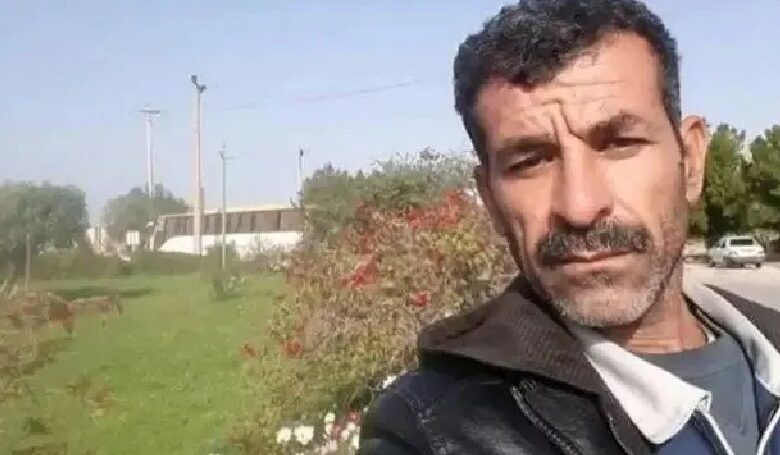
The death sentence of Abbas Daris, who was arrested during the November 2019 protests, was overturned by the Supreme Court, and the case has been referred to the same branch for retrial.
In a significant legal development, the death sentence of Abbas Daris, one of the detainees of the November 2019 protests, was overturned by the Supreme Court and his case was referred to a branch of the same court. A decision that could be a sign of uncertainty in the judicial path of the protesters' cases.
Abbas Daris, born in 1973 and a father of three, was arrested by security forces in the Chamran town of Mahshahr along with his brother Mohsen on December 7, 2019. He had previously been sentenced to death by the Mahshahr Revolutionary Court on charges of “moharebeh,” a sentence that was confirmed by Branch 39 of the Supreme Court in mid-July 2023.
In another case, he was sentenced to 14 years in prison by a criminal court in Khuzestan province, 10 of which were to be served. His lawyer, Fareshte Tabanian, announced: “Abbas Daris’ retrial was accepted and the Moharebeh verdict was overturned, and the case will be referred to the same branch for retrial.
Why is the overturning of the verdict important? This move could mean two things: first, that the Iranian judiciary may be reviewing the cases of protesters, especially those facing serious charges such as war crimes, and second, that international and human rights pressure has had some impact, albeit a small one.
The violation of the "moharebeh" ruling in this case means that the Supreme Court has concluded that the initial proceedings or documentation were flawed in terms of form or substance. By referring the case to the same branch, a new stage of the proceedings will begin, and its outcome could be decisive.
The charge of war crimes carries one of the strongest condemnations in legal and international terms. The fact that such a verdict has now been overturned raises questions about standards of interrogation, evidence, and sentencing.
Abbas Daris has denied admitting to blocking the road or burning tires. His claim underscores the importance of a more thorough investigation into the case. The overturning of the verdict may also affect the course of other cases related to the November 2019 protests, allowing similar trials to be retried. Some analysts see this as the beginning of “setting the stage for a more moderate judicial approach” to the detainees.
If the same division issues a more lenient sentence or reconsiders the sentence at a later stage, this could mean a partial reversal of the “maximum consolidation of sentences” policy in protest cases. However, it is not yet clear whether this will remain an exceptional case or be a sign of a larger shift in judicial approach.
Given that he still has a prison sentence and a new trial has begun, his family and human rights defenders are following the case closely.