Amnesty International's new report from November: At least 304 killed, children detained, tortured and left unaccounted for

In its latest report, Amnesty International put the number of people killed in the widespread protests in November at 304, saying that thousands of people, including 15-year-old children, have been arrested, and that the lack of information and awareness threatens the detainees with the risk of torture.
The latest Amnesty International report was published while the Islamic Republic's officials continue to refuse to release statistics on those killed by its security forces.
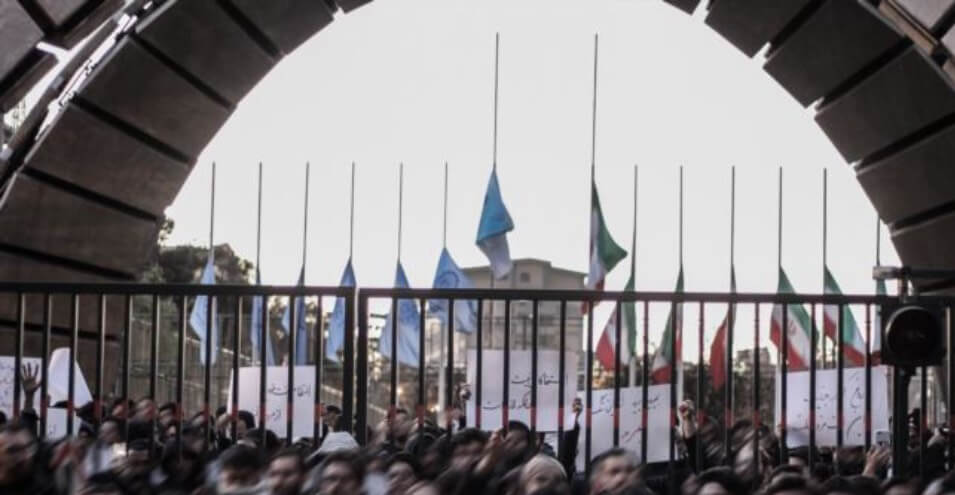
Human rights monitors at Amnesty International say that the Islamic Republic's security forces have "brutally suppressed" the November protests and have detained thousands of people, including journalists, human rights activists and students, to prevent anyone from speaking out about the ongoing "atrocious" measures.
The organization says its new report is based on interviews and conversations with dozens of citizens inside Iran who have spoken of secret and silent arrests, torture, and other ill-treatment of detainees.
Amnesty International has also raised the death toll to at least 304. The organization's previous estimate had reported the number of dead nearly a hundred fewer, at at least 208.
The website Kalameh has put the death toll in the protests at at least 366. A report in the New York Times said that some monitoring organizations say more than 400 people have been killed. The US President has recently said in a couple of speeches that he believes more than a thousand people have been killed in the November protests.
The Islamic Republic cut off almost all citizens' access to the internet hours after the protests began in the last week of November. However, published footage and reports indicate that security forces have been directly confronting protesters from the very first day, firing live ammunition.
Amnesty International also says that videos and statements in its possession show that the Islamic Republic's security forces opened fire on unarmed protesters who posed no threat to the officers.
“Disturbing eyewitness accounts suggest that, almost immediately after the killings of protesters by security forces, they launched a large-scale and coordinated crackdown to stoke fear and prevent anyone from speaking out about the events,” said Philip Luther, Amnesty International’s director of research for West Asia and North Africa.
The organization cited a recent UN report that said at least 12 children were among the dead.
Philip Luther says "the international community, including through the UN Human Rights Council, must act immediately" to force the Islamic Republic to allow an investigation into the events.
On December 5, Michelle Bachelet, the UN High Commissioner for Human Rights, called for greater transparency from the Islamic Republic's authorities, as well as an "independent and impartial investigation" into the events.
The Islamic Republic's officials have not responded to the UN's request. However, the extent of the violence, and the number of unarmed civilians who have been shot and killed, has been revealed in some of the vague statements made by officials in recent days, even by the Islamic Republic's Supreme Leader, Ali Khamenei.
"Wave of Mass Arrests" and "Torture and Mistreatment"
Amnesty International, in its new report, also spoke of a “wave of mass arrests.” The organization referred to some statements by Tehran authorities about the arrest of at least 7,000 people, and noted that the authorities responsible have not announced official statistics on this matter either.
A number of sources have told this human rights watchdog that arrests are continuing across the country.
According to the organization, children as young as 15 are among the detainees being held in prisons such as Fashafoueh.
In early December, Qasem Sholeh Saadi, a lawyer and former member of parliament who himself had the experience of being imprisoned in Fashafoyeh, described the prison's conditions as "catastrophic." Hassan Khalilabadi, head of the Islamic Council of Rey, also reported the extremely difficult conditions of the imprisoned protesters, saying that "Fashafoyeh prison does not have the necessary facilities."
Amnesty International has warned about statements made by Islamic Republic officials, including its leader, about protesters and describing them as "villains" and similar statements, as well as statements published on the Iranian Broadcasting System (IRBS), regarding the possible issuance of death sentences to detainees.
In recent days, the state-run Islamic Republic Radio and Television even broadcast statements by one of its "religious experts" who called for "tormenting" those arrested during the protests. Statements that received widespread coverage in cyberspace and domestic and foreign media.
Amnesty International has also warned about the arrests of journalists, students, human rights activists, minority rights activists, workers, and Iranian citizens of various ethnicities.
The organization also reported, citing witnesses and video evidence, the torture of some detainees. One of these witnesses said that a family member returned home after being released on bail with cuts and bruises on his head and face, and was shocked by what he had experienced.
Amnesty International, citing other sources, says that the detainees, including children, were taken to Rajai Shahr prison in trucks, blindfolded and handcuffed, and are subjected to daily punches, kicks, and beatings with batons.
"Attacks on hospitals", "ignorance of detainees"
The organization has also spoken of attacks on hospitals and the detention of the wounded.
A news source says security officials have forced a hospital director in Khuzestan to provide them with a list of all those recently admitted to the facility.
Human rights monitors have also warned about the lack of information about some detainees, saying that some people either have no contact with their families or very little information is known about them.
Some family members of detainees have told Amnesty International that authorities are refusing to provide information.
“The world must not sit idly by and watch as the Iranian authorities continue to commit widespread human rights violations and their ruthless efforts to crush dissent,” said Philip Luther, Amnesty International’s director of research for West Asia and North Africa.
Source: Radio Farda