Revolutionary institutions have no right to criticize each other.
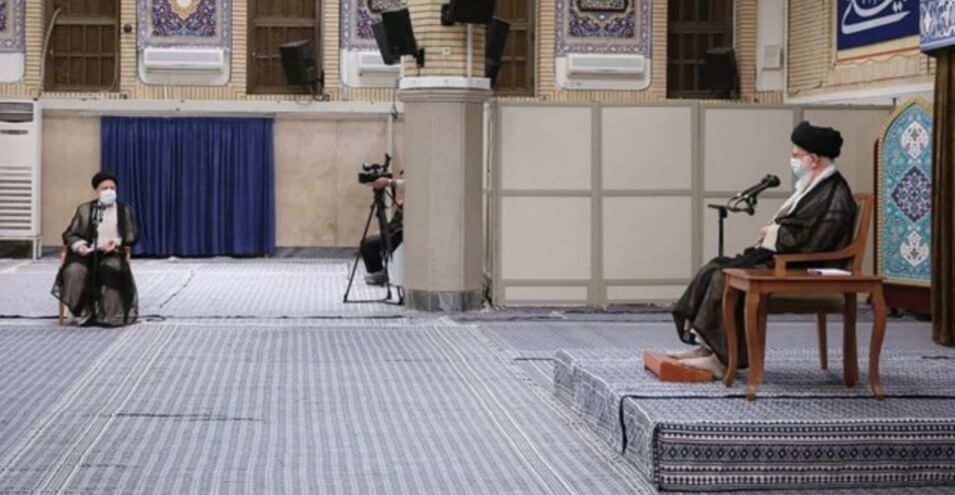
Revolutionary institutions have no right to criticize each other. This is a new but repeated order from the Leader of the Islamic Republic to the institutions under his supervision and even government organizations.
In remarks published on his website yesterday, relating to his meeting with the participants of the Congress of Martyrs of the Country's Nomadic Community, Ali Khamenei complained about the radio and television stations under his supervision for criticizing the police force and said: "Anyone who makes people distrustful and pessimistic about the activities, efforts, and plans of the country's officials is working for the benefit of the enemy, whether they know it or not."
The Leader of the Islamic Republic made these remarks in response to a television program's criticism of the performance of the police and Bank Melli in the theft of 250 deposit boxes at the bank.
The Leader of the Islamic Republic said, without directly mentioning the name of the program or the presenter of the Iranian Broadcasting Corporation, "It is being said that law enforcement forces are being blamed instead of encouraged."
The head of the Iranian Broadcasting Organization, who is appointed by the Supreme Leader, immediately reacted to these statements and apologized for the incident in a letter and promised to make up for the mistake.
Ayatollah Khamenei's warnings to his subordinate institutions and even to the media to prevent criticism or stop reporting are unprecedented. In the most memorable of them, after the embezzlement of 3 trillion tomans at the National Bank and Mahmoud Khavari's escape to Canada became public, he told judicial officials and the media in a public speech, contrary to public expectations, not to "drag" the matter any further. This request and order from the leader of the system to stop discussing and reporting on the largest embezzlement in the country's history was the beginning of other, and even more extensive and voluminous, embezzlements.
According to the law of the Islamic Republic, the Iranian Broadcasting Corporation, the Revolutionary Guard Corps, the Army, the Guardian Council, the Assembly of Experts, the Judiciary, the Supreme National Security Council, the Basij Organization, and the police force are under the direct supervision of the Leader, and the removal and appointment of senior officials of these institutions and determination of their general policies are the responsibility of the first person in the country.
In addition, over thirty other foundations, organizations, organs, and institutions are also governed by the Supreme Leader, although their budgets are determined by the government and parliament.
He, who apparently does not believe in the scope of his own authority, had said a few years ago in a meeting with revolutionary students: "The management of institutions such as the armed forces is with the leadership, but in the judiciary and the Iranian Broadcasting Corporation, even though their heads are appointed by the leadership, their management is not with the leadership. For example, I have always had and continue to have a critical stance on various issues when dealing with the Iranian Broadcasting Corporation, both under the current and previous managements."
Despite all these powers, he is not accountable to any institution, person, or media, and his supporters consider the leader to be alone and lacking the executive power to reform the country's affairs.
He is a leader who, during his more than 30 years of rule, has reacted strongly to the slightest criticism of the institutions under his management and silenced the media, but in all this time, he has never faced questions from the media even once.
Source: Voice of America