Experts are extremely concerned about the resurgence of the coronavirus outbreak in Iran
In recent days, the trend of coronavirus infections in Iran has increased, and the number of identified cases has exceeded 103,000. Experts warn that the recent trend could be worrisome and that people should not consider the coronavirus to be over.
In Iran, the number of citizens who tested positive for COVID-19 was very high until mid-April, sometimes exceeding the mark of three thousand people per day.
This trend continued to decrease with fluctuations until May 4, when the Ministry of Health announced the number of new coronavirus cases at 802, the lowest number to that time.
The situation has changed again in recent days. According to Kianoush Jahanpour, spokesman for the Ministry of Health, in the 24 hours leading up to noon on Thursday, May 8, 1,485 new COVID-19 patients were identified in Iran “based on definitive diagnostic criteria.”
Thus, according to official statistics from the Ministry of Health, 103,135 people in Iran have been confirmed to be infected with the coronavirus. In the past 24 hours, 68 more people have died from the coronavirus, bringing the total number of COVID-19 victims in Iran to 6,486.
"Concerns remain"
Masoud Younesian, a faculty member at Tehran University of Medical Sciences, told IRNA that it is still too early to judge the changes in recent days, but "concerns about a possible new round of disease outbreaks in the country remain."
In response to the question of whether the upward trend of the disease in recent days is related to increased tracking or indicates a second wave of the coronavirus outbreak, he said: "I do not have sufficient information in this regard. National Headquarters officials can better judge in this regard, given the trend in the number of tests being conducted."
Based on statistics published daily by the Ministry of Health, the number of coronavirus tests in Iran has fluctuated between 9,000 and 12,000 over the past month, and the number of tests increased to about 13,500 between Wednesday and Thursday alone.
The coronavirus outbreak is not over.
Ahmad Mehri, a member of the Iranian Epidemiology Association, believes that the measures that have been implemented so far, such as restrictions, social distancing, and prevention-oriented policies based on screening and disease detection, have only "partially led to the relative management of the coronavirus epidemic," and for this reason, people should not consider the coronavirus outbreak "over."
The expert warned about easing restrictions, telling Fars News Agency: "The virology and epidemiology community constantly acknowledges that what we know about this mysterious coronavirus is less than what we don't know. This is the most serious and worrying issue that should not be ignored. Because the reopening of places and easing restrictions after the relative calm of the coronavirus in Iran has created fears that the next peaks of the coronavirus epidemic will be more worrying."
He says that if a "cluster of disease" in a city suddenly causes an "explosive outbreak" due to the easing of restrictions, which hospital and treatment structure will be able to handle the huge volume of patients and patients?
A member of the Iranian Epidemiology Association warned that what has been achieved so far in combating the new coronavirus has been "relative management, based on official statistics," but people should realize that the epidemic is still ongoing and "the country's epidemiology community is very concerned about the next spikes."
Doubts about official statistics on Corona
The Ministry of Health's official statistics on the number of COVID-19 cases and victims are facing serious doubts from many experts and some local officials, including members of the Tehran City Council.
Citing burial statistics in the capital's main cemeteries in March and April and comparing them with statistics from the previous similar period, the members of this council believe that the number of deaths suspected of being infected with the coronavirus in Tehran during these two months was between four and five thousand six hundred people.
Nahid Khodakarami, a member of Tehran City Council who presented these figures on April 17, said that about 70 to more than 100 people buried daily in Tehran are likely to be infected with COVID-19.
Verifying these figures is not easy for various reasons, such as the lack of testing of suspected COVID-19 deaths. In addition, the average daily testing of 11,000 COVID-19 tests in a country of 82 million people does not provide a clear picture of the extent of the spread of COVID-19.
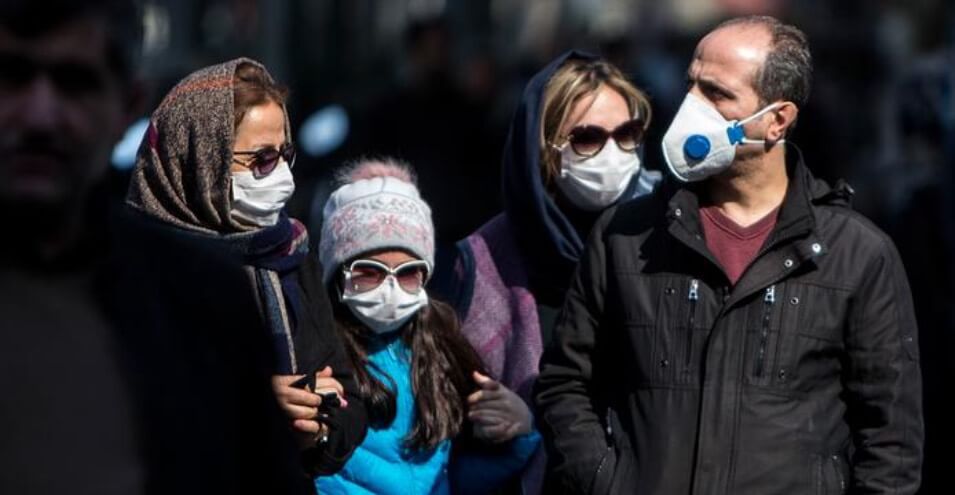
The epidemiology community, expressing concern about the next spikes in coronavirus cases, warns people not to consider the coronavirus crisis over.
Source: DW