US envoy warns Iran: Do not cooperate with the IAEA, we will hold an extraordinary meeting
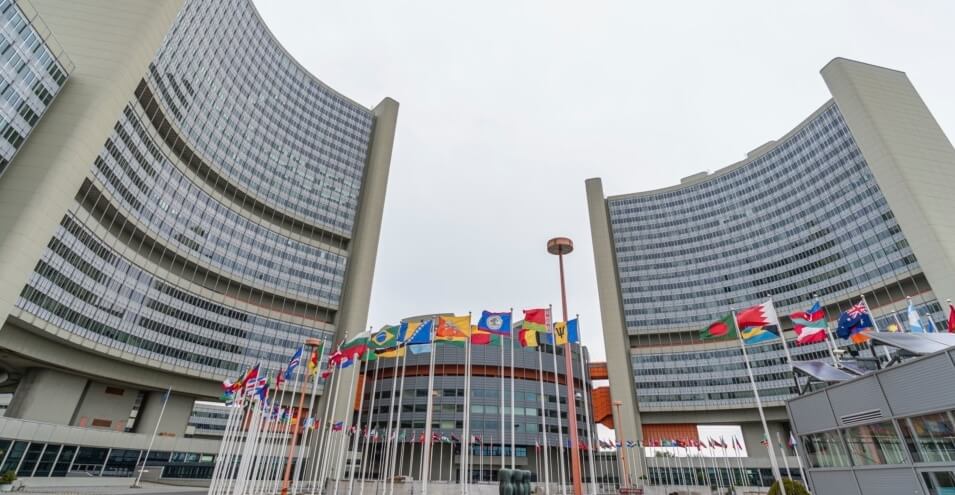
On the second day of the meeting of the International Atomic Energy Agency's Board of Governors, the US representative warned that if the Islamic Republic of Iran continues to fail to cooperate with the agency, an extraordinary meeting will be convened to address "this crisis."
The text of the remarks made by Louis L. Bono, the US Chargé d'Affaires to the Vienna-based International Organizations, at a meeting on Thursday, December 25, has been published on the mission's official website.
The regular meeting of the International Atomic Energy Agency's Board of Governors began on Wednesday. The meeting will continue online for three days following the renewed lockdown in Austria that began last Monday.
At the meeting, which was held about the Islamic Republic's nuclear program, Louis Bono accused the Iranian government of not cooperating with the International Atomic Energy Agency.
He emphasized that if the Islamic Republic does not stop this practice, the IAEA Board of Governors will convene an extraordinary meeting to address "this crisis."
According to the US representative, this cooperation should include “credible and verifiable explanations regarding the origin and current location of nuclear material or equipment that sampling indicates was present at three undeclared locations.”
Accordingly, the Islamic Republic should cooperate with the Agency to provide transparent information on the location and activities related to the natural uranium stockpile – in the form of a metal disk – associated with the fourth undeclared site.
The US representative continued, noting that after two years, the Agency's questions have still remained unanswered by the Iranian government, saying: "As we have consistently emphasized, these questions relate to Iran's legal obligations under the Non-Proliferation Treaty (NPT) and not its obligations under the JCPOA."
Louis Bono has stated: "If the issue of Iran's lack of cooperation on various issues, including those raised under the JCPOA, and in particular ensuring the continuity of information [to the agency] from the Karaj site, is not immediately resolved, the Council will have no choice but to convene an extraordinary session before the end of this year to address this crisis."
He also expressed concern over the Islamic Republic's move to suspend implementation of the Additional Protocol and the fruitless visit of IAEA Director General Rafael Grossi to Tehran after two months, saying: "This issue negatively affects the Agency's ability to provide credible assurances about the absence of undeclared nuclear materials and activities in Iran."
Rafael Grossi reportedly told the IAEA Board of Governors that no specific results had been achieved from talks he held in Tehran this week on Iran's nuclear program, but he noted that he would not give up "trying to reach some kind of understanding with Iran."
The US representative continued the statement by emphasizing the need for the Council to unite and implement coordinated action to prevent the Islamic Republic's current efforts and sabotage in the Council's affairs.
The Islamic Republic claims that, as a signatory to the Nuclear Non-Proliferation Treaty (NPT) and a member of the International Atomic Energy Agency, it has the right to access nuclear technology for civilian and peaceful purposes.
This comes while the three European powers involved in the JCPOA issued a joint statement this week, expressing deep concern about the Islamic Republic's increasing nuclear program and warning about the consequences of Iran's 20 percent and 60 percent enrichment.
A joint statement by France, Britain, and Germany addressed to the IAEA Board of Governors stated that "Iran has no acceptable civilian justification for 20 percent and 60 percent enrichment, and the production of enriched uranium at this level is unprecedented for a country that does not have a weapons program."
Nuclear talks between Iran and the remaining powers in the JCPOA, which have been suspended since June of this year due to the election of Ebrahim Raisi as president, are scheduled to resume in Vienna on December 29. The United States has been indirectly involved in these talks so far due to its withdrawal from the JCPOA.
The goal of these negotiations is to persuade Iran to resume fulfilling its obligations under the JCPOA and lift Washington's sanctions against Tehran.
On Wednesday, National Public Radio (NPR) aired an interview with Robert Malley, the US special representative for Iran, in which he emphasized that the United States will not stand idly by if Iran does not agree to return to the JCPOA and comes "very close" to building a nuclear bomb during next week's nuclear talks.
In the final part of his remarks, Louis Bono expressed concern about the continued inappropriate behavior and intimidation of IAEA inspectors during body searches by security agents of the Islamic Republic, saying: "The members of the Board of Governors sent a clear message to Iran two months ago that inappropriate behavior and intimidation of inspectors is unacceptable and must end immediately."
On September 14, the International Atomic Energy Agency issued a statement responding to the physical harassment of female inspectors by guards at Iranian nuclear facilities, calling the reported incidents "unacceptable."
The American newspaper "Wall Street Journal" also reported in its September 13 issue, citing Western diplomats, that guards at Iranian nuclear facilities have repeatedly physically abused female inspectors from the International Atomic Energy Agency over the past few months.
Some diplomats had previously expressed concern that making these matters public might damage the relationship between the IAEA and Iran in reaching an agreement.
Source: Radio Farda