Washington on the path of a difficult choice, from exchanging classified information to a scenario of a targeted attack on Iran
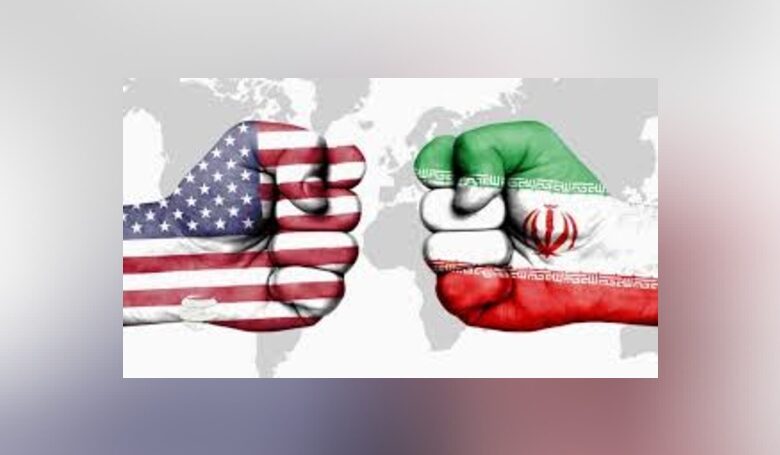
Washington's tough choice, European classified information, and the threat of a targeted attack have placed Iran at the center of a multifaceted crisis.
Amid the intensification of the nationwide crackdown on protests in Iran and the unprecedented increase in the death toll, there are clear signs of a shift in US policy from political pressure to operational readiness. Reports published in reputable Western media indicate that the Donald Trump administration, while sending messages of support to Iranian protesters, is preparing the intelligence and military platforms for direct action.
The US government on Monday asked several European countries to share classified information and data about potential targets inside Iran with Washington, according to two European officials, in a request that is seen as a sign that the crisis is moving beyond verbal warnings.
According to the Washington Post, these moves coincided with a meeting of senior White House officials to discuss military options, a meeting that took place amid a complete diplomatic deadlock and continued violence against protesters. Explaining the nature of the possible targets, one European official said: “We have no indication that President Trump intends to attack nuclear facilities again. He will most likely target leaders of organizations and forces responsible for and involved in the killing of protesters.”
In this context, Donald Trump announced the end of any political dialogue on Tuesday morning, January 13, by canceling all meetings with Iranian officials. He indirectly supported Republican Senator Lindsey Graham's call for intervention by releasing a message that included the phrase "Help is on the way" and using the acronym for the slogan "Make Iran Great Again," a message that quickly received global resonance.
The White House has also tried to link these threats to Trump's track record. White House spokeswoman Anna Kelly said: "The president has made his position clear and has shown with Operation Midnight Hammer (bombing Iran's nuclear facilities) and Absolute Will (capturing Maduro) that he stands by his word."
However, the political climate in the US is not unified. There are also serious concerns within the Trump camp about the consequences of entering a new conflict in the Middle East. Some figures close to the president have warned that such a move could come with both heavy economic costs and conflict with the slogan of “America First.” Former Trump adviser Steve Bannon has openly stated: “We don’t care if Iran becomes great again or not. The presence of Israel and the US there will only prolong the problem.”
At the decision-making level, informed sources say Vice President J.D. Vance and Secretary of State Marco Rubio have presented Trump with a range of operational options. Vance, who previously supported attacking Iran’s nuclear facilities, is now more cautious about the risk of the United States getting caught up in an attritional conflict.
At the same time, unconventional options are also on the table. According to a former US official, the president has been briefed on scenarios that include cyberattacks on government infrastructure, targeted actions to counter internet blackouts and strikes on facilities linked to the repression apparatus. However, the Pentagon is concerned about Tehran’s retaliatory response. “We don’t have enough equipment in the region right now to conduct a full-scale attack without risk of retaliation because we have removed a lot of our assets from Central Command (CENTCOM) for the Venezuela operation,” a source familiar with the matter told the Washington Post.
Despite these limitations, America's military power remains intact, from destroyers equipped with long-range missiles to B2 bombers that have previously been used in 36-hour operations against Iran.
Meanwhile, a European official has warned that Tehran may be exploiting Trump’s hesitation and offering talks to buy time. “If President Trump backs down and negotiates while protesters are being killed, the regime will not only survive this ordeal, but will become emboldened and act with greater impunity and brutality,” he said.
Inside Iran, protests have entered their third week, with human rights groups reporting that the death toll has passed 2,000. At the same time, a senior Iranian official told Reuters that Tehran has warned regional countries that it will respond militarily if their territory or airspace is used for a US attack. “We have made it clear through diplomatic channels that any country that offers its territory or airspace to the United States for an act of aggression against Iran will be considered a legitimate target by our armed forces,” he said.
The official also emphasized: "Our response will not be limited to the source of the attack; it will include any regional host that facilitates such intervention. Stability in the region is in everyone's interest, but we will not hesitate to defend our national security."
On the other hand, as the death toll rises, the Trump administration is increasingly considering a scenario known as “surgical strikes,” a strategy based on precision strikes limited to command centers, drone infrastructure, and security agencies’ communications networks. According to a report by the Wall Street Journal, the Pentagon has prepared a plan called “Command Blackout,” which aims to cripple the wireless and communications networks of special forces and plainclothes forces in major Iranian cities.
These developments are taking place in a situation where access to independent information has been severely limited due to widespread internet and telephone blackouts. Reuters, citing an Iranian official, confirmed the death toll at more than 2,600, while human rights organizations and some international media outlets have reported much higher figures. The American CBS News estimated the death toll at around 12,000 and said it could rise to 20,000. Reza Pahlavi, in an interview, also put the number of victims at at least 12,000, a figure that is difficult to verify due to communication restrictions.
What is now taking shape is not a classic “war or negotiations” equation; rather, it is a multi-layered scenario in which domestic repression, external pressure, and geopolitical calculations are intertwined. The United States is trying to change the balance of power within Iran by crippling the means of repression without engaging in a full-scale war. In contrast, the Islamic Republic is trying to drastically increase the cost of any action by threatening to spread the crisis to the entire region.
In the meantime, the determining factor is not only the White House’s decision, but also the continuation of the protests and the reaction on the streets of Iran. The longer the repression continues, the more likely it is that the crisis will move from the stage of political pressure to the stage of hard confrontation, a path that could have decisive consequences not only for Iran but for the entire Middle East.