Reaction of the families of some of the victims of the Iranian popular protests to Khamenei's offer to pay blood money
Ali Khamenei, the leader of the Islamic Republic, who described the protesters as "evil, hateful, and unworthy people," proposed in his most recent speech to pay blood money to some of the families of those killed, a proposal that has met with negative reactions from some of the victims' families.
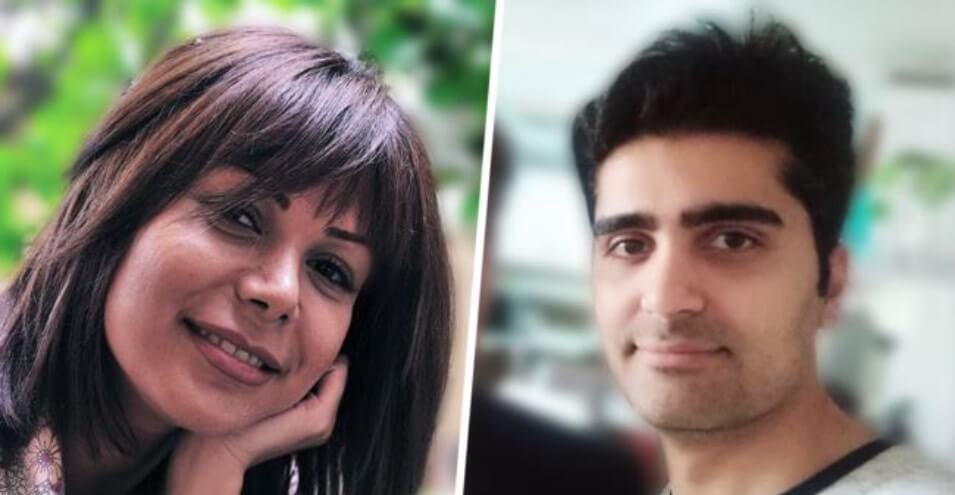
Nahid Shirpisheh, the mother of Pouya Bakhtiari, one of the victims of the recent protests in Iran, told Radio Farda on Thursday, December 5, in response to Ali Khamenei's recent remarks, "My son's blood is more valuable than these words that they want to compensate him with blood money, and I will not give such permission to the authorities to enter my house."
Noting that every drop of Pouya Bakhtiari's spilled blood is worth billions of tomans, Ms. Shirpisheh said that the authorities of the Islamic Republic "should be afraid of my anger and wrath, they should be afraid of my sigh. They should be afraid of me, Pouya Bakhtiari's mother."
Pouya Bakhtiari is one of the victims of the recent protests in Iran. On the second day of protests against the increase in gasoline prices, she went to a march with other family members when she was shot and died before reaching the hospital.
According to news published by Iranian domestic news agencies, on Wednesday, December 3, Supreme Leader Ali Khamenei ordered that the killed citizens who "had no role in the protests" and "died in the midst of the clashes" be considered martyrs and their families be covered by the Martyrs and Veterans Affairs Foundation.
This is not the first time that officials of the Islamic Republic of Iran have spoken about paying blood money to the families of those killed in protests in Iran. Previously, during the popular protests of 2009, which took place on a large scale in various cities in Iran after the presidential elections, Iranian officials had offered to pay blood money to some of the families of the victims.
Mohammad Agha-Soltan, the brother of Neda Agha-Soltan, one of the victims of the 2009 protests, reacted to the recent remarks of the Leader of the Islamic Republic by publishing a text on his Twitter account, writing that in 2009, the families of the victims were also offered blood money, some of which accepted, while others, like Agha-Soltan's family, refused to accept the blood money.
Hajar Rostami, Neda Agha-Soltan's mother, also said in an interview with Radio Farda that after Neda's death, five people from the Red Crescent went to her house and brought a plaque with Ali Khamenei's handwriting and signature as consolation; but "we did not allow them to enter. I went to Shahriari, the judge in charge of Neda's case, twice, and he offered to pay blood money, but we did not accept it."
Neda Agha Sultan, one of the victims of the 2009 protests, was shot dead one day after Ayatollah Khamenei's speech at Friday prayers on June 19. Images of Neda Agha Sultan's death were recorded by a citizen's mobile phone camera and were broadcast around the world.
Previously, Amnesty International announced in its latest report on the repression of the popular protests in November that, according to credible reports received by the organization, at least 208 people were killed in these protests. However, the actual number of deaths is likely higher.
Following a sudden increase in the price of gasoline, Iran witnessed widespread protests against the Islamic Republic. On Friday, November 14, after news of the price increase was released, widespread protests broke out in various cities in Iran, and on the evening of Saturday, November 15, just one day after the protests began, the Islamic Republic almost completely shut down the internet.
President Donald Trump reacted to the Iranian government's treatment of protesters on Tuesday, December 3, and said on the sidelines of a NATO summit: "It is very unfortunate that protesters in Iran were killed simply because they were protesting."
On the sidelines of this gathering, the US President repeatedly referred to the issue of Iranian protesters and America's support for the Iranian people, saying: "Protesters in Iran are seeking freedom, and we fully support them."
On Monday, December 1, in a speech at the University of Lowell (Louisville), US Secretary of State Mike Pompeo acknowledged the internal reasons for the protests in some Middle Eastern countries, and also referred to the role of the Islamic Republic in these countries, saying that the Iranian regime is the common factor behind all the protests in the region.
Source: Voice of America