Response of Two Imprisoned Teachers from Evin to Student Deaths in Zahedan School Fire
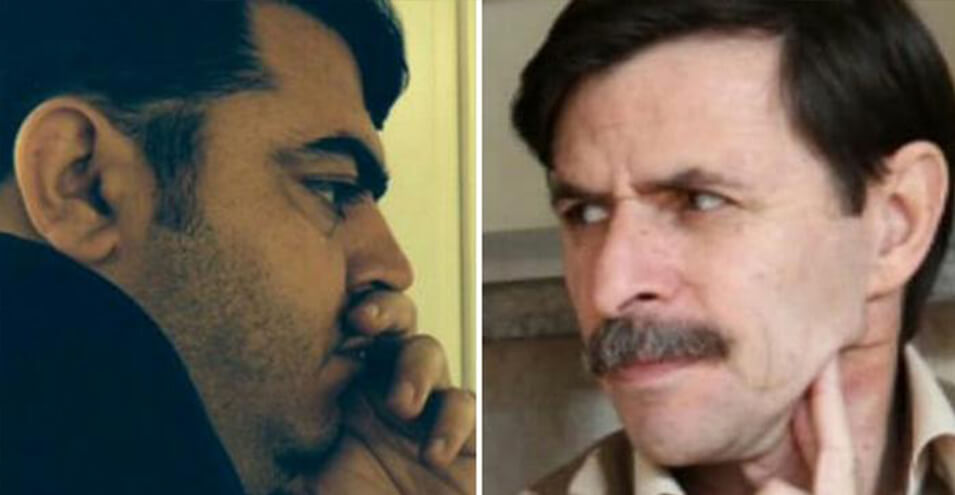
Mahmoud Behneshti Langaroudi and Ismail Abdi, two imprisoned teachers, in response to a school fire in Zahedan, have warned about popular uprisings and Iran “becoming Tunisia.” The recent fire at the “Osve Hasaneh” school resulted in the death of four students.
Mahmoud Behneshti Langaroudi and Ismail Abdi, two teachers serving sentences in Evin Prison on security charges, responded on Monday, December 24, to a recent fire at a school in Zahedan that resulted in the deaths of four female students, warning about the consequences of such incidents.
On the morning of December 18, a fire broke out at the “Osve Hasaneh” pre-school center in Zahedan, causing severe burns to four female students, all of whom subsequently died in the hospital.
The text of the statement by the two imprisoned teachers in response to this incident, read by Mahmoud Behneshti Langaroudi in contact with “Ensaf News,” has been published by the news outlet.
In their statement, Mahmoud Behneshti Langaroudi and Ismail Abdi, after reviewing several fire incidents with dozens of casualties from 1997 to now in schools across the country, posed the question: “Why is the problem of heating equipment in schools not being solved? Education officials cite the lack of adequate budget allocation for standardizing heating equipment as the main problem; the Education Minister claims that approximately 105,000 classrooms across the country still lack standard heating equipment and calls on all people to cooperate in addressing this problem.”
The two imprisoned teachers then answered the question “Where is the education budget being spent?” by writing: “Education officials claim that nearly 98 percent of the education budget is spent on current issues, particularly personnel salaries, and in reality, with the remaining amount, it is impossible to meet other needs of schools. Furthermore, this annual budget is constantly facing deficits, and sometimes there are even difficulties in paying the minimum salaries of teachers.”
Teachers’ “200 Dollar” Salaries in Iran
Messrs. Behneshti Langaroudi and Abdi, in another section of their statement, compared the salary situation of Iranian teachers with other countries and, “calculating at an exchange rate of 10,000 tomans per dollar,” estimated the monthly salary of Iranian teachers at approximately 200 dollars. This is while, according to them, for example, teachers in Luxembourg earn between 7,000 to 14,000 dollars, teachers in the United Arab Emirates earn between 2,500 to 6,000 dollars, and even teachers in China earn between 300 to 1,000 dollars per month.
According to these two imprisoned teachers, in Qatar, Oman, Kuwait, and Bahrain, teachers’ salaries are up to four times that of Iranian teachers, and Afghanistan is the only country where teachers’ salaries were “before recent price increases” lower than those of Iranian teachers.
In another section of their statement, Mahmoud Behneshti Langaroudi and Ismail Abdi, posing the question “Where is the country’s budget actually being spent?” provide examples by looking at the salaries and benefits of members of the Islamic Consultative Assembly in 1395 and the budget of some religious institutions in the current year (1397).
According to the estimate of these two political prisoners, the annual salaries and benefits of parliamentarians, including salary, grants, “overtime and exceptional compensation and benefits,” housing allowance, companions, offices, “gifts,” “domestic and foreign travel tickets” and other welfare expenses of parliament employees and security personnel in Iran, totaled 280 billion tomans.
Massive Budget of Religious Institutions
The two imprisoned teachers also estimated the budget of some religious institutions in Iran at 1,467 billion tomans in their statement. According to their writing, this amount was allocated “to provide living support for seminary students and clergy,” Jame-al-Mostafa, “insurance premiums for unemployed seminary students,” “Shahed, Imam Khomeini, and Velayat universities” and “Farabi Campus and Qom University and Imam Educational Institute” in year 97.
Mahmoud Behneshti Langaroudi and Ismail Abdi then, looking at “behind-the-scenes issues of Iran’s economy” and based on “all official and credible news,” point to the billion-toman expenses of these “behind-the-scenes” matters in the field of automobile imports, currency allocation at official rates, coin and currency distribution, goods smuggling, financial institutions and bank arrears, and among other things write: “Behind-the-scenes means corruption; widespread corruption that has infiltrated all branches of the country’s economy and, like termites, destroys and ruins all foundations and pillars, leading the country toward destruction.”
These two labor activists added: “The above cases, plus astronomical salaries and properties, embezzlement of tens of thousands of billions of tomans, domestic and foreign squandering, grants to neighbors and so on, have all caused the country to face difficulties in allocating a budget for matters such as providing standard heating equipment for students of this land, and precisely during periods when officials were busy confronting critics and dissenters and groups such as workers, teachers, lawyers, students, journalists and so on, economic corruption continued with ease to destroy the fabric of the country’s economy, and the result is the current state of the country.”
Messrs. Behneshti Langaroudi and Abdi then refer to a joint statement by Ayatollah Khomeini, the founder of the Islamic Republic, with “other scholars” in which it was stated: “If the Iranian nation submits to Islamic rulings and asks the governments to implement Islam’s financial program under the guidance of Islamic scholars, all people will live in welfare and comfort.”
These two imprisoned teachers then asked: “Why, after 40 years since the victory of the revolution, not only has the promise of the founder of the Islamic Republic of Iran not been fulfilled, but corruption, poverty, unemployment, discrimination and class division have spread to such an extent that it is only necessary to compare the living conditions of the people of northern Tehran not only with those of the people of Zahedan and deprived areas of the country, but with the very south of Tehran to see what has become of people’s lives and how deeply corruption has penetrated?”
“No System Can Endure with Corruption and Oppression”
After this preamble, Mahmoud Behneshti Langaroudi and Ismail Abdi asked those who “frighten people about Syria becoming a reality” to themselves prevent Iran from “becoming Tunisia.”
The reference of these two imprisoned teachers is to the series of events that followed the self-immolation of a Tunisian street vendor, which led to the fall of the Ben Ali government in Tunisia and simultaneously engulfed a large part of Arab countries under the banner of the “Arab Spring.” According to Behneshti Langaroudi and Abdi, after the self-immolation of the Tunisian street vendor in front of the municipality, “13 people in other Arab countries resort to self-immolation, resulting in the fall of Hosni Mubarak’s government in Egypt, Muammar Gaddafi in Libya, and Ali Abdullah Saleh in Yemen, and the governments of Algeria, Jordan, Bahrain, Saudi Arabia, Sudan, Kuwait, Mauritania, and Morocco are forced to make concessions to protesters and implement reforms in their governance methods.”
These two labor activists then warned that “historical and divine traditions are evidence of the fact that no system can ever endure with corruption and oppression, and Iran is not exempt from this rule, and in the words of the Quran, when ‘the appointed term comes, it does not delay by an hour nor does it advance an hour.'”
Mahmoud Behneshti Langaroudi and Ismail Abdi also considered the widespread public protests in nearly 100 cities in Iran in December 2017 as “a warning” to “listen to the voice of the people and attempt to reform procedures and mistakes and compensate for shortcomings and address grievances” and at the same time emphasized: “But after one year has passed since the aforementioned events and contrary to some promises, no serious decision to reform matters is observed, and none of the reformist, moderate, or fundamentalist currents have presented a specific program to restore people’s confidence, and apparently penetrating power and maintaining it is the only clear strategy of the political currents governing the apparatus.”
These two imprisoned teachers finally warned in their statement: “If, in the limited opportunities remaining, lessons are not learned from the events and experiences of other countries, the occurrence of incidents that are neither in the interest of the nation nor the country and would come as no surprise to the officials.”
Mahmoud Behneshti Langaroudi, a senior member of the board of directors of the Syndicate of Teachers of Iran, and Ismail Abdi, secretary of this syndicate, have been sentenced to five and six years imprisonment respectively and are currently serving their sentences in Evin Prison. These imprisoned teachers face security charges such as “assembly and conspiracy against national security” and “propaganda against the system.”
Before these two imprisoned teachers, the Coordination Council of Professional Guilds of Educators, the Syndicates of Teachers of Iran, and the Bar Association of the Capital, warning about the unsuitable conditions of educational facilities in deprived provinces of the country, had called for accountability of officials regarding the fire at the “Osve Hasaneh” school in Zahedan and “standardization” of schools.
Source: