Jomhuri Eslami Newspaper's Reaction to the Proposed 1401 Budget: "Subsidized Charities" Do Not Cure People's Pain
The Jomhuri Eslami newspaper says that Ebrahim Raisi's government is putting maximum pressure on the people by eliminating preferential currency and imposing onerous tax demands.
On Thursday, February 27, the conservative newspaper, referring to the controversial nature of the budget for next year, warned that the budget "if approved without reforms, will severely disrupt people's livelihoods and cause severe dissatisfaction among the people in the face of increasing pressures."
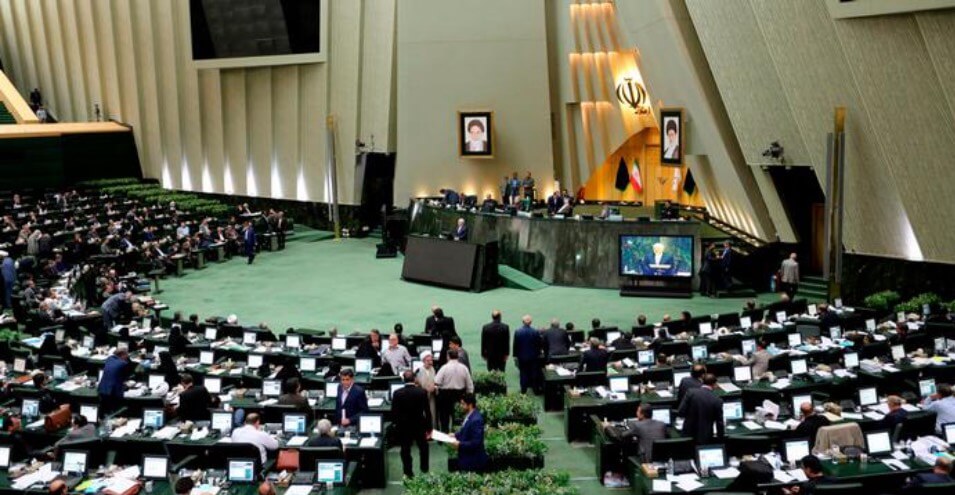
This comes at a time when livelihood protests in Iran have intensified in recent months, and numerous media outlets have previously warned of widespread protests following rising inflation and price increases resulting from the government's economic programs and policies.
The author of the political analysis column of this newspaper, which leans towards the traditional conservative spectrum of the Islamic Republic, criticizes the lack of serious determination to find the root cause and solve economic problems, and believes that the Raisi government has faced the problems by using a temporary solution of subsidies; while, according to the author, "subsidized charity will not cure any of the people's pain."
The Raisi administration's attempt to eliminate preferential currency has drawn widespread criticism over the exponential increase in the prices of basic goods. While proponents of the plan have presented an increase in subsidies, allowances, and cash vouchers to help the lower income groups as a solution to this problem.
The Islamic Republic’s economic planners have a long history of using commodity vouchers and subsidies. During Iran’s eight-year war with Iraq, rationing and a voucher economy were the most important means of controlling prices, while the Ahmadinejad administration implemented cash payments in exchange for cutting energy subsidies a decade ago.
Although the monthly cash payment per person was a significant amount for many low-income and large families, the multiple devaluation of the Iranian national currency over the past few years and the consequent increase in the prices of most goods practically caused this allowance to lose its effectiveness.
The value of this cash grant in the first year of payment, i.e. 1390, was around $38. In January 2017, this grant was equivalent to $10. While the current value of this subsidy is around $1.50.
Source: Voice of America