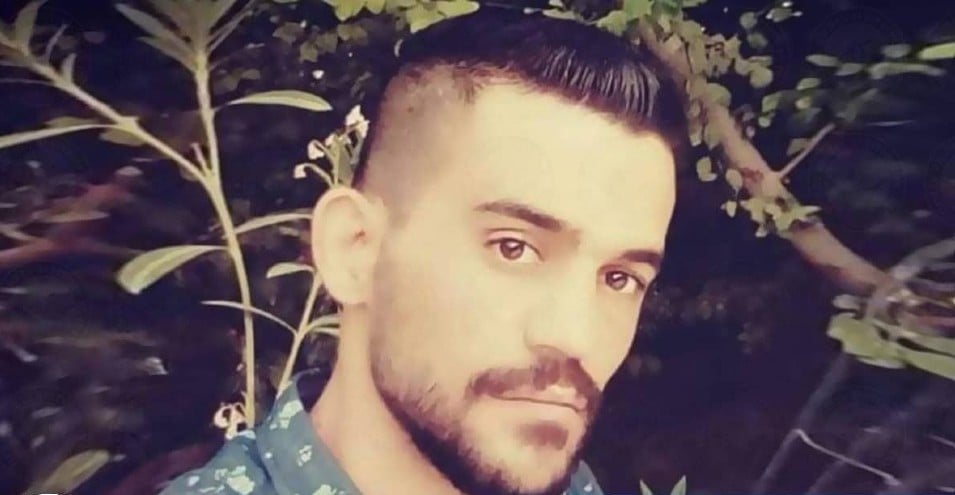
Hedayat Abdullahpour's father: My son was executed secretly and without our knowledge
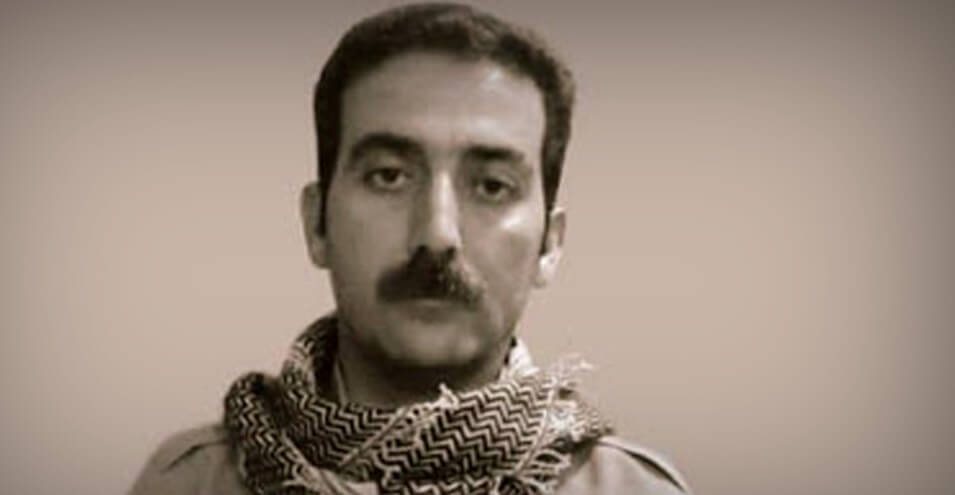
Abu Bakr Abdullahpour reported the secret execution of his son, Hedayat Abdullahpour, in the city of Oshnavieh in Iran, and told the Campaign for Human Rights in Iran that on Wednesday, July 24, the death certificate of this political prisoner was delivered to his family.
Mr. Abdullah Pour told the campaign that the death certificate states the date of execution was May 12, 2020, and the cause of death is "impact with sharp objects."
Hedayat Abdullahpour's father said he had no information about the details of his son's execution or where his body was taken.
Hedayat Abdullahpour, a car mechanic, was arrested in late June 2016 in one of the villages of Oshnavieh, a border town in the Kurdish-populated West Azerbaijan province, and sentenced to death by the First Branch of the Urmia Revolutionary Court on charges of aiding and abetting the rebellion. Hossein Ahmadiniaz, Hedayat Abdullahpour’s lawyer, told the campaign in October 2018 that the death sentence for his client on charges of aiding and abetting the rebellion had no legal or religious justification, and was approved in an unfair process with pressure and interference from security institutions. Despite being overturned by the Supreme Court, it was re-approved and referred to the Urmia Justice Department for execution.
Hedayat Abdullahpour was arrested after a clash between the Peshmerga of the Kurdistan Democratic Party of Iran and the Revolutionary Guards in the village of Qara-Saqal in the Oshnaviyeh province.
Hedayat Abdullahpour's lawyer, however, told the campaign that his client was caught up in the conflict between the Revolutionary Guard and the Democratic Party without his knowledge, intent, or will, and was unjustly convicted, and according to the testimony of the local residents, he had no role in the conflict: "Hedayat Abdullahpour was a car brake repairman. A car broke down in one of the villages of Oshnavieh. They called him and said that Mr. Abdullahpour's car brakes broke down and needed to be repaired. He went to get it repaired as per his custom and job, but when he arrived, he got caught up in the middle of the conflict without any intent, knowledge, will, or choice. He left the village immediately after repairing the car. According to the testimony of witnesses, the circumstances, and the confirmation of the people of the area, Hedayat Abdullahpour had no role in the conflict."
Abu Bakr Abdullah Pour, Hedayat Abdullah Pour's father, also said in an interview with the campaign: "My son was not present at all in that conflict, he was not present in the presence of the Prophet. Even the Friday imam, the city council, and the local people signed that he was not in the conflict, but they did not accept it, and now they are saying that his sentence has been carried out."
Hedayat Abdullah Pour’s father told the campaign: “Today, they gave us my son’s death certificate, and we can confirm through the death certificate that my son was executed. Otherwise, we have no way. We have neither seen his body, nor his execution, nor his grave. He was in Urmia Central Prison, and they took him to Oshnavieh to execute the sentence, and they executed him there because the conflict in Oshnavieh was there. They say they executed his sentence in the presence of the families of the IRGC. The families of the IRGC members killed in that conflict have said that they shot my son in their presence.”
He told the campaign: “Over the past few days, we went with our lawyer to follow up. The prosecutor in Osnavieh said he did not know whether the IRGC had transferred him to another place. I said, ‘Tell us if he is alive or dead. He has a wife and children. His 6-year-old daughter, Kurdistan, and his 11-year-old son, Sirvan, are waiting for us. Tell us what his condition is.’ A few days later, he called and said, ‘Go to Urmia to execute the sentences.’ We went with my brother and son, and they said, ‘We offer our condolences and that his soul is at peace.’ We asked him, ‘What happened?’ He said, ‘They executed his sentence in Osnavieh 20 days ago.’ We hoped it was not true, that it was a lie. I have neither seen his body nor his execution, but I now have his death certificate. I have no idea how they executed him, and now I want them to give him his body, shroud him, bury him, or show him his grave. We do not know where or how they buried him. If it is possible, I would be grateful if they could inform his wife and children.”
Source: Human Rights Campaign