Lesbos refugees: Life in new accommodation worse than the hell of Moria
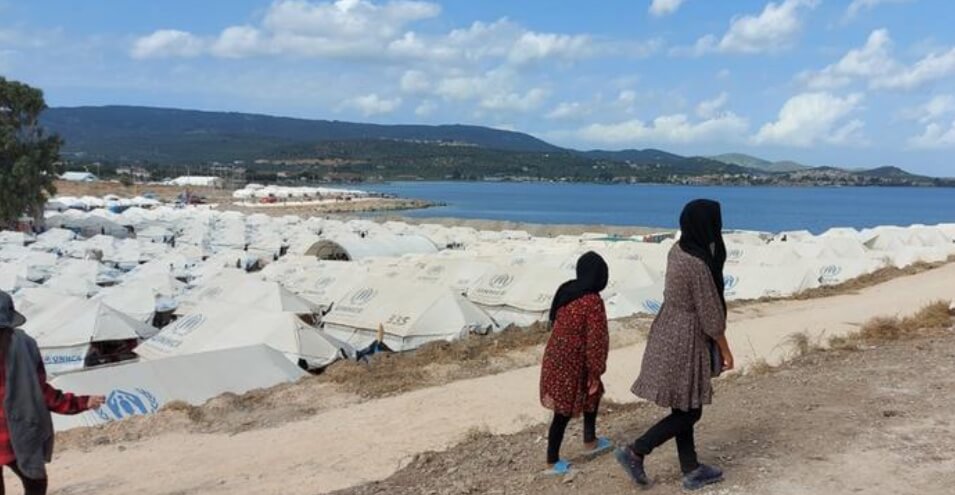
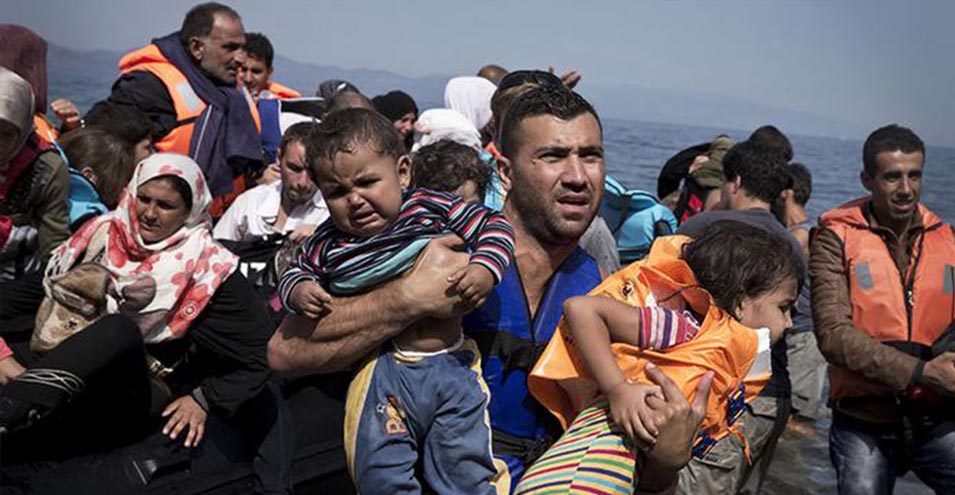
The refugees of Lesbos are cramped in tents. No space for privacy, no bathrooms or enough food. The men wash themselves in the sea. The women refuse to do so. Moria was hell, but now they are in shock like earthquake victims.
A tent camp has now been set up for more than 13,000 refugees who were displaced after the fire at the Moria camp on the island of Lesbos. Two police stations have been set up inside the camp to ensure security, Behrouz Asadi, managing director of the non-profit Maltzer Foundation's foreign affairs office in three German states, told DW Persian.
He, who has recently gone to Lesbos to provide information about the situation of the refugees and find ways to help them, says: "The images you see there show that these refugees are completely in shock. It's as if they've been hit by an earthquake or a storm. They've been forced to leave everything behind and come to a new place. They've put two to three families in each tent." A situation that is only tolerable for a short time and can quickly lead to crisis and tension.
The new residence lacks even the basic amenities of Moria.
The dire conditions at Moria camp have been widely reported in the world's media. It was described as a veritable hell. But now, the refugees, wandering among the white tents and bewildered, sometimes yearn for the same conditions as before.
Behrouz Asadi, comparing the conditions of the past and what has emerged as a residence today, says: "A structure had been created in Moria because it was a place where refugees lived for many years. For example, the refugees ran a bakery. They traded. They had a bathroom and three meals a day. They could shop. They could go to the doctor. In the new camp, none of these things exist, and there is severe mental and physical pressure on them, which could lead to major problems in the not-so-distant future."
During this time, he has heard complaints of worry, despair and mental anguish from every refugee he has spoken to. From the homeless who, despite all this, are unable to return to their country. Most of them come from Afghanistan. A group from Iran, Iraq and Syria, from Pakistan, Somalia, Ethiopia and Bangladesh have made it to Lesbos. They have fled war, persecution and prison.
No security, no sanitary pads
A 28-year-old female refugee from Afghanistan says she has been living on Lesbos for almost two years. She does not want to give her name. She is alone. She tells DW that life in the previous camp was very bad, but now in the new camp "it has become worse, there are no toilets, no showers, no electricity."
This woman has no idea about her future and says that new decisions are constantly being made about their fate. She used to live in a tent and was abused. She doesn't want to talk about it. She says she has now been moved to a camp for victims and lives in a room with another woman. But this camp is also scheduled to close and she doesn't know what will happen next.
It has been 10 days since the camp was established, and according to Behrouz Asadi, they still haven't installed a single shower there. The men go to the sea to wash themselves, "but the women really have a hard time with this." The camp's toilets are portable and must be constantly cleaned and disinfected. They have also set up a quarantine area that can accommodate 2,000 people in case they contract the coronavirus.
Before the Moria camp caught fire, it was reported that 35 people infected with the coronavirus had been identified there. As the refugees were displaced, these people were also scattered across the island. Behrouz Asadi says: “There are no official statistics on the number of infected people. But from what I saw and filmed, about 100 people are in the quarantine section.”
200 tents were set up in cooperation with the German and Italian Red Cross, and the rest were moved in with the help of the High Commissioner for Refugees. The area between the tents is dirt. As soon as it rains, everything sinks into mud. Behrouz Asadi talks about the problems of the 9,000 people who have been settled in a small “town” by the sea, and continues: “If the sea rises, it will take some of these tents with it.”
One packet for breakfast, one for the rest of the day.
There are several other camps on Lesbos that Behrouz Asadi mentions. One of them is Karakope, which houses 1,000 people. They are “physically and mentally vulnerable.” There is another camp that houses 100 children under 18 who are unaccompanied or from vulnerable families. There is also a women’s home where 200 women live with their children.
However, many refugees are still displaced. Behrouz Asadi says: "Under the olive trees live families who do not want or cannot go to the shelter set up by the government. Water is brought in by tanker to the tent area. The army gives them a packet for breakfast and a packet for lunch and dinner. Some have even pitched their tents in the burned ruins of Moria."
Many aid organizations, both Greek and foreign, are volunteering to help refugees in Lesbos and are working there. But Behrouz Asadi says organizing thousands of refugees is not an easy task because they are gathered in one place with various problems and of different ages, and "the problems will increase every day. At the same time, access and assistance are not easily given to these organizations."
There is no outlook for the situation of refugees.
The European Union has never been able to agree on a common policy for distributing refugees among its member states in recent years. Some Eastern European countries refuse to accept refugees at all. Others accept only a small number on their territory. Germany takes in a total of about 1,500 refugees. But even this small number has been criticized by some EU countries and a group of politicians in the country.
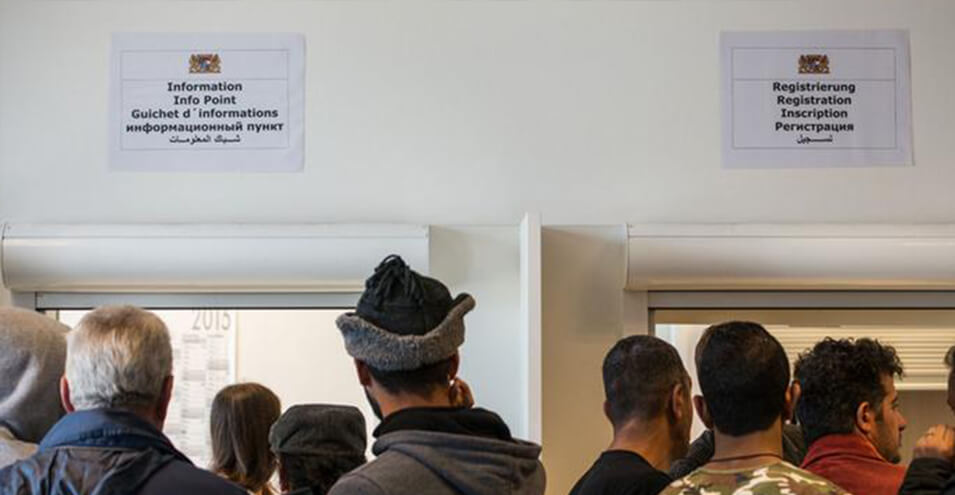
According to Behrouz Asadi, on Monday, September 28, 700 people whose asylum was accepted under the Geneva Convention were transferred to Athens, and another 700 will be sent to Athens by the end of this week. But there is no talk of accepting new refugees and those who arrive daily from Türkiye to Lesbos.
He says that the creation of a new refugee camp on Lesbos was a joint decision of the Greek government and the European Union, and "it is the duty of European countries to be responsible for some of these problems in these circumstances and to think of a solution to this situation." In his opinion, Germany can and should play a special role, saying: "This country can easily accommodate the five thousand people it previously promised."
Source: DW