50th Session of Hamid Nouri's Trial; Witness Says "About 6,500 Male and Female Prisoners" Were Executed in Evin
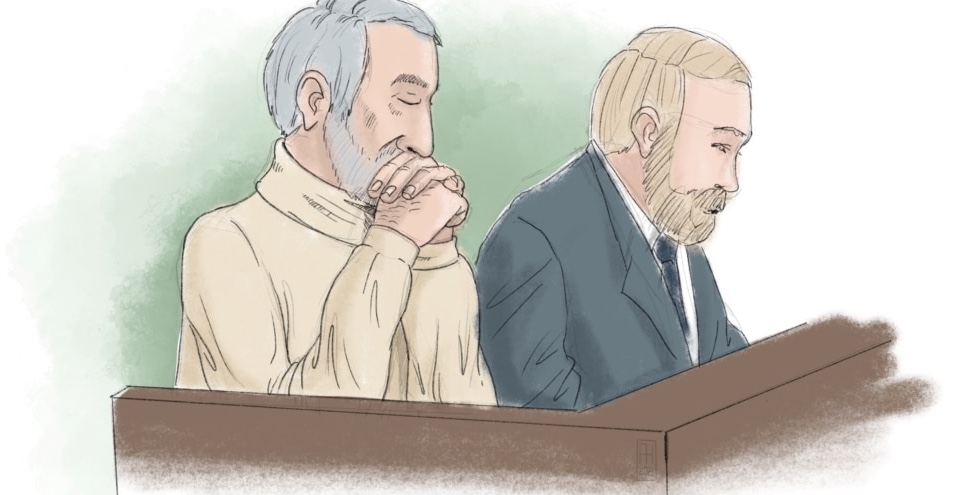
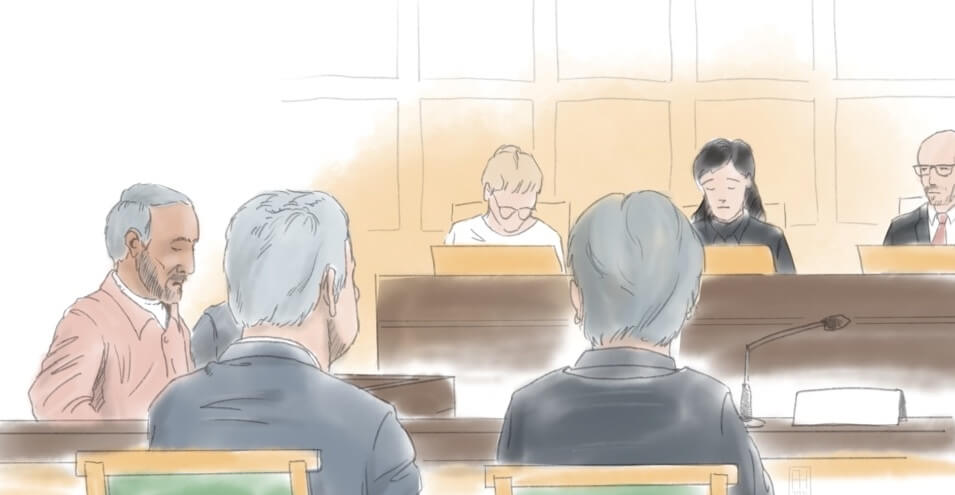
The 50th trial session of Hamid Nouri, accused of participating in the execution of political prisoners in the summer of 1988, was held on Thursday, December 9, 2021, with the testimony of Gholamreza Shemirani in Stockholm, Sweden.
Shahid was arrested in the summer of 1988 for supporting the People's Mojahedin Organization and sentenced to 10 years in prison. He spent four months in the "Tohid Committee" prison, five years in Qezel Hesar prison, and five years in Evin prison. He was in Evin prison at the time of the 1988 executions.
The witness said: Visits were stopped in Evin Prison from early August to late October or early November 2018. Martial law was imposed inside the prison and movement was prohibited after midnight. The IRGC did not have the right to go out or take leave, and those who had gone on leave had to return to prison.
Shemirani testified that the mass killings in Evin Prison began on August 28, 1988, and lasted two months. On August 28, he said, the IRGC took Amir Abdollahi, 23, from his cell and Mohammad Reza Sardar from the cell next door. Amir returned with the IRGC in the middle of the night and, while packing his belongings, said in a dejected tone that he had gone to court and received a death sentence. Amir left that night and never returned. The witness said that Amir and his 21-year-old brother Majid, who was in the cell next door, had previously been sentenced to life in prison.
The witness said he heard from other prisoners that the death squad spent half of August 7 in Gohardasht Prison and the other half in Evin Prison. The witness did not remember the exact time of the executions in Evin Prison, but said that as far as he knew, Reza Firouzi and Taghi Sedaghat Rashti were taken from their cell to be executed on the first and second days of October.
Mr. Shemirani testified that a total of about 6,500 male and female prisoners were executed in Evin, and about 170 survived. The witness said that the prisoners who survived in Gohardasht Prison were transferred to Evin Prison in February, and the total number of male prisoners in this prison increased to about 250 to 280.
He added that he himself was interrogated, tortured and held in solitary confinement from late September 2017 until the executions. On August 27, he was brought before the death squad – or, as the Evin guards called it, the “Imam’s Pardon Board” – in the “Prosecutor’s Building” of Evin Prison. The witness was taken to the death squad again on August 28, 20, and finally on August 23 in “Building 209.” Shemirani escaped execution by exonerating himself from the People’s Mojahedin Organization of Iran and was released in 1991. He was never interviewed in prison.
Gholamreza Shemirani testified that after declaring his innocence to Nayeri and the death squad, Iran’s current president, Ebrahim Raisi, urged Nayeri not to accept his acquittal because “he is too hypocritical.” Faced with Nayeri’s negative and harsh reaction, Raisi took Shemirani out of the courtroom and gave him a form to fill out.
During her visits to the death squad, Shemirani witnessed the transfer of more than 200 female political prisoners – women members of the People’s Mojahedin Organization – to the prosecutor’s office building. She had seen Hossein Mortazavi, the then head of Evin Prison, happily knocking on the building’s entrance door.
The witness saw Hamid Nouri blindfolded in January 2017 and after the executions in February 2018 with Naserian in Evin Prison. Shemirani said that during the executions, Hamid Abbasi (Nouri) in Gohardasht Prison and Halvaei in Evin Prison were very active in carrying out the death sentences. He heard from other prisoners that Assistant Prosecutor Majid Ziaei, Assistant Prosecutor Majid Ghoddoosi, and Hamid Nouri were responsible for interviewing prisoners after the executions.
Gholamreza Shemirani is now a French translator and works nights at a government hospital. At the end of his testimony in court, he said that he had lost everything along the way and that his only desire was "justice."
The next court session will be held on Friday, December 19, with the testimony of Mohsen Zadshir.
Source: Voice of America