Washington's message from Tel Aviv, from deterrence to limited attack
America's readiness for "spot operations against Iran" was at the center of discussions between CENTCOM and Israel.
As regional tensions rise and political and military pressure on the Islamic Republic intensifies, Israeli media outlets have reported a new message from the United States, a message that emphasizes Washington's ability to take limited military action against Iran, without immediately entering into an all-out war.
Israel's Channel 14 reported that General Brad Cooper, commander of the US Central Command (CENTCOM), told Israeli military officials during a recent visit to the country that the United States was fully prepared to carry out a "spot operation" against the Islamic Republic. According to the media outlet, American officials also stated that more time is needed to complete preparations for an "all-out battle."
According to the report, meetings between the American delegation and Israeli military commanders emphasized that Washington's current approach is based on limited, targeted, and controlled actions. One of the commanders present at the meetings stated that the US strategy is to carry out a short, quick, and clean operation; an operation that, from the perspective of its planners, should send a clear political and military message without dragging the region into a cycle of widespread conflict.
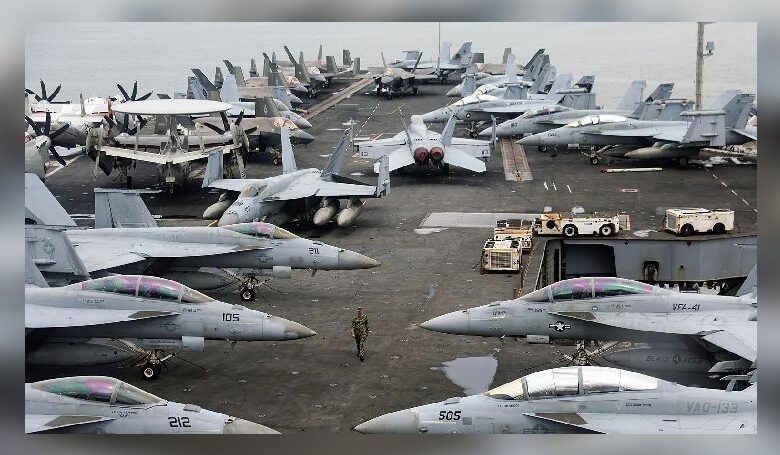
The CENTCOM commander's visit to Tel Aviv and his meeting with Israeli Army Chief of Staff Eyal Zamir took place in a situation where speculation about the possibility of US military action against the positions and officials of the Islamic Republic has increased significantly in recent days. These movements have taken place at the same time as the US has strengthened its military presence in the Middle East, including the dispatch of ships and heavy equipment.
In this context, US President Donald Trump, referring to the internal developments in Iran, had previously repeatedly warned against the repression of protesters and spoke of the possibility of Washington's intervention. On February 2, he confirmed that the US had dispatched a significant amount of military equipment to the region and announced the movement of "a large fleet" towards the Middle East; a move that he said was aimed at closely monitoring developments in Iran.
Israeli media have also reported the deployment of the aircraft carrier USS Abraham Lincoln near Iran, a move that analysts see as part of a show of force and increased deterrent pressure on Tehran.
Meanwhile, the Editorial Board of Iran International announced in a statement released yesterday, January 25, that the extent of violence by the Islamic Republic's forces during the national revolution exceeded initial estimates, and that more than 36,500 people were killed during the targeted suppression of protesters on the orders of Ali Khamenei.
Israel has also claimed in its reports that Washington sees regime change in Iran as a “fundamental necessity.” According to this narrative, the likely focus of any US military action would be not on public infrastructure but on institutions and individuals directly involved in the repression and killing of protesters—parts of the government that American officials believe have lost their legitimacy.
At the same time as these developments, Israeli officials have also announced their readiness for various scenarios. Rafi Milo, commander of the Israeli army's northern headquarters, announced: "The country is preparing itself for any possible retaliatory reaction from the Islamic Republic and is closely monitoring Hezbollah's movements."
On the other hand, Shmuel Zakkai, head of the Israel Civil Aviation Authority, has warned foreign airlines that the region may enter a more sensitive period and that there is a possibility that Israeli airspace will be closed again if tensions escalate.