The general outline of the parliament's plan to limit the internet to the maximum and increase military control was approved.
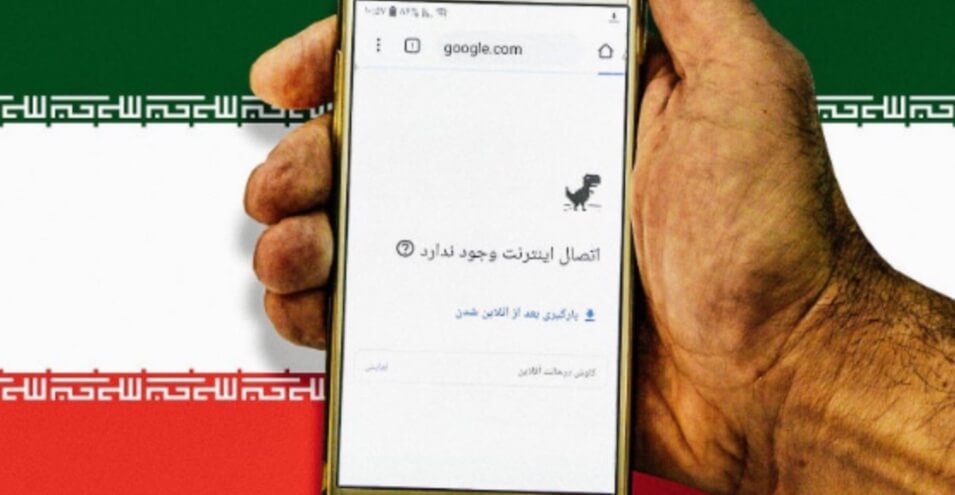
The joint parliamentary commission, which operates under the title of "Protecting Users' Rights in Cyberspace," approved the general outline of a plan prepared to maximally restrict the Internet and increase military control over the Internet with 18 positive votes and one negative vote.
The meeting to review this plan, which has been announced as the "Cyberspace Services Regulatory System Plan" and is also known as the "Protection" plan, was held on Tuesday, March 2nd, while the Iranian parliament was busy reviewing next year's budget, and some representatives insisted that the commission meeting be held after the budget review was completed, but this request was not accepted by representatives supporting internet restrictions.
The "Protection Plan" was placed on the parliament's agenda after Ali Khamenei, the leader of the Islamic Republic, called cyberspace in Iran "wild and unbridled" in numerous speeches and criticized the failure of responsible institutions to restrict it.
ISNA news agency reported that during a meeting of the Joint Commission, MP Jalal Rashidi Kochi said: "Some people are calling me and threatening me to agree to this plan. This is despite the fact that after some time has passed since the Joint Commission began its work, people are still concerned about the approval of this plan."
Opponents of the "Plan to Protect Users' Rights in Cyberspace" have warned that the issue is not limited to restricting important foreign messaging services such as Instagram, and that if this plan is approved, it will create fundamental changes in the way users operate, monitor the Internet, and bandwidth, and its goal is to impose severe restrictions on Internet access.
If this plan is approved as law, as stated in its text, from then on, "all data will be recorded and maintained," and according to this plan, "storing and processing Iranian users' data in accordance with the council's approvals and relevant rules and regulations" will be a normal procedure.
According to this text, it has also been stipulated that the creation, maintenance, and operation of Internet border crossings by the private and non-governmental sectors will be prohibited after the law comes into force, and this matter will be entrusted to the military.
Critics also say the plan's proponents are seeking to impose broader filtering and then replace some apps. One of the proposed apps is Rubino, which is supposed to replace Instagram.
This application is operated by a company affiliated with the Executive Headquarters of the Imam's Decree. The Executive Headquarters of the Imam's Decree is the largest economic holding company affiliated with the office of the Supreme Leader of the Islamic Republic.
The Iranian government's planning and investment to further restrict the internet comes as Freedom House, in its new 2021 report, announced the world's internet freedom index, and in this table, Iran is ranked as one of the worst countries with the least internet freedom - even lower than countries such as Belarus, Uzbekistan, and Pakistan.
In parallel with the pursuit of the approval of this plan, the Iranian government has been trying for years to separate the domestic Internet (intranet) from the global Internet under the guise of launching a "national network" for security reasons and to control protests and repression or censor events of repression. This plan, which is being called the "key to disconnect from the global Internet," is scheduled to be finalized by the end of 1402.
Some Iranian government officials have suggested that the experience of countries such as Russia and China be used in the creation of a national intelligence network.
On the other hand, in recent days, numerous reports have been published about deliberately reducing internet speeds to disrupt access to popular social networks such as Instagram.
In this context, yesterday, the Zoomit website, which covers technology news, reported that some internet companies have said that the bandwidth of foreign networks such as Instagram, WhatsApp, Telegram, and Clubhouse has been "deliberately reduced."
The Tehran-based newspaper Etemad also wrote in a report on March 16 that one of the goals of reducing internet speeds is to limit access to popular social networks, and "it seems that what happened to the Viber messenger in 2015 is going to happen to Instagram as well, and its bandwidth will be reduced to such an extent that users will practically forget that a social network called Instagram even existed."
Source: Radio Farda