Taking “traditional medicine courses” has become mandatory for Iranian medical students.
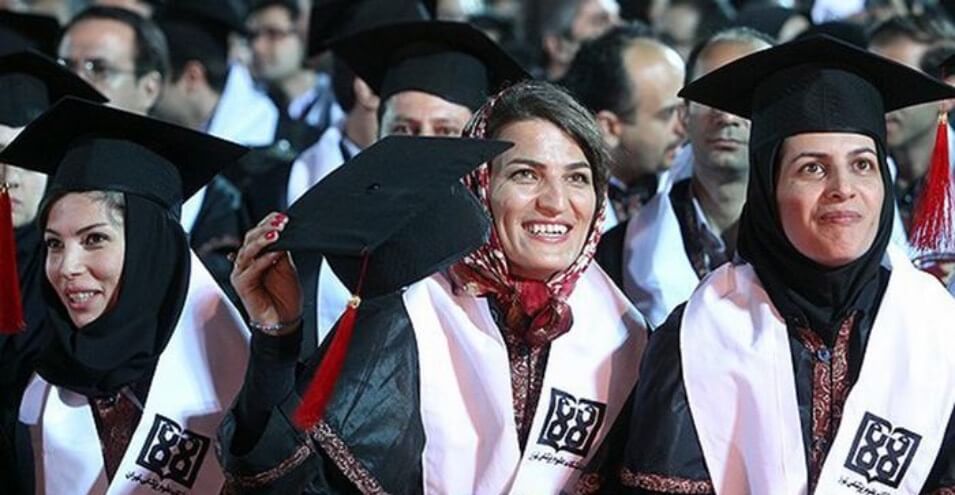
The Deputy Minister of Education of the Ministry of Health announced that from now on, all general doctoral students will be required to take a course in traditional medicine. With the spread of the coronavirus in Iran, the discussion about traditional medicine and “Islamic medicine” has sometimes become controversial.
The Deputy Minister of Health and Medical Education says that all general doctoral students (medicine, dentistry, and pharmacy) are required to take a course in traditional medicine, regardless of the year they started their studies.
According to ISNA News Agency, Ali Akbar Haqdoost made this statement on Monday, June 9, in response to a question from universities about offering two units of courses on the basics of traditional and complementary medicine for students of general doctoral courses.
The Deputy Minister of Health said that since the new educational program for students of the General Doctorate of Medicine and the new educational program for students of the General Doctorate of Pharmacy are included in the traditional medicine course and they take these units according to the program, they do not need to take them again.
He added that if students in the old doctoral program in pharmacy have completed two units of traditional and complementary medicine from the elective course schedule, they are not required to retake them, and otherwise they must complete these two units.
Haqdoost said: "Also, students of the general medical doctorate program of the old curriculum and students of the general dental doctorate program, whose curriculum does not include this course, are required to take this course in addition to the approved course credits during the course."
The Deputy Minister of Education of the Ministry of Health says that in order to prevent the extension of the education period for medical students, those whose current semester is their last semester and who have not succeeded in passing the traditional medicine course do not need to take it.
This senior official from the Ministry of Health said: "Given the situation of the coronavirus disease and its effects on the educational process of the current and upcoming semesters, all students who graduate by the end of this year will not need to take the above courses."
With the official confirmation of the spread of the coronavirus in Iran in the last days of February, various discussions arose about the use of traditional medicine to combat and treat COVID-19. The use of traditional medicine was also common in Iran and other countries before the coronavirus, but in this regard, the recommendations of those who introduce themselves as experts and promoters of "Islamic medicine" have been very controversial.
The coronavirus recommendations of "Islamic medicine" experts, along with the statements of Abbas Tabrizian, who is called the father of this medicine in Iran, made their way onto social media and became the subject of ridicule and amusement for users for a long time.
“Islamic Medicine.” Corona; From Violet Oil to Camel Urine
Tabrizian, who once caused a controversy by burning the book "Harrison's Principles of Internal Medicine," which is considered an international source and authority on medical science, prescribed patients to insert cotton soaked in violet oil into their anus to treat coronavirus.
The controversy had not yet subsided when Hakim Mehdi Sabili, another proponent of "Islamic medicine" and director of the "Sadiq Medical Scientific and Educational Association", introduced his findings for treating coronavirus in a video and drank a glass of camel urine in front of the camera.
There is no shortage of such "medicines" and strange advice to combat the coronavirus in other countries; but in a few countries, senior officials such as the commander-in-chief of the Revolutionary Guard Corps and a number of other senior commanders of this institution participate in a ridiculous show such as introducing the "Musta'an 110" device and claim that this device can detect the coronavirus in the human body from a hundred meters away.
Despite the introduction of the IRGC's virus detector, the number of COVID-19 diagnostic tests in Iran did not exceed an average of about 11,000 daily tests until a few weeks ago.
Continued decline in infections and relative increase in deaths from coronavirus
The number of tests has been increasing since the beginning of June and has now reached more than 22,000. Apparently, the increase in tests, along with the easing of restrictions and the reopening of most businesses, was one of the reasons for the sharp increase in identified cases in the first half of June, which has started to decline again in recent days.
In the last three days of the first half of June, the number of new cases of coronavirus exceeded 3,000 each day. This rate of new infections was only recorded during the peak days of the Covid outbreak in Iran in the first half of April.
The rand has been declining with slight fluctuations over the past few days. According to a spokesperson for the Ministry of Health, 2,043 new cases of coronavirus were identified in the 24 hours ending at noon on Monday, June 9. This number is more than 300 cases less than the previous day.
Kianoush Jahanpour said in his daily press conference on Monday that 70 people have died from COVID-19 in the past day.
On June 25, the number of victims was 34, the lowest number in about three months. Since then, the number of victims has increased with fluctuations and has been 70 or more in the past three days. Since the beginning of the coronavirus outbreak in Iran, the total number of infected people has been 173,832 and the number of victims has been 8,351.
Source: DW