New report: Islamic Republic has killed or kidnapped “at least 540 Iranians” abroad
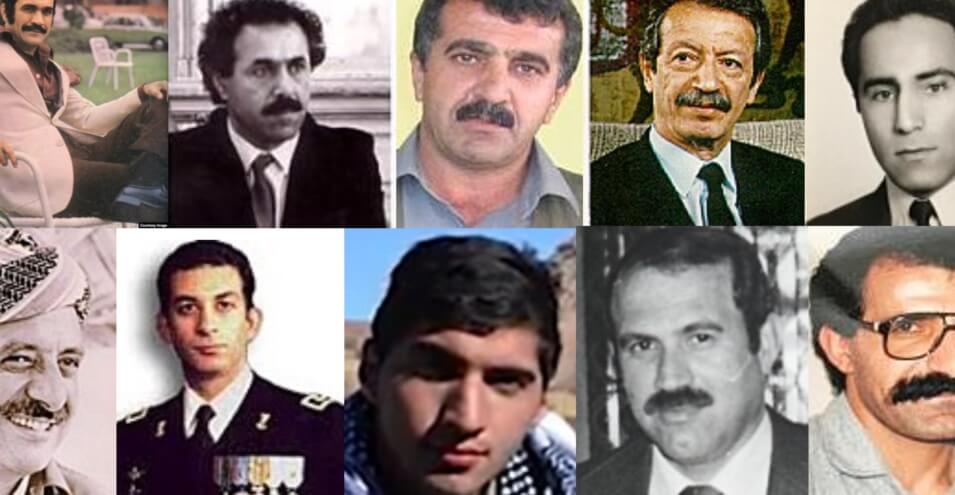
Referring to the news of the Islamic Republic's attempt to kidnap Masih Alinejad, a journalist and political activist living in the United States, the Abdolrahman Boroumand Center for Human Rights published a report and statement, writing that the Iranian government "has a long history" in this regard and that the Boroumand Foundation "in its ongoing research has identified more than 540 Iranians whose murders or successful kidnappings are attributed to the Islamic Republic of Iran."
The Abdolrahman Boroumand Foundation, which works to defend human rights in Iran and has an office in Washington, continues its report by emphasizing that "this number does not include all reported cases."
According to the report, since the 1979 revolution, agents of the Islamic Republic have carried out hundreds of attacks against refugees in various countries, and because they have often been immune from any punishment, they have constantly repeated these attacks.
The report states that countries must ensure the protection of the rights of refugees they host and hold the Islamic Republic accountable for its systematic use of violence to silence dissent and for expanding its terror apparatus on their soil.
In its statement, the Boroumand Foundation called for a "decisive and internationally coordinated response to these crimes" and, while calling for "providing victims with access to fair, equal, and effective justice," emphasized "the realization of effective rights for victims, including compensation."
Details of the murder or kidnapping of "540 Iranians"
Regarding the Islamic Republic's "successful" actions in killing or kidnapping Iranians abroad, the Boroumand Foundation writes that Iran's neighboring countries, as well as countries where transparency and accountability are not a priority for the government apparatus, have experienced more attacks than other countries.
According to the report, Iraq (30 cases) has the highest number of successful attacks, with the exception of Iraqi Kurdistan (380 cases), Pakistan (30), and Turkey (28). France (13 cases), Afghanistan (at least 9 cases), and Germany are next in line. Smaller numbers of opponents and dissidents have also been killed in Austria, Switzerland, the United Kingdom, Sweden, the Netherlands, the United States, the United Arab Emirates, Tajikistan, Tanzania, the Republic of Azerbaijan, India, the Philippines, Poland, and Spain, among other countries.
The number of murders peaked in the 1990s with more than 397 cases (329 in Iraqi Kurdistan) – and then in the 2000s with 20 identified murders, “it began to decline but never stopped. Thus, cases of kidnapping, disappearance, and extrajudicial killings have been causing terror and terror among the Iranian community in exile for more than four decades.”
According to the Boroumand Human Rights Foundation, “The recent plot by Iranian intelligence agents is the latest example of the Islamic Republic’s efforts in a series of failed plots, including the bombing of an opposition group’s summit in Paris (July 2018) and the kidnapping of Baloch human rights activist Habibollah Sarbazi in Turkey (July 2019). Recent successful attacks include the assassination of regime opponents Mohammad Reza Kolahi Samadi (December 14, 2015) and Ahmad Mola Nisi (November 8, 2017) in the Netherlands, Ebrahim Safizadeh in Afghanistan (June 1, 2019), Massoud Molavi Vardanjani in Turkey (November 13, 2019), and the kidnapping of journalist and Iranian government opponent Ruhollah Zam in Iraq (October 2019) and his execution in Iran (December 13, 2020).”
The report states that “these women and men fled repression in their own countries and believed that the countries they sought refuge in would protect them. In most cases, however, host countries failed to protect them and denied them access to justice and truth.”
Earlier on August 2, nearly 500 political and civil activists issued a statement referring to the Islamic Republic government's plan to kidnap Masih Alinejad, a journalist and political activist living in the United States, calling on world governments and international organizations and institutions to "resolutely and responsibly protect the lives and security of citizens and refugees fleeing Iran and not give kidnappers, terrorists, and regime lobbies the opportunity and safety to carry out inhumane and terrorist acts."
The US Department of Justice announced in a statement on July 13 that a four-member team affiliated with the Iranian intelligence service attempted to kidnap journalist and human rights activist Masih Alinejad from New York.
The journalist's name was not announced in the US Department of Justice statement, but Ms. Alinejad confirmed in an interview with Radio Farda that she was the target of the kidnapping.
Source: Radio Farda