Reporters Without Borders: Iran World’s Largest Prison for Female Journalists
According to the latest report by Reporters Without Borders, Iran has become the world’s largest prison for female journalists, with 10 female journalists and citizen reporters currently detained.
Reporters Without Borders has reported in its latest report a new wave of arrests and repression of journalists and citizen reporters. According to this report, the Islamic Republic of Iran ranks 170th out of 180 countries in the 2019 World Press Freedom Index. However, when it comes to pressure on female journalists, the Islamic Republic falls to the bottom of the list.
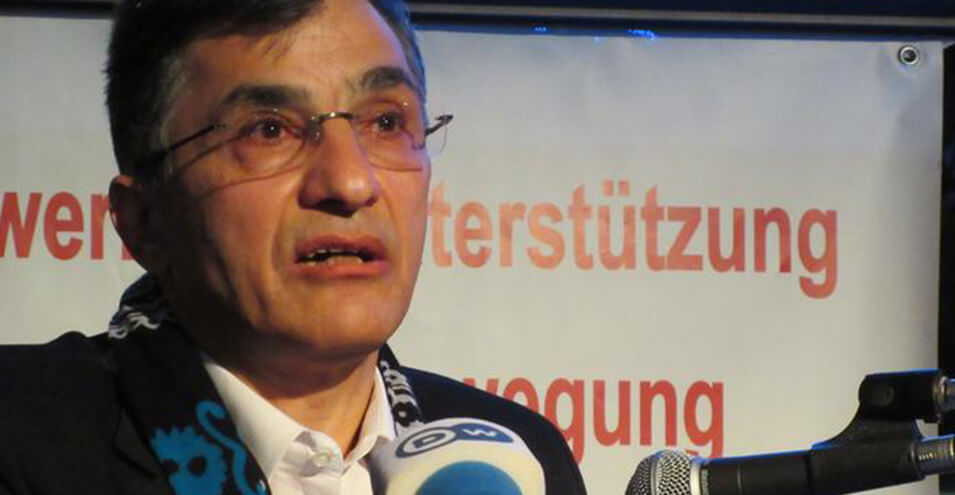
According to Reza Moini, head of the Iran and Afghanistan office of this organization, “Iran, which was previously one of the five largest prisons in the world for journalists, has today become the world’s largest prison for female media activists.”
He points to the detention of 10 female journalists and citizen reporters in the Islamic Republic and has called on the UN’s special rapporteur on human rights in Iran to “urgently take action for the release of these prisoners and the disastrous state of media freedom in Iran.”
Reporters Without Borders has pointed to the arrest of Noshin Jafari, who was imprisoned in August of this year. She is a cinema and theater reporter and according to this organization, in a report published on social media by “trolls close to the Islamic Revolutionary Guards.” Noshin Jafari is accused of having an anonymous Twitter account that “insulted Islamic sanctities.” This organization has written, citing Noshin Jafari’s relatives, that she “is being pressured by officers of the IRGC Intelligence Organization for false confessions.”
Another case is Marzieh Amiri, a journalist for the Shargh newspaper, who was arrested on April 1, 2020 (International Workers’ Day) while covering arrests of people attending a peaceful gathering organized by labor unions on Vezara Street in Tehran. She has been sentenced to 10 years in prison and 148 lashes. According to Reporters Without Borders, “Branch 28 of the Revolutionary Court on August 14 refused to temporarily release her by posting bail.” Marzieh Amiri’s charges are listed as “gathering and conspiracy with intent to act against national security,” “propaganda against the system,” and “disturbing public order.”
Charge: Reporting on Mistreatment and Suppression of Workers
Asal Mohammadi, a student at Azad University and a member of the editorial board of the student publication Gam, has been in prison since last year. She was imprisoned while accompanying individuals who participated in the Haft Tappeh workers’ strike in August of last year. Reporters Without Borders also reported on Sanaz Allahyari and her husband Amir Hossein Mohammadifar and Amir Amirgholi, other colleagues at this student publication, who “have been detained since December of last year for reporting on the Haft Tappeh workers’ strike and the mistreatment and torture of detainees in prison.”
Alongside these women, Reporters Without Borders has pointed to Frangis Mazloom, the mother of Soheil Arabi, a photographer and citizen reporter and award-winning citizen journalist who was arrested in early July two years ago by officers of the Ministry of Intelligence and “whose only crime is reporting on the conditions of her son’s detention and protesting his inhumane and tyrannical treatment.”
Harsh Sentences for Criticism of Injustice in the Judicial System
Hengameh Shahidi is another of these women who has been in prison since July 2018. She has been sentenced to 12 years and nine months in prison, of which seven years are enforceable and two years consist of deprivation of membership in groups and parties and virtual and media activities, and during this period she has no right to leave Iran. She “had published posts on her Twitter page about the conditions of her previous detention and criticism of injustice in the judicial system and its then-head Sadegh Larijani.”
Reporters Without Borders has written about the situation of three female prisoners who faced severe harassment and abuse in prison: Sepideh Moradi, Avisha Jalaldin, and Shima Entesari, three colleagues at the Majzoban Noor website and from the Gonabadi dervishes who are serving a five-year prison sentence. The organization has written that these three “have been deprived of health care and medical facilities both in Qarchak Prison and in Evin’s Black Section.”
Narges Mohammadi, One of the Longest-Imprisoned Female Journalists
Narges Mohammadi, a journalist and vice president of the Human Rights Defenders Association of Iran, has been in prison since May 2015. She has been charged with three counts and has been sentenced to terms equivalent to 16 years in prison: “Five years for ‘gathering and conspiracy against the system,’ one year for ‘propaganda against the system,’ and ten years for founding and collaborating with the Legam Association, an association to abolish capital punishment.” Reporters Without Borders has written that according to Article 134 of the Islamic Penal Code and considering “the most severe punishment,” Narges Mohammadi should serve 10 years in prison.
Source: DW